
You are staring at a number with six zeros. It is easy to glance at the ten thousand dollar difference between two price points and shrug. Ten grand feels like dust in the wind. But sit with that number for a second. Think about what it actually buys.
That gap is a new car. It is a year of college tuition. It is two luxury vacations. It is a down payment on your next place, or perhaps an entire year’s salary.
Price your home too high and you become “that house.” You know the one. It sits on the market for eighteen months, gathering dust like a teenager without a prom date. Buyers walk past it. They assume something is wrong. The stigma sticks.
Price it too low and you leave money on the table. The solution is not hope. The solution is cold, hard realism. A little upfront research greases the wheels of the sale process. It helps you maximize your dollars at the end of the day.
Here is how you start.
Зміст
10. Leverage Online Valuation Tools
Start with online calculators. They are fast. They are free. A few clicks can tell you if it is even a good time to sell right now.
When you type in your address, make sure the site connects the data accurately to your specific location. Do not rely on a single source. Online estimates vary wildly.
Get at least five different prices from different sites. Discard any that seem unusually high or low. Average the rest.
Online estimates are just that: estimates. They lack nuance.
These tools use general data. Square footage. Number of beds and baths. Neighborhood comparables. They do not walk through your front door. They do not know if your backyard backs up to a noisy highway. They do not see your stunning view. They cannot judge if your roof is new or if your kitchen is a time capsule.
Use this as a starting line, not the finish.
Calculate It! Check these free resources:
- Zillow.com
- Yahoo Real Estate
- Trulia.com
- Domania.com
- RealEstate.com
- Eppraisal.com
9. Consult Agents and Appraisers
You have a ballpark figure. Now get expert eyes on the property.
Listing agents want your business. They offer free walk-throughs. They provide a Comparable Market Analysis (CMA). A good CMA lists carefully selected comparable properties. It highlights what makes your home unique. It analyzes current market conditions.
Get at least three CMAs from three different agents. Compare them.
But here is the catch. Agents are not necessarily your friends. They need to earn a commission. To earn that commission, they need your listing. To get your listing, some agents will offer an unrealistically optimistic price. They bet on your optimism. They hope you pick the agent who promises the highest number.
If the price seems too good to be true, it is.
Consider an appraiser instead. You have to pay for this. But the opinion is impartial. An appraisal gives you a clear-eyed view of your home’s value. More importantly, it gives you a checklist.
The appraiser will note issues that could slow a sale. They might spot updates that justify a higher price. Talk to them. Ask what could add value. Then fix it. Update the fixture. Patch the wall. Get back to market with a stronger product.
8. Adopt the Buyer’s Mindset
Pricing is not just about math. It is about psychology. You need to think like the person writing the check.
What are they looking for? What are they afraid of? If you are pricing your home, you must strip away your emotional attachment. You cannot sell a house based on the memories you made in its kitchen. Buyers see square footage, layout, and condition. They do not see your family photo album.
Look at the competition. Not just the active listings. Look at the sold comps. Did they sell at ask? Below ask? How fast did they move?
If similar homes are sitting, your price needs to reflect that friction. If they are flying off the shelf, you might have room to be slightly aggressive. But do not guess. Verify.
The market does not care about your feelings. It cares about value. Find that value. Price accordingly.

You tell yourself the blue bedroom holds magic. You paid extra for that granite countertop because you fell in love with it in a showroom three years ago. To you, those things matter. To the market, they are invisible.
Stop pricing your home based on memories. Start pricing it based on math.
Buyers don’t care about your history. They don’t care about the summer you spent painting those trim strips yourself, even if your arms still ache when it rains. When a buyer walks through your front door, they are running a cold, hard calculation. They are comparing your square footage, your roof age, and your layout against every other house in town. If you lead with sentiment, you lose. You need to strip away the emotional baggage and look at the raw data.
But here is the twist. You can use human psychology against the buyers.
Think about how prices are listed. A gallon of milk at $2.99 feels cheaper than one at $3.00. It’s not. It’s a penny different. But your brain registers $2.99 as a deal. Apply this to your listing price. If your comps suggest a value of $400,000, don’t list it at $402,000. Don’t even list it at $405,000. List it at $399,000. That psychological hook is free leverage. It makes your home feel accessible in a way a rounded number never will.
7: The Truth Behind Comparables
What is your house actually worth?
It’s worth what a stranger will write a check for. And that stranger usually looks at what similar homes sold for recently. This is the golden rule of real estate: comparables, or “comps.”
Realtors will hand you a list of these properties. They might even offer a Comparative Market Analysis (CMA) that looks pretty on a PDF. But you need to look closer. You live here. You know the street. You know which neighbors keep their lawns immaculate and which ones let their fences rot. You have a granular view of the competition that an algorithm doesn’t.
Don’t just trust the numbers on a screen. Go outside.
Walk the neighborhood. Look at the active listings. These are your direct competitors. But be careful. Active listings are often stuck on the market for a reason. They might be overpriced. They might have hidden defects. Or they might just be unlucky. If you price your home based on active listings, you risk pricing yourself out of the market or signaling that your house is less desirable than it is.
Instead, focus on sold comparables.
Find the houses that actually closed in the last three to six months. These are the real benchmarks. They represent the truth of what buyers were willing to pay. Look at the final sale price, not the listing price. The listing price is a hope. The sale price is a fact.
Slot your home among these sold properties. Does your kitchen have an island when theirs didn’t? Did your roof get replaced last year, while theirs is fifteen years old? Adjust your price based on these tangible differences. If your home has a feature that adds value, price accordingly. If it lacks features that buyers want, discount it.
“Active listings show you what houses don’t sell for. Sold comps show you what they do.”
You might feel like you

Localize Your National Trends
Nationally averaged price charts look tidy in spreadsheets, but they rarely match what is happening on your specific street. You might see Moody’s Analytics predicting a 1 percent national uptick in 2011 and another 4 percent in 2012. That macro view is merely the starting line, not the finish. It does not tell you if your zip code is cooling off or heating up.
To find your actual market value, you need granular data. Look at comparable sales. Check what similar homes sold for twelve months ago. Then six months. Then three. Then right now. Plot those points. Does the line slope upward or downward?
The shape of that line dictates your pricing strategy. If inventory is low and buyers are fighting for scraps—a seller’s market—you might justify adding a 10 percent premium. If the shelves are bare and no one is buying—a buyer’s market—you may need to knock 10 percent off to get attention. If you are unsure which side of the fence you are on, check trajectory tools on sites like Trulia.com. They visualize these shifts so you don’t have to guess.
The Foreclosure Factor
You also have to account for distressed assets. One foreclosure on your block is an anomaly. It might depress your neighbor’s equity, but it rarely sinks your sale. However, the math changes quickly if the trend accelerates.
If more than 25 percent of recent sales in your area are bank-owned properties, the dynamic shifts entirely. Banks price to sell, often below market value. To compete in that environment, you cannot price like a standard homeowner. You will likely need to reduce your asking price to remain competitive against the distressed stock flooding the neighborhood. Ignoring this metric is a fast track to sitting on your listing for months.
5: Establishing a Fair Price
You now possess the raw materials: online estimates, comparative market analyses (CMAs), appraisal reports, and your own observations of local trends. Fair pricing is an exercise in data aggregation. It is about synthesizing all these conflicting signals into one number.
A robust method for narrowing this down is to set two boundaries. Name an extreme low and an extreme high based on your research. Then, use your data to squeeze the range until it feels tight. The number in the middle is likely your target.
Once you settle on that figure, write it down. Circle it in red pen. Make it physical. If you have been rational and thorough, this number becomes your emotional baseline. Anything above it is a bonus. Anything below it is a mistake you will regret.
A fair price is not static. It is a launchpad. Sometimes buyers will overpay for a specific feature or urgency. Sometimes you must underprice to generate a bidding war. Understanding why requires looking ahead.
4: Price Ahead of the Curve
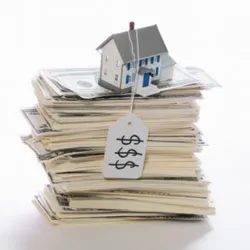
Adjusting for Future Value
Picture the local market sliding. Prices are dropping. You price your home at what it is worth today. Two months later, you are staring at a looming deadline with interest rates eating your equity alive. Your house is now overpriced. You are behind the curve.
If you slash the price to catch up, you are still behind. Prices continue to erode. Buyers see the reduction. They smell desperation. They start wondering what is wrong with the foundation or the plumbing.
Chasing a falling market is a trap. Avoid it by looking ahead. If prices drop 1 percent a month, do not price for today. Price for three months from now. In a market declining by 1 percent each month, knock 3 percent off your fair price to make the house competitive three months from now. This buffer keeps you relevant. It keeps buyers looking.
The opposite holds true in a rising market. If you overprice, betting on future gains, you kill your momentum. Fresh listings get the attention. By the time your price becomes competitive, your home has sat for three months. It looks tired. Buyers assume something is wrong with it.
3: Sweeten the Deal
You listed a fair price for a standard deal. An agent sells to a buyer. The buyer is financed through a bank. They plan to occupy the empty house in a couple of months. Almost every word in that sentence costs you money.
Think about the agent. If you offer the house for sale by owner, consider knocking 3 percent off your fair price and pocketing the other 3 percent that would’ve been the agent’s commission. But also be aware that you’ll work for this 3 percent by selling yourself. It is not passive income. It is labor.
Another way to sweeten the deal is by offering seller financing or the option to lease. Buyers who are having problems finding a lender might be willing to pay a premium on the price of the house if you offer a way to sidestep bank requirements. You’ll need to speak to a good financial advisor and likely an attorney if you hope to offer seller financing. The paperwork is complex. The risk is real.
Leasing a house is easier. It allows buyers without a down payment to (effectively) apply a couple years’ worth of rent to the purchase price of the house. This bridges the gap for those who are cash-poor but income-rich.
Offering the option of a fully furnished house might be attractive to some buyers. It allows you to add to the listing price. A buyer who needs a place to live next week is likely willing to pay more for the privilege of quick escrow. Convenience has a price tag.
2: Less is (Sometimes) More
This concept is counterintuitive. We are taught to show everything. More photos. More square footage. More features. In a declining market, information overload can be a liability.
Buyers are risk-averse. They are looking for reasons to say no. If you highlight every flaw, they will use it to negotiate you down. If you hide nothing, they might still find something to nitpick. The goal is to present a narrative. A narrative that suggests stability. Value.
Consider the staging. Remove clutter. Not just clothes. Personal items. Photos. Collections. These are distractions. They prevent buyers from imagining their life in your space. Less clutter means more space. More space feels like luxury.
Think about the photos. Do not use wide-angle lenses to fake a larger room. It backfires. Buyers walk in. They see the discrepancy. They lose trust. Use natural light. Clean windows. Stage one key room at a time. A clean kitchen and a tidy master bedroom sell houses. A cluttered basement does not.
What about the disclosures? Be thorough but brief. Legal requirements must be met. But you do not need to write an essay. Bullet points work. Clear facts. No dramatic language. “The roof was replaced in 2020” is better than “We had major issues with leaks until we

The Traffic Trap of Underpricing
Everyone dreams of the bidding war. It feels like free money. The strategy is simple: list low, watch the frenzy, and let the market push you above asking price. In a red-hot market, slashing the price by ten percent might eventually net you that same ten percent gain over the fair market value.
But there is a catch. A gaping one.
What if that aggressive low price doesn’t trigger a bidding war? What if only one buyer shows up? They see a deal. They make an offer. You sign. You lose the competition. You sell for less than you could have, and you didn’t even get the thrill of the chase.
This is the traffic problem. Underpricing is not a pricing strategy. It is an advertising strategy. It requires massive, upfront noise. If you list low, the world must know about it. Immediately.
If you have an agent, make sure they are pushing hard. We are talking massive marketing spend. Social media blitzes. Broker open houses. Press releases. When the listing hits the market, it needs to make a splash loud enough to attract a crowd, not just a single interested party. Without traffic, underpricing is just leaving money on the table.
Fix-Ups That Actually Move the Needle
Let’s talk about the baseline. The “fair price” assumes your house is normal. The paint is fresh. The floors aren’t cracked. It’s clean. The yard is mowed. The clutter is gone. This is the entry fee. If you skip these steps, your price drops. Period.
But if you want to push that price higher, you need to go beyond “normal.”
Think about space. Can you convert that dusty extra bedroom into a functional home office? Remote work is still huge. People will pay for dedicated workspace. Add light. Open up windows. Remove heavy drapes. Bright homes sell faster and often for more.
Curb appeal is non-negotiable. First impressions are everything. Fresh mulch. A painted front door. Maybe some new outdoor lighting. It signals maintenance. It signals care.
Inside, focus on the high-friction areas. The kitchen and the bathroom. These are the rooms where buyers get emotional. You don’t need a full remodel to trick them out. Color-coordinate the appliances. If you have stainless steel, make sure everything matches. It looks intentional. It looks expensive.
Staying Grounded in Comps
Here is where people get greedy. You add a heated floor in the mudroom. You install a sauna in the basement. You think you’ve created a unicorn property. You raise the price accordingly.
Stop. Look at the comparables.
Look at the houses that sold in your neighborhood last month. What do they have? If every house on the block has granite countertops, that feature is already priced into the average sale. It’s not a bonus. It’s the standard. If you don’t have it, your price should reflect that deficit.
But if you have something truly unique? Heated floors? A wine cellar? A smart home system that actually works? Those are different. Those add value because the average buyer doesn’t have them. That is where you have room to grow the asking price.
The goal is efficiency. You want to price the home so that it attracts serious buyers but also reflects the upgrades you