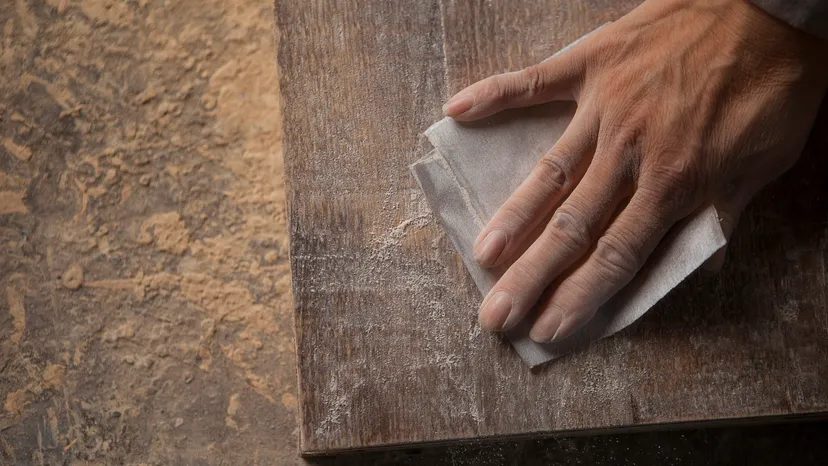
You are standing in the hardware store aisle. You need sandpaper. You grab a box labeled 400-grit. You bring it home. You sand your oak table. It feels rough. You look at the instructions you found online. They ask for P2000. You are confused. You just ruined your project.
This happens because sandpaper numbers are not universal. They are a mess of conflicting standards. If you do not know which system your paper uses, you will make mistakes. Here is how to stop guessing.
Зміст
The American CAMI System
The United States uses the CAMI system. Coated Abrasives Manufacturers’ Institute developed this. The American National Standards Institute approved it. It is the standard you see on most boxes in U.S. stores.
The logic is simple. Higher numbers mean finer grit. Lower numbers mean coarser grit.
- 16-grit is extremely coarse. It strips paint fast. It leaves deep scratches.
- 3,000-grit is incredibly fine. It is almost polish.
In this system, the number goes up as the paper gets smoother. This is the baseline for most American DIYers.
The European FEPA System
Europe uses FEPA. Federation of European Producers of Abrasives runs this. You will see a “P” before the number. P60. P180. P240.
For a while, the systems match.
- CAMI 60 is roughly FEPA P60.
- CAMI 180 is similar to P180.
- CAMI 240 is close to P240.
Then they diverge. Fast.
If you think CAMI 320 equals P320, you are wrong. It does not. The jump gets massive.
| CAMI (US) | FEPA (EU) |
|---|---|
| 320-grit | P400 |
| 440-grit | P600 |
| 600-grit | P1200 |
| 800-grit | P1500 |
Check the label. Look for the “P”. If it is there, you are in Europe. If not, you are in the US. Mixing them up means you will over-sand or under-sand. Either way, the finish suffers.
The Japanese System
Japan has its own count. It is stricter. The numbers are higher than CAMI for the same smoothness.
- Japanese 150-grit is like CAMI 100.
- Japanese 1,000-grit is like CAMI 700.
- Japanese 10,000-grit is like CAMI 2,000.
If you buy Japanese paper, do not assume it matches US grades. Read the conversion chart. Or just trust the “P” system if you are working with European supplies.
The Micron System
Then there is micron. This is the opposite of everything else.
In CAMI, FEPA, and Japanese systems, high numbers mean fine grit