


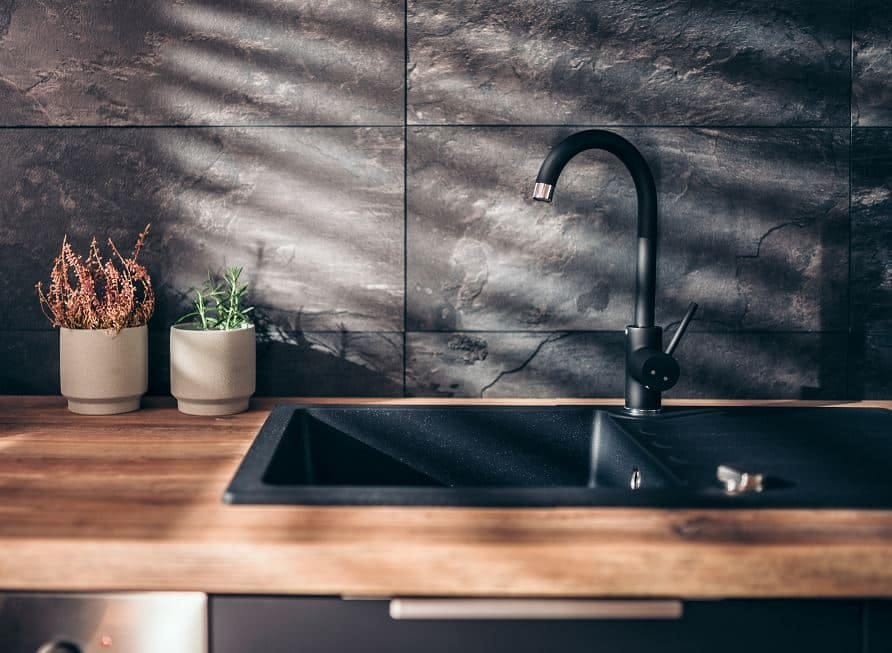
You bought the black sink. It looked incredible in the showroom. Sleek. Modern. The kind of fixture that makes a kitchen feel expensive without actually being one. Then you got home. You used it. Coffee rings appeared. Lime scale built up. And now you’re staring at a grayish haze on your black sink and wondering if you’ve ruined it.
You haven’t. But you’re one wrong cleaning product away from doing it.
The fear is real. People assume that because the surface is dark, it’s delicate. Or worse, they assume it’s like granite and can take anything. Neither is true. Most dark sinks are composite granite, resin, or cast iron with an enamel coating. These materials hide dirt better than stainless steel at first, but they show scratches and chemical burns immediately. A white stain on a black surface is not just ugly. It’s permanent.
So how do you clean a black sink without stripping the coating? You stop using abrasive pads. You stop using bleach. And you start using warm water with a drop of dish soap.
Зміст
Why your black sink looks dull and how to fix it
The cloudiness isn’t always dirt. Sometimes it’s mineral deposits. If you have hard water, calcium and magnesium settle into the microscopic pores of the sink. Over time, this creates a white film that looks like chalk dust. On a black background, it looks like a disaster.
You might think you need a heavy-duty cleaner to remove it. That’s the trap. Strong acids eat away at the resin or enamel sealant. Once that seal is gone, the sink stays dull. Forever.
Instead, go for vinegar. White distilled vinegar is acidic enough to break down mineral buildup but gentle enough not to strip the finish if you dilute it. Mix equal parts vinegar and water in a spray bottle. Spray the sink. Let it sit for five minutes. Wipe it with a soft microfiber cloth. Rinse thoroughly. Dry it immediately.
If the haze persists, try baking soda. Not as a paste with bleach. Just a light sprinkle of dry baking soda on a damp sponge. Gently rub the affected area. The mild abrasion lifts the residue without scratching. Rinse. Dry.
Which cleaning products to ban from your kitchen
You need to know what not to use. This is more important than knowing what to use. One slip-up with the wrong chemical can cost you hundreds in replacements.
- Bleach. Never. It discards the color and weakens the material.
- Ammonia. Same result as bleach. It breaks down the sealant.
- Abrasive powders. Think Comet or Bar Keepers Friend. Unless the manufacturer explicitly says it’s safe for composite granite, skip it. Those tiny gritty particles act like sandpaper.
- Steel wool. Forget it. It leaves metal particles that rust. Rust stains on a black sink are a nightmare to remove.
- Scouring pads. The green side of your sponge is your enemy. Use the yellow or blue sponge side. Or a soft cloth.
What about natural cleaners? Lemon juice? It’s acidic. Use it sparingly. Don’t let it sit for hours. Lime juice? Same rule. Natural doesn’t always mean safe for engineered stone.
How to maintain
What to avoid when cleaning black resin sinks
Some household cleaners are straight-up enemies of black resin. You might think bleach is the nuclear option for stains, but on this material, it’s a disaster waiting to happen. It fades the surface. So does anything with strong solvents, like heavy-duty descalers.
Forget baking soda too. Or washing soda. They’re too abrasive. And don’t even think about using steel wool or stiff-bristled brushes. You’re scratching a surface that can’t take it.
Here’s another one that sneaks up on people: boiling water. Pour that directly into the basin and you risk warping the resin. Heat makes it soft. It loses its shape.
So, what’s the rule? Gentle. Always gentle.
How to degrease a black sink without damage
Grease builds up fast. It sits on top of everything. You want it gone, but you don’t want to strip the finish.
Squeeze a lemon into a bowl of warm water. Mix it. Use a soft cloth to wipe the basin down. The acid cuts the grease. It’s mild enough for the resin.
No lemon? Use white vinegar instead. Dilute it with warm water. Wipe it on. Then, and this is key, rinse it off immediately. Leaving acidic solutions sitting there can dull the shine over time.
Daily cleaning tips for black kitchen sinks
For the day-to-day stuff, keep it simple. A drop of dish soap in water works. Or diluted black soap. Use a soft sponge. Wipe. Rinse with clear water.
Want it to look sharp? Grab a paper towel. Spray a little glass cleaner on it. Wipe the surface. It removes the film and brings back the depth of the black color.
If there’s hard water buildup or stubborn grime, try clay stone. Wet your sponge. Rub a little bit on the spot. It’s a natural abrasive, but soft. Rub gently. Rinse well.
How to protect your black sink from future stains
Cleaning it isn’t enough. You have to seal it. Otherwise, dirt sticks right back on.
You have two main options here.
- Cooking oil: Wipe a thin layer of olive or vegetable oil over the whole basin with a paper towel. It creates a barrier. You’ll need to redo this often, maybe once a week.
- Waterproofing spray: Buy a specific impregnating product from a hardware store. It’s made for stone and resin. Lasts longer than oil.
Both work. It depends on how much maintenance you want to do.
Make your black sink shine again
Dull? That happens. Resin doesn’t reflect light as well when it’s dirty or dried out.
One trick is turpentine essence. Sounds old-school? It is. Put a tiny amount on a soft cloth. Rub the surface. It polishes it. Rinse thoroughly after. It brings back that deep, wet look.
Scared of turpentine? Fair enough.
Use toothpaste. Yes, the stuff from your bathroom. It’s a mild abrasive. Put it on a soft sponge or a soft toothbrush. Scrub the stained areas. Rinse. Dry it with a clean cloth.
It works for de-scaling and polishing.
Just remember one thing while you’re at it. Don’t scrub like you’re trying to remove rust from a car. Black resin sinks are fragile. Hard scrubbing means permanent scratches. Once they’re in, they stay.
Take your time. Use soft tools. Keep the surface happy.


