


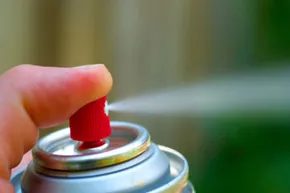
Shake the can. You hear the rattle. That is the ball bearing mixing the pigments with the propellant, preparing for a coat that dries in minutes rather than hours.
You have aching patio furniture. The shutters need a color change, again. A neighbor’s kid needs a sign. The answer is in a pressurized can. It is fast. It is even. It is simple.
Aerosol paint sits under pressure. When you depress the nozzle, a valve opens. Paint mixes with gas or compressed air. It exits as a fine mist. This covers surfaces quickly and uniformly. You avoid brush strokes. You skip roller texture. It is one of three main application methods, alongside brushes and rollers. The result is often cleaner and faster.
The story starts with efficiency. Industrial workers needed speed. American artist Francis Davis Millet created an oil and lead mixture for spraying. He wanted to prep surfaces for the Chicago World’s Fair. He needed it fast. But he did not invent the delivery system.
Edward Seymour saw the potential. He was working on aluminum paint for radiators. He needed to finish them quickly on a large scale. He looked at existing technology. Norwegian engineer Eric Rotheim had invented the first aerosol can in 1931. Seymour piggybacked on that invention. He did not build the can. He built the use case.
Seymour of Sycamore dedicated resources to this method. He saw a future in the hiss of the spray.
Around the same time, other players entered the market. Krylon and Crown Holdings Inc. developed new can designs. These became the metal cylinders we recognize today. They were smaller. Lighter. Cleaner. They applied coats faster than any brush could. Small projects became manageable. The manufacturing industry noticed. Spray paint moved from a clever trick to an industrial tool.
Today, the options are vast. You find enamels. Stains. Flats. Glossies. There are formulas for wood. Metal. Glass. Plastic. Masonry. If it can be painted, there is likely a spray for it.
We will look closer at what happens inside that can. What makes it tick? What creates that noise when you shake it?
The metal cylinder sitting on your workbench is deceptively simple. Inside that steel or aluminum shell, a valve, a dip tube, and a small steel ball called a pea do all the heavy lifting.
The magic happens because the can holds two things at once: the paint itself and a gaseous propellant. Manufacturers fill the can with liquid paint, inject the gas under pressure, and then crimp the valve shut. This traps the mixture in a state of high tension.
Environmental regulations have shaped exactly what gas sits inside your can. Before 1978, chlorofluorocarbons were the standard. They worked well until scientists linked them to ozone depletion. The industry switched to hydrocarbons like butane and propane. Those caused smog issues by the 1980s. Today, most cans use hydrofluorocarbons. These contain hydrogen, fluorine, and carbon. They lack chlorine. That makes them far less damaging to the atmosphere.
Зміст
The Physics of the Mist
Press the nozzle and watch the pressure drop. The sudden change forces the propellant to expand. It pushes the paint up the dip tube. The tube works like a straw. One end connects to the valve. The other dips into the paint at the bottom.
Once the mixture clears the nozzle, it leaves the pressurized environment. The propellant expands rapidly. The paint atomizes. It breaks into a fine, even mist.
The particles carry a positive charge. They repel each other as they fly out. This keeps the spray wide and consistent. The object you are painting usually has the opposite charge. The paint jumps to the surface. You get smooth coverage with almost no overspray waste.
Why You Must Shake the Can
That rattling sound isn’t just noise. It is functional. The pea is a tiny metal ball bearing trapped inside the valve mechanism. It keeps the propellant and paint from separating while the can sits on the shelf.
Shaking the can agitates the mixture. It forces the pea to bounce around. This ensures the paint and gas blend properly. If you skip this step, the heavier paint settles at the bottom. You will get globs of thick liquid instead of a mist. The finish will be uneven. The spray will clog.
The Hidden Risks
Paint is thick because of the solvent. Toluene is a common choice. It evaporates quickly at room temperature. As it dries, it releases chemical vapors.
Inhaling those vapors can be dangerous. The effects can range from intoxication to hallucinations. Spray paints also contain aerosols that release harmful chemicals. The combination is potent. While retailers generally refuse to sell to minors, the ease of access makes these products attractive for misuse. Always work in a well-ventilated area.
Industrial Applications of Spray Paint
Beyond the garage, this technology powers heavy-duty industries. Automotive refinishing relies on it. Industrial machinery needs protective coatings that last for decades. Aerospace components get specialized treatments that withstand extreme temperatures. The same pressure, atomization, and charge principles that work on a bike frame also protect jet engines. The efficiency scales up without changing the fundamental physics.
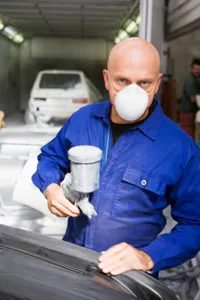

The efficiency of spray paint—quick coverage, uniform finish, minimal waste—is obvious to anyone with a garage full of weekend projects. But scale those benefits up, and you get an industrial powerhouse. It wasn’t long after Seymour’s early innovations reached the public that factories realized they could replicate these results on a massive, automated level.
Today, three primary techniques dominate the landscape: powder coating, vacuum coating, and flatline spraying. Each serves a distinct purpose in manufacturing, driven by the specific material properties and volume requirements of the final product.
How Powder Coating Creates Durable Finishes
Also known as electrostatic spray painting, this method applies dry pigment to a surface without a liquid carrier. The process begins with compressed air atomizing fine, dust-like paint particles. As these particles pass through the spray nozzle, friction generates an electrical charge.
Positively charged particles repel one another, forcing them to spread out evenly in the air before they ever touch the target. This self-distribution is key to achieving a consistent layer without runs or sags. The object being painted acts as the counterbalance. Typically grounded via a cable attached to any exposed metal part, the object carries a negative charge. This attraction pulls the powder firmly onto the surface, ensuring high adhesion rates even on complex geometries.
Once applied, the coated item usually moves through a curing oven where heat melts the powder into a smooth, durable skin. It’s a favorite for automotive parts, outdoor furniture, and appliances because the result is tougher than standard wet paint.
Why Vacuum Coating Speeds Up Thin-Layer Production
Not every item needs a thick coat of paint. For delicate substrates like sheet wood, glass, or thin plastics, vacuum coating offers precision. This technique is often used in the packaging and electronics industries where uniformity at a microscopic level matters.
The object is placed inside a sealed chamber—essentially a paint reservoir. Here, the entire surface area is either submerged in a water-based solution or sprayed by nozzles that ensure every inch receives the exact same volume of liquid. There are no drips. There are no uneven patches.
The real speed boost comes after the object leaves the chamber. Instead of waiting for hours for solvent evaporation, the item is exposed to intense ultraviolet (UV) light. This triggers a photochemical reaction called UV curing. Unlike thermal drying, which relies on heat to remove moisture or solvents, UV curing uses light energy to instantly harden the paint. The process takes seconds, not minutes. This allows for rapid throughput on assembly lines where time is money.
The Role of Flatline Spraying in Mass Production
When you’re dealing with thousands of small components a day, manual spraying doesn’t cut it. Flatline spraying is designed for high-volume, repetitive tasks. Think small items under four inches (about 10 centimeters) thick—latches, brackets, consumer electronics casings.
These objects move continuously on an assembly line. They feed into a specialized machine engineered for that specific part’s shape. Programmable spray guns execute pre-set movement patterns, sweeping over the item to ensure complete coverage. Because the machine controls the angle, distance, and flow rate, the result is mechanically perfect every single time. Human error is removed from the equation. Efficiency peaks when the part count rises, making this method indispensable for mass manufacturing.
Beyond Factories: Aesthetics and Urban Renewal
While these methods power the industrial sector, the technology hasn’t stayed confined to factory floors. The versatility of spray application has bled into other areas, influencing everything from personal aesthetics to urban revitalization.
Spray paint is no longer just a tool for industrial durability; it has become a medium for cultural expression and architectural restoration.
We’re seeing applications that blend utility with art. Buildings that were once symbols of decay are being revitalized through large-scale mural projects that rely on industrial-grade spray techniques for longevity and vibrancy. Similarly, the cosmetic industry has adapted these principles, using fine-mist applications for everything from hair coloring to skincare packaging, proving that the mechanics of atomization and adhesion are


The influence of spray technology extends far beyond home improvement. It has fundamentally reshaped beauty standards, cosmetics, and urban art.
The Science Behind Sunless Tanning
The push for sunless tanning gained traction as medical warnings mounted regarding ultraviolet radiation from both sunlight and tanning beds. The link to skin cancer prompted a shift in consumer behavior.
Salons now use methods nearly identical to industrial spray painters. A client steps into a small, enclosed booth. Automated or hand-held sprayers use compressed air to mist the body with a chemical solution.
The browning effect is not pigment. It is a reaction involving dihydroxyacetone (DHA). DHA is a sugar derived from plant sources. When it contacts the dead outer layer of skin, a chemical interaction occurs. This reaction darkens the skin temporarily. The effect typically lasts about a week before the skin cells shed naturally.
Airbrush Makeup and HD Television
Makeup artists have adopted airbrushes for personal application. These are small, air-powered tools. They use compressed gas to atomize liquid foundation and color. This process mirrors how propellant atomizes paint in a spray can.
The result is a thin, uniform layer. It is significantly smoother than what a traditional powder brush can achieve. There are fewer visible brush strokes or cakey textures.
High-definition television drove this shift. Modern cameras are unforgiving. They capture every pore and flaw. The flawless finish provided by airbrushing became essential for broadcast quality.
Spray Paint and the Evolution of Street Art
Graffiti artists embraced spray paint for its sheer convenience. The medium exploded in Philadelphia and New York City during the 1960s and ’70s. Artists began painting colorful, thematic murals in public spaces. Subway cars were the primary canvas.
For many, this was a way to build a reputation. It generated buzz for other artistic endeavors. Since most street artists operate outside legal frameworks, portability matters. Spray cans are light. They are easy to carry. They are easy to hide.
The paint itself offers distinct advantages:
* Bright, vivid colors
* Adhesion to nearly any surface
* Rapid coverage
From Graffiti to Gallery
What was once viewed as a symbol of lawlessness has transformed into a chic art form. Today, it features gallery showings and high-dollar auctions.
Jean-Michel Basquiat stands as a celebrated example. His work, which often incorporated spray paint techniques, has been exhibited in museums worldwide. The medium has gained institutional respect.
Spray paint manufacturers are helping legitimize the art form. Companies now donate product for legal, large-scale projects. This support helps elevate street art into the mainstream cultural conversation.
Why Spray Paint Matters in Pop Culture
Spray paint has left an indelible mark. It started as a tool for efficiency. It became a method for masking imperfections. It evolved into a vehicle for artistic statement.
Its reach is global. Its impact is visible in tanning booths, on runways, and on city walls.
Frequently Asked Questions
How do you properly dispose of spray paint cans?
Dispose of empty cans according to local recycling guidelines. Ensure the can is completely empty. Detach the plastic cap if possible.
What are the health risks associated with spray paint fumes?
Inhaling fumes can cause respiratory issues, dizziness, and headaches. Use proper ventilation. Wear protective gear.


