It’s thirty-four degrees on the terrace. The sun burns without mercy. In the spring, the green emerald lawn you take care of turns a sickly fragile yellow. You feel the familiar panic rising in your chest. You want to grab the hose. You want to water the grass in a desperate attempt to restore it to its former glory. But then you look at your water meter. You think about rising costs. You think about limitations.
Is it worth straining your wallet to maintain a technically dormant rather than dead lawn?
There is a better way. It’s about giving up the blind routine of watering according to the schedule. It’s about letting information, not fear, guide your garden. The secret lies in a simple device that costs less than lunch but saves hundreds of gallons of water. Stop guessing. Start measuring.
Зміст
Stop watering the habit: The price of a “perfect” lawn
We combine a bright green lawn with summer success. It means free time. It signals status. It means a perfect game of croquet in the afternoon or a quiet read in a sun lounger. But this aesthetic comes at a high price.
In many areas, water restrictions are becoming the new normal. Prices are going up. Every liter counts. The obsession with maintaining a pristine English-style lawn during the worst drought is no longer sustainable. It is ecologically irresponsible and financially foolish.
The hidden harm of overwatering
Many gardeners fall into the trap of thinking, “more water means better grass.” This is a dangerous myth. Watering without checking the condition of the soil can really damage your lawn. It removes nutrients from the soil. It creates an environment that is susceptible to fungal diseases. It stresses the roots instead of strengthening them.
Consider volume. A 100 square meter lawn can consume thousands of liters of water in one summer. This is a huge waste. You are practically filling a bucket that is already full. You are stressing your budget and ecosystem unnecessarily.
Understand your lawn’s true needs
Grass is tougher than we give it credit for. It has developed mechanisms to withstand heat. When the dry season comes, most lawn grasses go dormant. They turn yellow. They go dormant.
A yellow lawn is not a dead lawn. It’s waiting for rain. It awaits cooler temperatures. When the weather changes, it turns green again. Pouring water on resting grass will not make it green up faster. It only weakens the root structure and disturbs the balance of the surrounding plants.
Myths vs. Reality: When Does Grass Really Need Water?
Old ways die hard. We water on Mondays or every other day because that’s what our parents did. During this time it was believed that water was infinite. This era is over.
Your lawn does not need calendar watering. It needs water when the soil is dry. If you’re watering because “it’s Tuesday” you’re wasting resources. If the soil is still moist, additional watering is unnecessary. Poor water management results in tired borders, stressed shrubs and a garden that looks worse, not better, in the heat. You can’t create a calm, dry garden if you’re constantly fighting nature with a hose.
Smart solution: soil moisture sensors
There is a technology that solves this problem instantly. It’s not complicated. It’s not expensive. It is a soil moisture sensor.
How it works: Precision irrigation
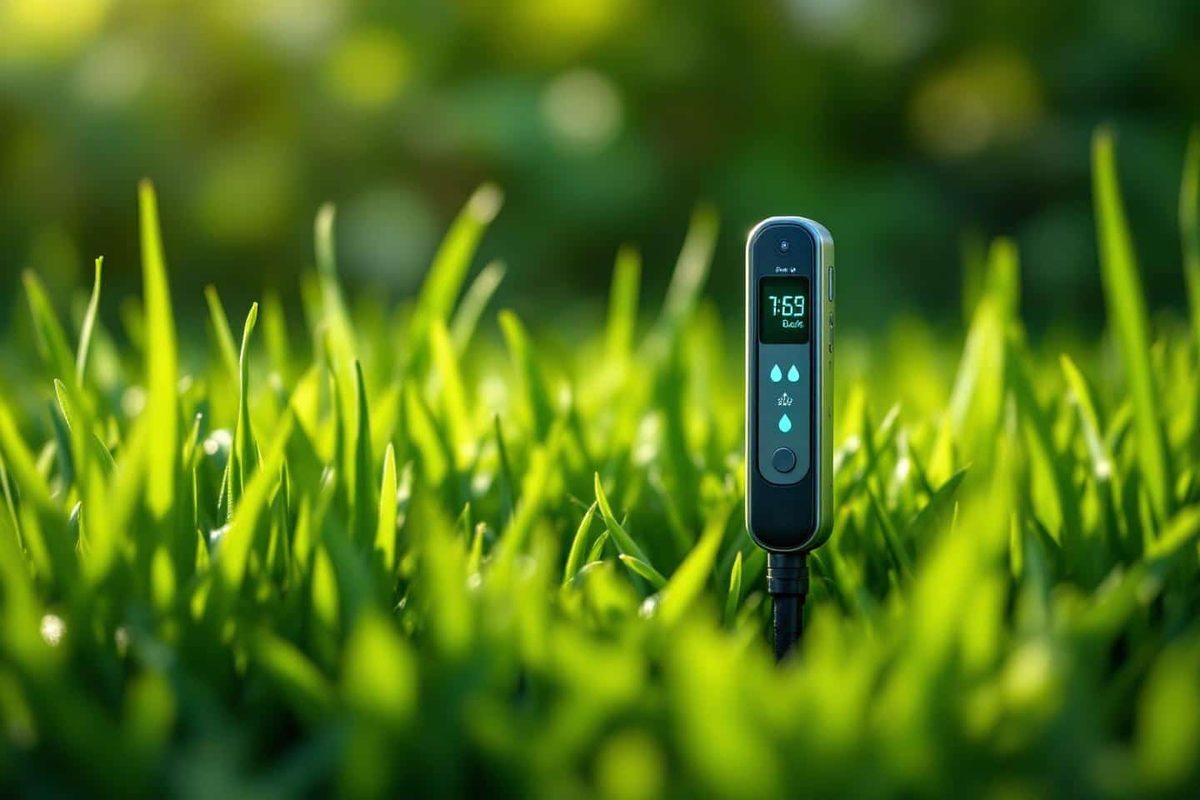
This is the best kept secret of smart gardening. By inserting the sensor into the soil, you get real-time information on moisture levels. This sensor measures the water content exactly where it matters: near the roots.
You will find out the true state of your soil in seconds. You stop watering when it is not necessary. You only start watering when the lawn really needs it. This eliminates the guesswork. It eliminates waste.
Installation and ease of use
You don’t need to be an experienced gardener to use this tool. Most sensors are plug and play. You just push the sensor into the ground about ten centimeters deep. This is the depth at which most grass roots grow.
Many models are equipped with color-coded displays. Red can mean dry. Green can mean optimal. Some have simple gauges that even children can read. It provides instant visual feedback. No apps needed. No complicated settings. Just a clear answer to the question: “Should I water?”
Save time and money
Check the soil with the sensor before touching the faucet. You no longer care about the weather forecast. You no longer have to worry about forgetting to water on vacation. You know exactly what the soil needs.
This approach simplifies gardening. It reduces maintenance time. It significantly reduces water consumption. Your lawn stays healthy, your bank account stays fuller and your conscience is clear.
Additional strategies for a drought-tolerant lawn
Technology helps, but cultural practices are just as important. Building a heat-resistant lawn requires a holistic approach.
The winning triangle: mulch, mowing height and aeration
In addition to sensors, you should implement the following practices to improve resilience:
- Natural mulching: Leave clippings on the lawn after mowing. Or spread a thin layer of shredded leaves. This covers the soil, reduces evaporation and provides nutrients to the grass as it decomposes.
- High Mowing: Don’t cut your grass too short. Taller blades of grass shade the ground. This keeps the soil cool and conserves moisture. Aim for a height of at least 7-8 centimeters in summer.
- Ventilation: The compact soil repels water. Make small holes in the lawn with a dethatcher or an aerator. This allows water and air to penetrate deeper and promotes stronger root growth. This is crucial on slopes or terrace edges where runoff often occurs.
Timing is important: when to water
If the sensor says “water” and you need to water, you’re doing it right. Avoid watering at midday. The sun evaporates most of it before it reaches the roots.
The best times are early morning or late evening. Water can penetrate deep through these windows. Deep soaking stimulates downward root growth and makes the lawn more resistant to drought. Shallow, frequent watering results in weak, shallow roots that burn easily.
Conclusion
The goal is not to kill the green. The goal is to grow resilient green. By using a soil moisture sensor, you stop resisting heat and start working with it instead. You save water. You save money. You save time.
Your lawn will go dormant. It turns yellow. Leave it. It will come back. The secret to a perfect summer garden is not constant hydration. It’s a smart intervention.
The sun still burns. The meter is still spinning. But now you know exactly what to do. You look at the sensor. You check the reading. You decide.
Or maybe you just walk away.
Smart irrigation cuts water bills in half
Incorporating a soil moisture sensor into your weekly gardening routine isn’t just a gadget. It’s a direct way to reduce your water usage by 50% in one season. This is not a marginal gain. It’s a structural change in the way you manage your outdoor space.
The lawn stays lush. The flower beds are blooming. But the real payoff is in the numbers. You stop overwatering your grass during unexpected rain showers or cold gusts of wind. No more wasting money on high water bills when neighborhood drought restrictions are in full effect. Homeowners in densely populated cities and rural villages are rediscovering the joy of a green exterior without environmental guilt or budget constraints.
How moisture sensors enable water-wise garden
A growing trend is the “Mediterranean garden” or the minimalist Zen yard. Both styles focus on sobriety without compromising on looks. Less water means more freedom.
Think about what this freedom will bring you.
Instead of dragging the hose across the lawn every Tuesday and Thursday, sit on your patio. Or take a nap in the shade. Or organize an evening aperitif with the neighbors under the fairy lights. Technology does the heavy lifting. The soil sensor detects when the soil is really dry and starts watering only when necessary.
This approach turns any green space into a cool haven, even during extreme heat waves or long droughts. It’s not about neglecting the plants. It’s all about accuracy.
Why smart watering is the future of lawn care
You don’t have to be a botanist to maintain a healthy garden. You just need the right information.
Installing a Smart Watering Moisture Sensor takes the guesswork out of gardening. You will see the colors return to your lawn as the seasons change. You will enjoy a naturally radiant garden. No chores. No waste. Just results.
It’s not a question of whether you can afford to upgrade your garden system. It’s about whether you can afford to keep paying for water that evaporates before it reaches the roots.