Flies don’t just appear out of nowhere when the temperature climbs. They are tracking you.
Specifically, they are tracking the invisible signals you send out every day. Food access. Odors. Humidity. A clear path from the outdoors.
It feels like bad luck. It isn’t. It’s a combination of simple errors most homeowners make without thinking. The frustrating part? You’re likely sending these distress signals right now.
The good news is that you can break the cycle in under a week. You don’t need pesticides. You need to stop acting like a buffet. Here are the most common oversights and the practical steps to make your kitchen unappealing to insects.
Зміст
The Invisible Feast: Managing Ripe Fruit and Hidden Residue
Spring turns the fruit basket into a magnet. Apples. Bananas. Pears. Sometimes a forgotten strawberry hidden at the bottom.
The problem is not the fruit itself. It is the ethylene gas and sugar vapors released during ripening. Humans might barely smell it. Flies can detect it from across the room.
A banana with brown spots. A bruised apple. A spoonful of leftover compote left drying on the counter. These create a permanent, invisible buffet. Heat accelerates this. The warmer the kitchen, the further the scent travels.
Stop trying to hide the fruit. Start limiting the scent dispersion.
When fruit reaches peak ripeness, move it. Refrigerate it. Place it in an airtight container. This is especially important in the late afternoon when indoor temperatures rise.
But the fruit bowl is rarely the main culprit. The real damage happens in the blind spots.
Look at these areas:
– The sticky ring around the coffee machine.
– The drip tray underneath the dish rack.
– The floor corner near the trash can.
– A damp dish towel folded over itself.
These spots ferment slowly. They release a continuous low-level odor. Even a “clean” sponge can harbor micro-remains after just a few days.
The classic error? Cleaning what you see and ignoring what you don’t. Flies follow smell, not aesthetics.
You need targeted cleaning. Focus on grease and sugar. Wipe the under-sink area. Clean the joints. Scrub the corners. Address the textiles that hold moisture. A neutral-smelling kitchen is a fly-blind kitchen.
Here is the quick protocol:
1. Store ripe fruit in the cold or sealed boxes.
2. Refrigerate leftovers immediately. The warm phase wakes up the odors.
3. Wipe sensitive zones daily. A damp pass over the counter, sink edge, and cutting board cuts off the signal trail.
Cut the odor at the source. Do not wait for it to become a landmark.
The Trash Can Recruiter: Why Your Bin is the Main Target
The trash can is the headquarters.
It concentrates everything. Food scraps. Dirty packaging. Moisture. Heat.
The winning trio for attracting flies is simple: poor separation, leaking bags, and loose lids.
A yogurt cup bottom. A takeout container that was “rinsed” but still smells faint. A plastic bag punctured by a cardboard box. This creates a persistent odor. It is worse if the bin is near a heat source or tucked into a poorly ventilated cabinet.
Even a lid does not help if the bag does not seal or if wet waste accumulates. Flies find what they need.
The most cost-effective fix is preventing fermentation and leaks.
The Compost Trap
Composting is great for the planet. It is an insect highway if you are sloppy.
A countertop bin open every time you peel an onion or cut a carrot diffuses constant odor. If the mix is too wet, fermentation accelerates.
Balance comes down to two rules:
1. Seal the container effectively.
2. Keep biosolids “dry.” Add unprinted paper or brown cardboard to absorb moisture.
Without this, your kitchen becomes an odor relay station. Flies realize quickly that food is available. Do not abandon recycling. Make it invisible to insects.
The Maintenance Protocol
One routine change everything: Empty. Rinse. Disinfect. Relocate. Repeat.
- Empty frequently. Avoid the warm, wet phase that attracts the most attention.
- Rinse the bin and lid. This limits odor residue.
- Disinfect lightly and regularly. This prevents the sticky film that traps smells.
- Check the placement. Keep it away from direct sun. Do not place it next to radiators or appliances that generate heat.
Treat the trash can as a hygiene object. Not just a receptacle.
You will see results fast. Fewer arrivals. Less swirling around the sink.
Why Simple Cleaning Fails Against Pests
Most people clean for looks. They wipe the counter because it looks dirty. They throw away the bag because it is full.
Flies clean for survival. They follow chemical trails.
If you clean the visible surface but leave the sticky residue under the sink, you are painting a target. The smell of fermenting food is a beacon. It does not matter how clean the floor looks.
The key is breaking the scent chain.
Use vinegar or enzymatic cleaners on the sticky spots. Enzymes break down the organic matter that standard soap misses. This is not about sterilization. It is about removal of the signal.
Also, check your windows.
Tiny gaps in screens let them in. A torn mesh is an open door. Repair screens. Use door sweeps. Stop the easy entry.
The Humidity Factor Often Ignored
Flies love moisture. They breed in it.
A dripping faucet. A wet sponge. A leaky fridge seal.
These are not just annoyances. They are breeding grounds.
Fix the drip. Replace the sponge. Check the seal.
Dry everything. Use a fan if the kitchen stays damp. Reducing humidity makes the environment hostile to pests. It stops the lifecycle before it starts.
Final Thoughts
You do not need to live in a sterile lab. But you do need to manage your kitchen’s output.
Food. Smell. Water. Entry.
Control these four variables. Store ripe fruit properly. Empty the bin often. Clean the blind spots. Fix the leaks. Patch the screens.
The flies are not invading. They are responding to your cues.
Stop sending the signal. Watch them leave.
It starts with one change. Empty the bin tonight. Wipe the counter after dinner. Check the fruit basket.
Small adjustments. Big difference.
Moisture and lingering smells turn a kitchen into an unintended sanctuary for pests. A slightly humid environment feels warm while you cook, but it is also a perfect breeding ground for flies if the air doesn’t circulate. The sink drain and especially the P-trap are the main culprits. They collect grease deposits, microscopic food remnants, and that distinct “old” odor that rises from the plumbing. If you notice a faint but consistent smell even after scrubbing the visible surfaces, the problem is deeper. You need to target the source, not just the surface.
Flush the drain with very hot water. Remove and clean the filter. Check the tight corners under the drain cover. When the odors vanish, the flies lose their interest. Odor and humidity travel together in these spaces.
Other warm, hidden zones are often overlooked. The dishwasher, coffee maker, pet bowls, and water collection trays are all risk factors. A closed dishwasher with a damp rubber seal creates a micro-climate. A coffee machine with a full drip tray holds moisture and food residue. A pet bowl that is rinsed but left wet acts as a mini water source. Over time, these small spots create an inviting atmosphere. The fix is simple: empty the trays, let them dry completely, and wipe them down when possible. A dry surface is far less attractive than a damp one, regardless of how clean it looks. In a spring kitchen, rising temperatures make these micro-zones even more profitable for insects.
Ventilation is essential, but you have to do it right. Opening windows wide at dusk with the lights on and leftover food on the counter is an open invitation. Aeration works best when the kitchen is already “neutral.” Close the trash bin. Clean the sink. Wipe surfaces dry. A few minutes of airflow is enough, especially if the air can move freely. The goal is twofold: remove humidity and eliminate odors without giving flies a five-star welcome when they are searching for a spot.
The Silent Entry: How Light and Unsealed Gaps Attract Pests
A kitchen can be spotless and still attract flies simply because access is too easy. Windows, air intakes, range hoods, and ventilation grilles act as highways for insects. A worn seal, a poorly fitted grille, or a hood that leaves a gap is all it takes. Bugs don’t need a massive opening. In spring, when windows are opened more frequently, the risk spikes. The first step is identifying entry points with a quick inspection, focusing on frame edges, door bottoms, and ventilation areas. Once entry is easy, any food odor becomes a strong signal.
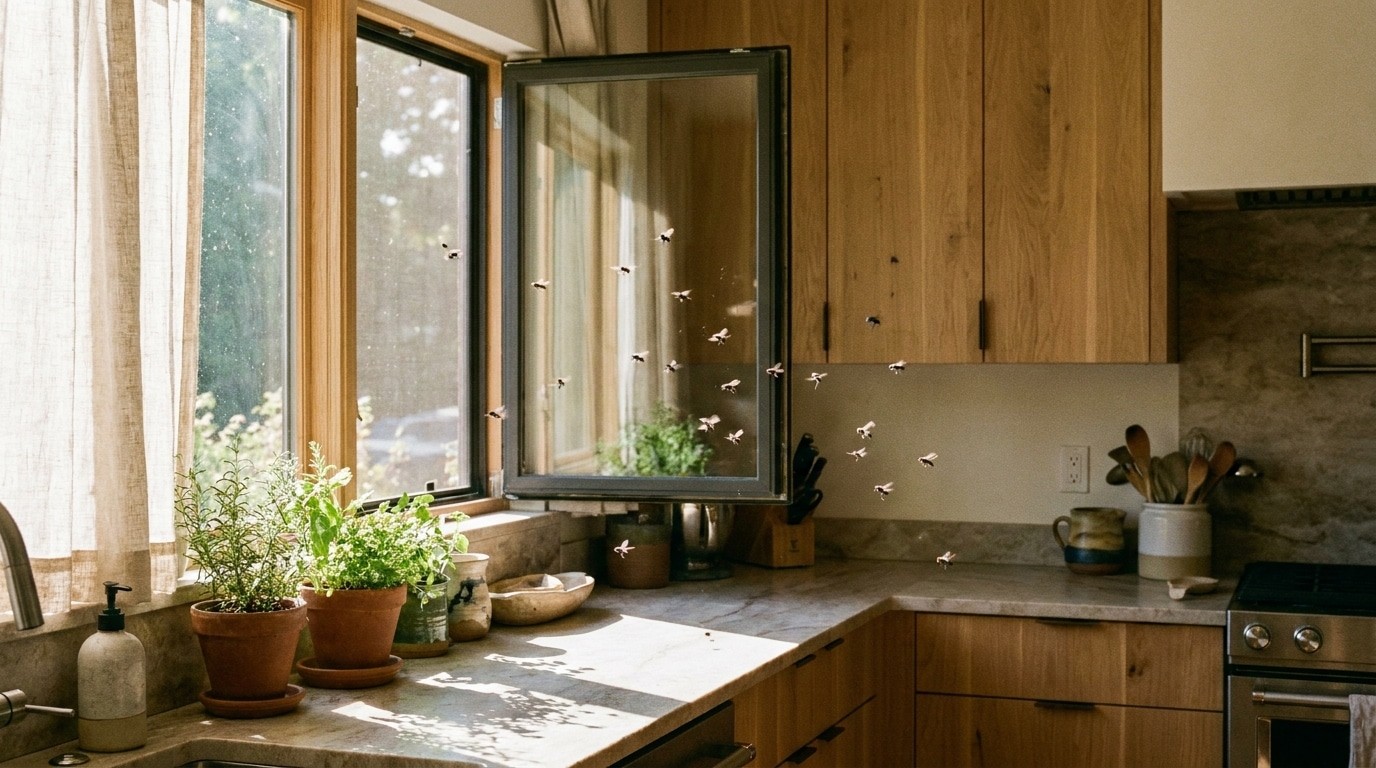
The evening light trap is dangerous. A lit kitchen acts as a beacon, especially when the outdoors is darker. Add a partially open window, and the flies navigate straight inside. The solution isn’t to live in the dark. It’s to avoid the combination of bright light and prolonged window openings. Close the windows earlier or ventilate at a different time of day. This simple shift cuts off their guidance system. Flies follow light just as closely as they follow smells.
Smart sealing doesn’t require a big budget. Install a basic mosquito net. Replace worn seals. Use an effective door sweep. Ensure ventilation grilles are tightly fixed. These are concrete barriers. The aim is to prevent easy entry, especially during periods when you are opening up the house. Once entry points are restricted, other habits—managing trash, controlling moisture, hiding ripe fruit—become significantly more effective. The kitchen stops being an easy stopover and becomes a controlled space. That is usually the turning point: fewer entry points mean fewer guests.
The 10-Minute Spring Routine to Keep Flies Out
To regain control quickly, you must eliminate three main errors: leaving ripe fruit and leftovers exposed, poor trash management, and stagnant warm moisture. A short, daily routine is enough if it is consistent. Here is a checklist to keep in mind:
- Store ripe fruit in the fridge and seal leftovers in containers
- Wipe sticky spots and replace sponges or dish cloths as soon as they smell
- Empty organic waste frequently, rinse the bin lid, and avoid leaky bags
- Dry trays from the coffee maker and dishwasher; never let water stagnate
- Check openings and limit ventilation with lights on in the evening
Weekly habits stabilize the results. Clean the sink trap. Rinse the trash bin liner holder. Wash textiles in hot water. Inspect seals and corners under the sink. It isn’t complicated, but it prevents the return of background odors that become attractive over time. A non-attractive kitchen is one where nothing ferments and nothing stays damp longer than necessary. It also improves comfort: the air feels fresher, the room is more pleasant, and the chores are shorter.
When everything is in place, the logic is clear. Flies are drawn to ripe fruit, trash, humidity, odors, light, and unsealed entry points. By reducing these six triggers, flies lose both their reference point and their interest. And if a few intruders persist despite your efforts, the real question to ask yourself is simple: which signal is still active in the kitchen right now?