


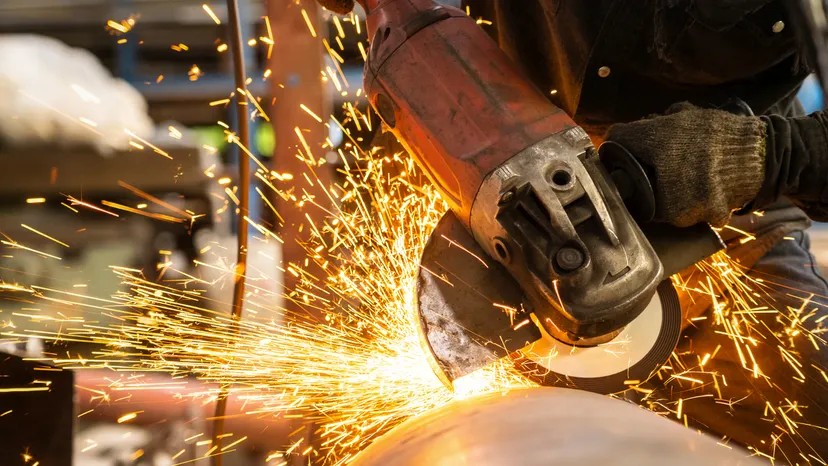
Grab that carbide-tipped abrasive cutoff wheel. If you are holding a wood blade, put it down. You are about to make a mess, break your saw, or hurt yourself. Cutting metal with a circular saw isn’t magic, but it does require specific gear. Specifically, you need a blade designed for the hardness and heat of metal, not the softness of pine.
Зміст
Why You Can’t Just Swap Blades
Here is the hard truth. A standard wood-cutting circular saw has an open motor housing. It breathes in air and dust. When you cut metal, you create hot chips and fine particles. Those particles fly everywhere. On a metal-cutting saw, there is a collection bin or shield to catch that debris. A wood saw has nothing.
If you force a metal cut on a wood saw, those chips get into the motor. They jam the bearings. They burn out the windings. It is a slow death for your tool.
If you absolutely must use a wood saw because you have no other option, you are walking a tightrope. Use only a 7 1/4-inch blade. Preferably a worm drive model. Worm drives offer extra torque which helps when the metal fights back. But watch the mounting side. Wood saws mount the blade on one side. Worm drives mount on the opposite side. Do not mix them up. The label on the blade should face out on a standard saw. On a worm drive, it faces in. Check your manual. Really check it.
Picking the Right Blade for Non-Ferrous Metals
Not all metals are the same. You aren’t cutting steel here. You are looking at non-ferrous metals like brass, aluminum, copper, or lead. These are softer but stickier. They clog blades fast.
You need a carbide-tipped abrasive cutoff wheel. Why? Because it lasts up to 10 times longer than regular steel blades. Regular steel blades wear out in minutes. Carbide holds an edge. It handles the heat better. It doesn’t flex as much.
But thickness matters. A lot.
- Thin metal: You want a high tooth count. More teeth mean a smoother cut. Less vibration.
- Thick metal: You want a lower tooth count. Fewer teeth mean bigger gullets. Those gaps carry the chips away. If the gullets fill up, the blade binds. If it binds, you get kickback. If you get kickback, you lose a finger.
Check the packaging. It will tell you the suitable material and thickness. If it says “aluminum up to 1/2 inch,” do not try to cut 3/4 inch. The blade will overheat. The metal will anneal. The cut will be ugly.
“The packaging typically indicates the suitable material and thickness.”
Read it. It is not a suggestion.
Where to Find These Blades and What to Buy
Walk into your local big-box home improvement store. Look at the circular saw blade aisle. It is 95% wood blades. You will hunt for the metal ones. You might not find them.
You may have to go online. Or visit a specialty tool store. Do not be surprised. These are niche items.
Do not buy the cheapest blade you see. Cheap blades wobble. They vibrate. They shatter. You want precision. You want safety.
Before you click “buy” or pull a blade off the shelf, check two things:
1. Diameter: Does it fit your saw? Most are 7 1/4 inches, but check.
2. Arbor size: Does the hole in the center fit the shaft of your saw? 5/8 inch is common. 1 inch is for bigger tools. Mismatched arbor sizes mean the blade won’t spin true. It will wobble. It will cut poorly. It will be dangerous.
The Reality of Cutting Metal at Home
You can do this. But you have to respect the material. Metal doesn’t yield like wood. It resists. It heats up. It creates debris that gets into places it shouldn’t.
Use the right saw. Use the right blade. Respect the thickness. And for the love of everything, wear eye protection. Metal chips don’t ask permission to enter your eye. They just go.
You might still end up with a rough edge. That is normal. Metal cutting is messy. It is loud. It is not for the faint of heart. But if you need that cut, and you only have a circular saw, this is how you do it without destroying your property or your health.
Just remember, the next time you pick up that saw, ask yourself: is this a wood saw or a metal saw? Because the answer changes everything.


