


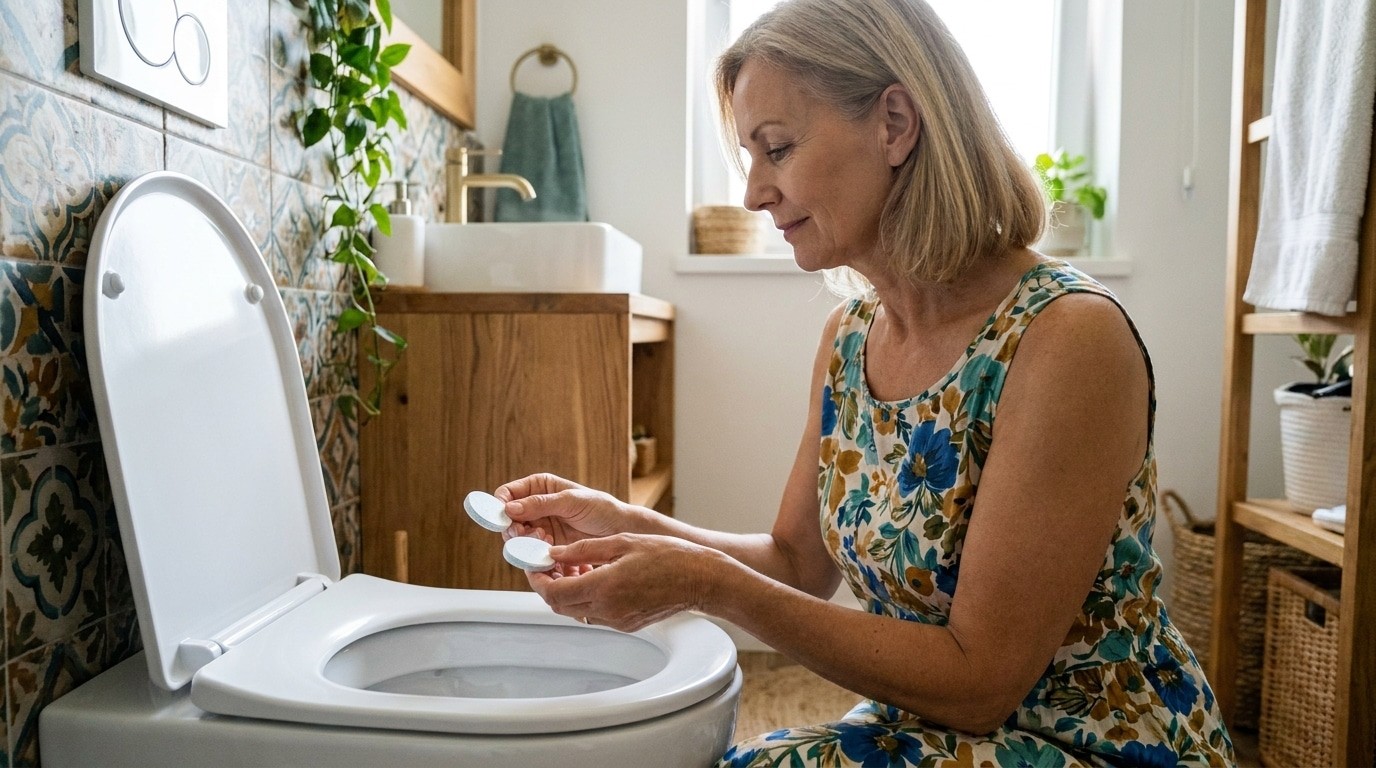
Vases look perfect until you tilt them and see that white film clinging to the glass. It happens in carafes too, and even in toilets you swear you cleaned last week. Summer makes it worse. Harder water and constant use mean those mineral deposits return faster. Most people reach for white vinegar and baking soda. It works, sort of. The smell is strong, the foam is messy, and thick old limescale often survives. There is a quieter way to do this.
Зміст
Why limescale is a chemical problem, not just dirt
Limescale is not normal grime. It is mineral residue, mostly calcium from hard water. When water evaporates, it leaves salts behind. They stick to glass, ceramic, and enamel. Vases are vulnerable because water sits there. The walls dry slowly. That creates a white veil or a crust at the bottom.
Toilets face a different rhythm. Repeated flushes mix hard water with other waste. A stubborn ring forms, sometimes turning brown. You clean it, and it comes back. That is why it feels like wasted effort. The issue is chemical. Mechanical scrubbing alone rarely fixes the root cause.
Vinegar has its fans. It is acidic and dissolves some deposits. But the smell can take over a small bathroom. Baking soda is versatile, but it is not a dedicated descaler. It helps with odor and light scrubbing. Mixing them creates foam, which is satisfying to watch. The actual cleaning power comes from acidity, which might not be enough for old buildup. You end up repeating the process and still seeing that white spot when light hits the glass.
How a denture cleaning tablet removes limescale
The idea sounds odd. A tablet made for dentures? Yes. It is designed to clean fragile surfaces without scratching. It works by releasing effervescence in water. That fizz helps dislodge residue and penetrate small textures. For light to moderate limescale, this is often enough to restore clarity. No abrasive brush. No harsh chemicals.
It is a progressive, controlled method. That matters for thin glass carafes or decorative vases. You are not trying to blast the deposit away. You are letting the solution work on it. The process is simple. A container, water, one tablet, and time. It avoids the pungent vinegar smell. The visual result on white veils is often quick.
This is not a replacement for professional stripping of thick, years-old limescale. But for routine maintenance and traces that ruin transparency, the effect is solid. You do not need vinegar or baking soda for this. The tablets are discreet, sold in supermarkets, and easy to keep in a cupboard.
How to clean vases and carafes with the tablet method
You want the solution to act without aggression. Adjust the setup based on the size of the container and how bad the limescale is.
- 1 effervescent denture tablet
- 1 to 2 liters of warm water (depending on capacity)
- 1 flexible bottle brush or soft pipe cleaner (optional)
Fill the vase or carafe with warm water. Add the tablet. Let it sit. For a light veil, 20 to 30 minutes might be enough. For a firmly attached deposit at the bottom, give it more time. Empty the water. Rinse thoroughly. Use a soft brush if needed, but do not scrub hard. The bath does the heavy lifting, not your arm.
Two details help. Warm water speeds up dissolution. Make sure the container is filled enough that the solution touches the whitened areas. You get back that transparency with almost no rubbing. The finish is cleaner than a quick rinse.
How to treat toilet limescale with this method
Toilets need a different approach. You need to treat the bowl, including the area under the water line. Drop the tablet directly into the bowl. Ideally, do this when the toilet is not in use for a while. Let it work. Flush and brush if a spot resists.
If the limescale ring is established, lower the water level first. Do a partial flush to expose the deposit. That allows the solution to act where the scale is visible. This method also refreshes the bowl. It limits odors and residue. The gesture stays simple and accessible. The result depends on how thick the limescale is, but recent marks often improve noticeably.
Why this method works every time: safety rules and limitations
You can’t just throw a tablet into anything. Porous surfaces are a hard no. Un-glazed artisanal ceramics, for example, will drink up the solution and potentially stain or degrade. Stick to glass and enameled ceramic. Even there, if the item is decorative or has sentimental value, test a hidden spot first. You don’t want a surprise reaction on your grandmother’s vase.
Never mix this with other cleaning products. Specifically, keep it away from bleach or strong acids. The mechanism relies on a single, controlled chemical action. Adding other agents disrupts that balance and can create dangerous fumes or ineffective sludge.
Thick, ancient limescale needs patience. Do not force it off with a scraper. Scratching the surface creates microscopic ridges that act as anchors for future calcium buildup. Repeat the soak. It is less work in the long run than fighting a scratched surface.
How to stop limescale from coming back
Prevention is cheaper than cure. Rinse and dry your carafe immediately after use. Do not let water sit in a vase for days. Check your toilet bowl regularly before that white ring becomes a permanent fixture.
In areas with very hard water, frequent light cleaning beats occasional heavy scrubbing. The goal is to break the cycle: deposit, dry, accumulate. A weekly quick wipe prevents the scale from hardening.
This makes the limescale removal tablet a smart backup solution. It slots into your routine without turning your bathroom into a chemistry lab. No strong vinegar smell hanging around for hours. Just a quick soak and a rinse.
Which everyday items benefit from a gentle soak?
Limescale is not a death sentence for your fixtures, even in the hard-to-reach corners. Using a tooth tablet method, vases, carafes, and toilets regain clarity without aggressive household cleaners or hours of scrubbing.
The process is simple. No fuming bottles. No wrist damage. Just time and a mild reaction.
Think about where else this might work. Teapots with stubborn stains? The inside of a coffee maker? These items often get neglected because the standard advice is “use a harsh acid.” A gentle, effervescent soak might be the better, safer option.


