


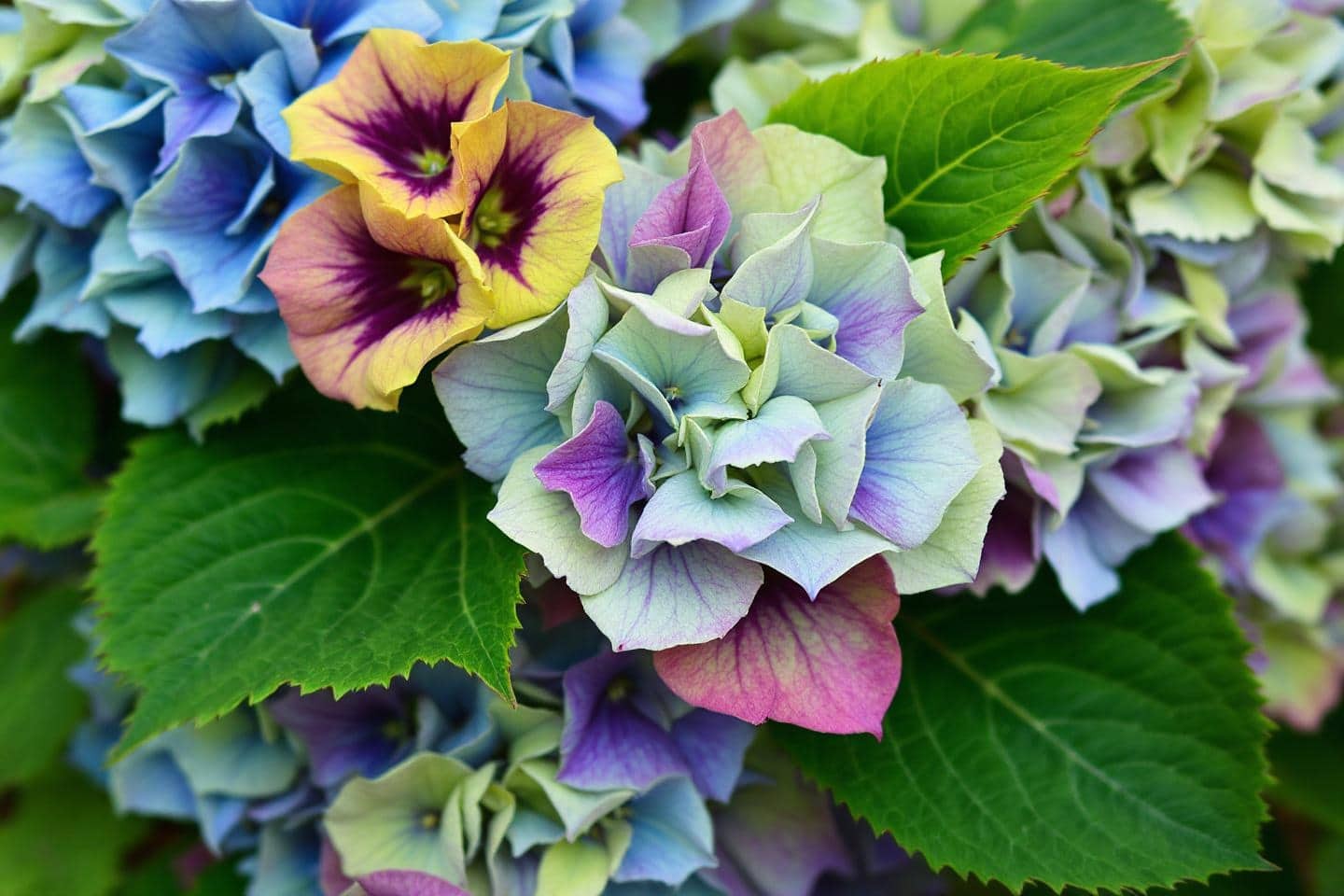
Most gardeners treat hydrangeas like fragile guests. You admire the big, heavy flower heads in autumn, maybe deadhead them gently, then leave them alone. The logic is simple enough. Less touching means less stress. Right? Wrong.
This hesitation is why so many hydrangea bushes turn into woody, leafless sticks with sparse flowers by year three. It’s not that they hate attention. They just need the right kind. A judicious prune changes everything. It stops the plant from becoming leggy. It forces new growth. It ensures next summer’s explosion of color isn’t just a hope, but a guarantee.
You might be worried about cutting off next year’s blooms. That fear is valid. But it’s also misplaced if you know which stems are old and which are young. Ignoring the shears doesn’t save the plant. It lets it rot from the inside out. Literally. Old wood traps moisture. Moisture brings fungus. Fungus kills vigor.
Зміст
Why gardeners are afraid to prune hydrangeas
There’s a myth that hydrangeas are “low maintenance” in the sense that they require zero care. They’re not. They’re low maintenance if you know what you’re doing. High maintenance if you guess.
The hesitation usually comes from three places. First, fear. You’re holding sharp metal near a plant you paid for. Second, ignorance of the biology. You don’t know if the flower buds are on old wood or new wood. Third, the aesthetic fear. You think cutting it back will make it look bare.
“The belief that less intervention equals better health is the single biggest reason hydrangeas fail.”
In reality, the “hands-off” approach leads to a bush that looks like a bird’s nest made of twigs. The center dies out. The outside gets thin. The flowers get smaller because the plant can’t feed them all. You end up with a sad, sprawling thing that blocks light and catches rain.
The hidden cost of not pruning
When you skip the prune, you’re letting the plant keep dead weight. Those brown, dried-out flower heads from last year? They’re not decorative. They’re magnets for moisture. In autumn and winter, when the air is wet, that trapped water leads to cryptogamic diseases. Basically, mold and mildew that eat the stems.
Then there’s the structural issue. Without pruning, the shrub grows outward. It becomes wide and shallow. No depth. No structure. The old stems, gray and dry, clog the middle. Sunlight can’t reach the center. Air doesn’t circulate. The plant suffocates itself.
You lose the show. The potential for dense, vibrant clusters is there, but it’s buried under layers of old, inefficient growth.
The fatal autumn mistake
Here’s where people really mess up. They see the dead flowers and think, “Time to cut it all back.”
Don’t.
Late autumn pruning is risky. If you cut deep before winter hits, you expose fresh wounds to freezing temperatures. The plant can’t seal them up because it’s dormant. Frost gets in. Bacteria get in. The stem dies.
Also, if you cut too hard in late autumn, you might accidentally remove buds that have already formed for next spring. Some hydrangeas set buds in summer. If you chop them off now, you’re looking at a blank season.
The “fatal autumn” isn’t the weather. It’s the impulse control.
When and how to prune without ruining next year’s flowers
The sweet spot for pruning is late winter. Think February or early March. The worst of the frost is gone. The sap hasn’t started moving yet, but it’s about to. The plant is waking up, but it’s not fully awake. This gives it time to heal before it pushes new leaves.
Here is the step-by-step method that actually works.
- Get the right tool. A sharp secateur. Not old gardening scissors. Clean it with alcohol. You don’t want to spread disease from one bush to another.
- Remove the dead flowers. Cut just above the first set of large, healthy buds. Don’t go lower than that. Those buds are your future flowers.
- Find the old wood. Look for stems that are gray, dry, or brittle. These are two-year-old or older stems. They’ve done their job. Cut them all the way down to the base. This opens up the center.
- Keep the strong stuff. Leave the thick, green-ish stems that have plump buds. These are the workhorses.
- Shape it. If the bush is too wide, trim the outer edges slightly to encourage inward growth.
This isn’t just cleanup. It’s regeneration. By removing the old, you force the plant to put energy into the new. The result? Thicker stems. More flowers. Better shape.
What to absolutely avoid
Pruning is easy to mess up. Here is how to ensure you don’t kill your hydrangeas.
- Don’t prune in spring. By April, the buds have swollen. If you cut now, you’re likely cutting off the flower buds. You’ll get leaves, sure, but no flowers.
- Don’t cut too short. If you leave only a few inches of stem, the plant will struggle to recover. It will take a year to rebuild its structure.
- Don’t leave the debris. Those old flower heads and cut stems? Throw them in the trash or compost bin (not the garden compost, where they might harbor pests). Leaving them on the ground invites disease.
- Don’t prune in wet weather. If it’s raining, wait. Wet wood spreads pathogens faster.
The difference is visible immediately
You don’t have to wait for summer to see if you did it right. Look at the bush in March.
A neglected bush looks tangled. You can’t see the sky through it. The stems are thin and weak.
A pruned bush looks clean. You can see the structure. The remaining stems are thick and sturdy. The buds are prominent. It looks ready to explode.
This isn’t just about looks. It’s about health. The airflow prevents disease. The sunlight reaches the center. The plant isn’t wasting energy on dead wood.
Why you should actually enjoy this
Pruning doesn’t have to be a chore. It’s the one time of year you can really look at your garden and decide how you want it to look. You’re not just cutting; you’re designing.
You’re removing the clutter. You’re making space for the new.
And the payoff? Next July, when the neighbors’ hydrangeas are sparse and sad, yours will be a wall of color. Big. Bold. Healthy.
It starts with a single cut. Just make sure it’s the right one.
Why deadheading actually buys you more blooms
Most people think the show is over once July hits. They’re wrong. If you keep your shears handy, you can force hydrangeas to put out fresh, bright flower heads even after a brutal heatwave or in those tricky, half-shaded corners of the yard. It’s not magic. It’s energy management.
When you cut off the spent blooms, you stop the plant from wasting calories trying to make seeds or sustain dead wood. That energy gets redirected. Into new growth. Into bigger, bolder flowers later in the season. It’s the difference between a tired, drooping shrub and a landscape piece that actually looks like it belongs there.
How to prune hydrangeas for late-season color
The goal isn’t just maintenance. It’s impact. A well-pruned hydrangea changes the whole look of a border. It stands out.
You don’t need fancy gear. Just a decent pair of bypass pruners and a bit of patience. Look for the dead flowers. Snip them off just above a set of healthy leaves or a bud node. Don’t be shy. The more you clean up, the more the plant wakes up.
The real payoff isn’t just flowers
There’s something else going on here. It’s not just about the petals.
Staring at your plants, figuring out what they need, teaches you how the rest of the yard works. You start noticing the slope of the lawn. The way the water runs off the terrace. Which hedges are choking the light and which ones need a drink.
It becomes intuitive. You learn the rhythm.
Understanding your plants gives you the power to design with efficiency.
It’s not just gardening. It’s spatial reasoning. You start seeing the garden as a system, not just a collection of pretty things. That mindset shifts how you approach borders, terraces, and even water-wise planting. You stop guessing. You start knowing.
The annual reset
So why wait?
The winter is coming. The garden is getting ready to sleep. This is the time to do the work. A little attention now means a knockout show next spring.
You can experiment. Try moving a massif. Tighten a border. See what happens when you prune a little harder or a little lighter. The shears are waiting. The plants are waiting.
Don’t let the season die quietly. Give them the cut they need. Watch what comes back.


