


It’s 7 a.m. You slide into the driver’s seat. The air bites through your coat. You turn the key. Suddenly, the view through your windshield vanishes. It’s like staring through a milk bottle. You’re blind.
This isn’t bad luck. It’s physics. And it happens every winter.
Most drivers spend the first five minutes of their commute scraping ice or waving a rag at the glass. It’s annoying. It’s slow. It’s dangerous. We all do it. But there is a better way. A way that doesn’t involve waiting for the defroster to do its slow, grinding work.
The solution isn’t magic. It’s mechanics. And maybe a little bit of chemistry.
Зміст
Why Your Glass Fogs Up When It’s Cold
Fog isn’t random. It’s condensation. Specifically, warm, wet air hitting a cold surface.
Here’s the setup: Your car interior is warm. You are breathing. Your clothes might be damp from snow or rain. Your body heat raises the humidity inside the cabin. Outside, the glass is near freezing.
When that warm, moist air touches the cold windshield, it can’t hold onto the water vapor. It crashes. It turns back into liquid droplets. Microscopic beads of water scatter light. You lose visibility.
This is why it’s worse in winter. The temperature gap is widest. The glass is coldest. The humidity is highest.
A dirty windshield makes it worse. Oils from the dashboard, smoke, and dust give the water something to stick to. A clean window sheds moisture faster. A clogged cabin air filter traps humidity. It recycles stale, wet air instead of bringing in fresh, dry air.
Understanding this helps. You aren’t fighting magic. You’re fighting thermodynamics.
The Garage Secrets They Never Tell You
Dealerships want you to buy new wipers. Mechanics want to sell you a new defroster nozzle. They rarely tell you the low-cost, high-impact fixes.
Here’s what works. Not because it’s trendy. Because it works.
1. The Shaving Cream Shield
This sounds like a myth. It’s not.
Shaving cream contains surfactants. These chemicals break surface tension. They spread the water droplets into an invisible, uniform film. Instead of beading up and blurring your vision, the moisture spreads out. Light passes through. You can see.
How to do it:
1. Clean your windshield inside and out. Use glass cleaner. Let it dry.
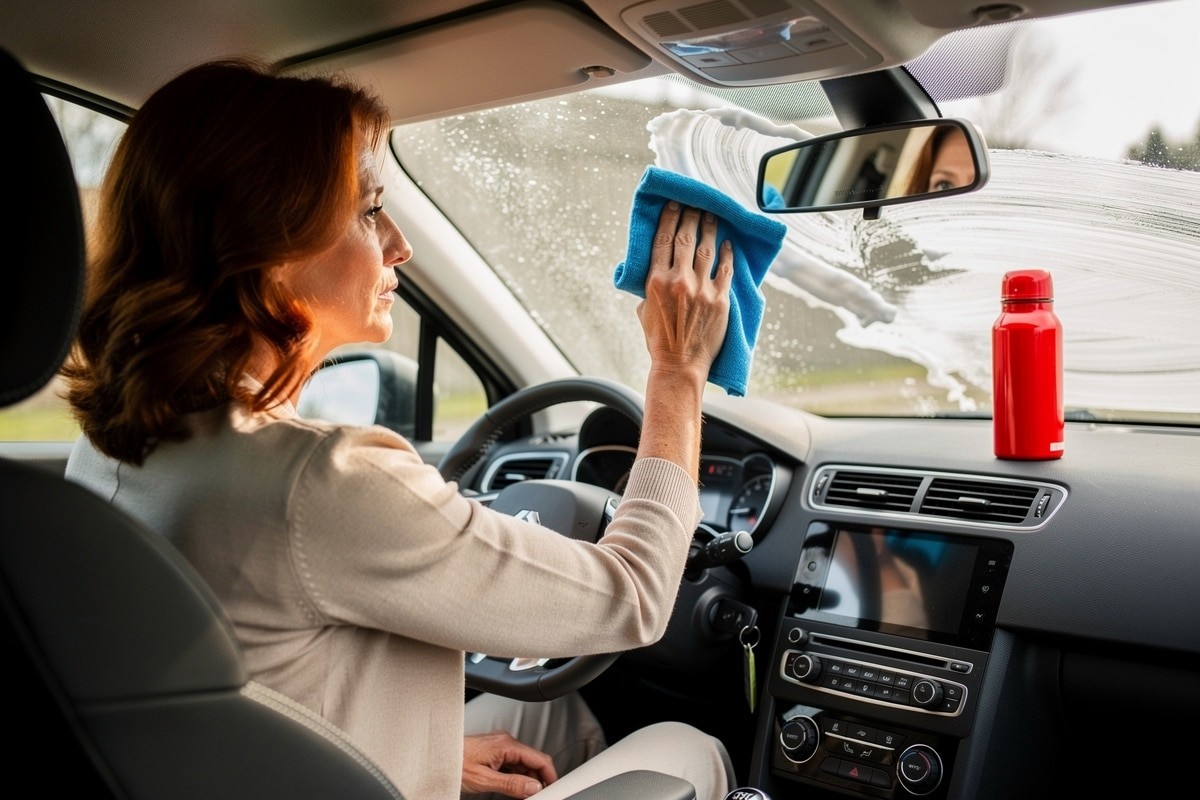
2. Apply a thin layer of standard white shaving cream to the interior glass.
3. Spread it evenly with a paper towel or cloth.
4. Buff it off with a clean, dry microfiber cloth. No streaks. No residue.
This layer lasts for weeks. It doesn’t harm the glass. It doesn’t fog up. It just stops the droplets from forming.
2. The Potato Trick (Yes, Really)
Old-school mechanics use this. It’s natural. It’s cheap.
Potatoes contain starches and sugars that act similarly to the surfactants in shaving cream. They leave a faint, hydrophobic coating.
**How to
You don’t need to spend a fortune on specialized anti-fog sprays to keep your windshield clear. Mechanics often hoard these tricks because they are cheap, effective, and use stuff you already own. The goal is simple: stop moisture from sticking to the glass. Here is how to do it without the chemical haze.
Shaving cream as a fog barrier
This sounds absurd. It works perfectly.
Take a small amount of standard shaving cream. Apply a thin layer to the inside of your windshield. Do not scrub it in like soap. Just spread it. Then, wipe it off completely with a dry microfiber cloth.
What you leave behind is an invisible film. It prevents condensation from forming. Your view stays transparent. The protection lasts for several days. It works on side mirrors too. It costs pennies.
Shaving cream leaves a hydrophobic layer that beads water away from the glass surface.
DIY moisture absorbers for your dashboard
Humidity is the enemy. You need to remove it from the air inside the cabin.
Take a clean sock. Fill it with cat litter (silica or clay works best) or plain white rice. Tie the end securely. Place it on your dashboard or under a seat. The litter absorbs excess moisture from the air. This reduces the condensation that leads to foggy windows.
You can change this homemade dehumidifier once a month during winter. It keeps the air dry. It is the same principle used in closets and cabinets. Just ensure the sock is secure so you do not spill the contents on your upholstery.
Cleaning agents that fight grease and grime
A dirty window fogs up faster. Grease and film give water droplets something to cling to.
Use white vinegar. Dilute it with water. Spray it on the glass. Wipe it dry with a microfiber cloth. This dissolves the oily residues that trap moisture.
Alternatively, use liquid dish soap. Apply a small amount with a damp cloth. Buff the glass until it shines. Do not rinse. The thin soap layer repels water droplets. You can also place a small open bowl of baking soda in the car. It absorbs humidity silently. Repeat this cleaning routine weekly in cold weather. The difference is noticeable.
Using your car’s climate control correctly
Most drivers forget this.
Turn on the air conditioning in winter. Yes, even when it is freezing outside. The AC compressor dries the air. It pulls moisture out of the cabin. This clears fog from the windshield and side windows much faster than heat alone.
Check your cabin air filter. A clogged filter traps moisture and odors. It stops fresh air from circulating. Replace it once a year. Ideally, do it before the first cold snap. Clean air means better visibility. It also means a healthier environment for you and your passengers.
A simple winter routine to clear fog
Consistency matters. Combine these steps to keep your windshield clear.
- Apply shaving cream to the interior glass monthly.
- Replace the rice or litter sock every four weeks.
- Clean the windshield with vinegar or dish soap weekly.
- Inspect the cabin air filter. Replace if dirty.
- Run the AC for a few minutes at startup to dry the air.
These habits add up. You gain visibility. You gain safety. You stop fighting the fog every morning.
The struggle against condensation ends when you treat it as maintenance, not a nuisance. Small actions yield big results. The road ahead stays clear.


