Dining rooms are tricky. Some feel timeless, inviting, and warm. Others scream “museum storage” or “1995 formal dinner.” The difference often isn’t about style trends. It’s about what you’re keeping. And honestly? You should probably ditch a lot of it.
If your space is choked with heavy fabrics, brown furniture that swallows the light, or melodramatic floral arrangements, it’s time to edit. Real design isn’t about filling every inch. It’s about letting the room breathe. Here’s what the pros want you to throw out for a more durable, modern aesthetic.
Зміст
Why You Need to Stop Buying Heavy Drapery
Look at your windows. Are they dressed? Or are they buried?
Susie Novak, founder of Susie Novak Interios, is direct about it. Heavy drapes are a problem. They block light. They feel fussy. They turn a dining room into a cave.
“The goal of any window treatments is to draw the eye to the window, not hide it behind layers of fabric,” Lauren Smith, founder of Styled Ivy Interios, adds.
The matching valance with the fringe? That’s dead. Long live sheers. Airy, light-filtering treatments keep the space feeling open. You want your guests to see the person across the table. You want natural light to hit the plates. Thick polyester curtains defeat that purpose instantly.
The Truth About Glass-Front Hutches
Storage is necessary. Hoarding isn’t.
Novak warns against the oversized wooden hutch with glass doors. Especially the ones filled with mismatched collectibles and wedding china you haven’t used since 1998. Smith puts it bluntly: it looks like a grandmother’s house.
And maybe that’s cozy for some. But for a timeless look? No.
Swap the glass-front monstrosity for something sleek. Clean lines. Closed storage or minimal open shelving. Hang a single, strong piece of art above it. Let the eye rest on the artwork, not the clutter inside.
Matching Furniture Sets Feel Stiff
Remember when every dining room had the same six chairs? The ones that clicked together in a box at the store?
That era is over. Eve Jean, founder of Eve Jean Interios, calls matching sets “one-dimensional.” They feel staged. Formal. Lifeless.
Instead, mix it up.
Find chairs that share a color palette or a wood tone but differ in shape. Maybe one is bentwood. Another is upholstered. This approach creates depth. It tells a story of curation, not consumption. It feels collected, not ordered. And let’s be real—hunting for unique pieces is more fun anyway.
Harsh Overhead Lighting Kills the Vibe
One bright bulb in the center of the ceiling is a mood killer.
Jean says a single fixture makes the space feel flat. Uninviting. It highlights flaws in the table setting and creates harsh shadows on faces.
Layer the light.
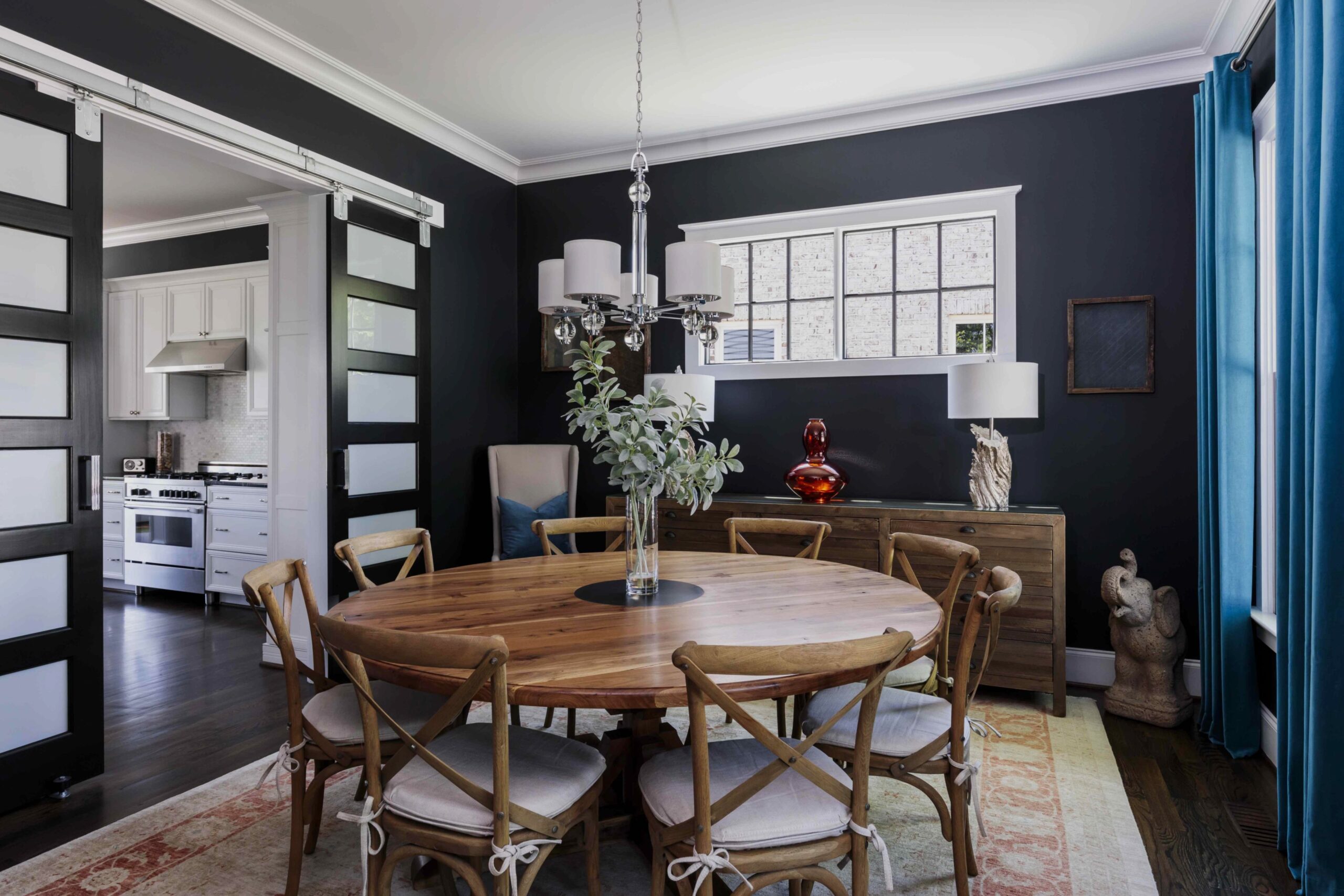
Use a chandelier for style. Add sconces on the walls for ambiance. Maybe a small lamp on a sideboard. Candlelight, if you’re feeling dramatic. Dimmers are your best friend. You want the room to shift from bright daytime practicality to intimate evening warmth without changing the bulbs.
Ditch the Oversized Floral Centerpieces
Your table is for eating. And talking.
Smith advises against brightly colored, oversized floral arrangements. They interrupt conversation. You can’t see your neighbor. They make the table feel crowded. They feel overly formal for a Tuesday night dinner.
Opt for restraint.
A few branches in a tall vase. A bowl of smooth stones. A single, low-profile arrangement of greenery. These accents add life without dominating the space. They let the food be the focus.
How to Make Your Dining Room Timeless
Timeless doesn’t mean boring. It means enduring. It means the design still works five years from now.
Start by subtracting. Remove the heavy curtains. Clear the hutch shelves. Mix the chairs. Soften the lights. Scale down the flowers.
What’s left is space. And space is where people actually want to gather.
What’s the one item in your dining room you’re keeping?