


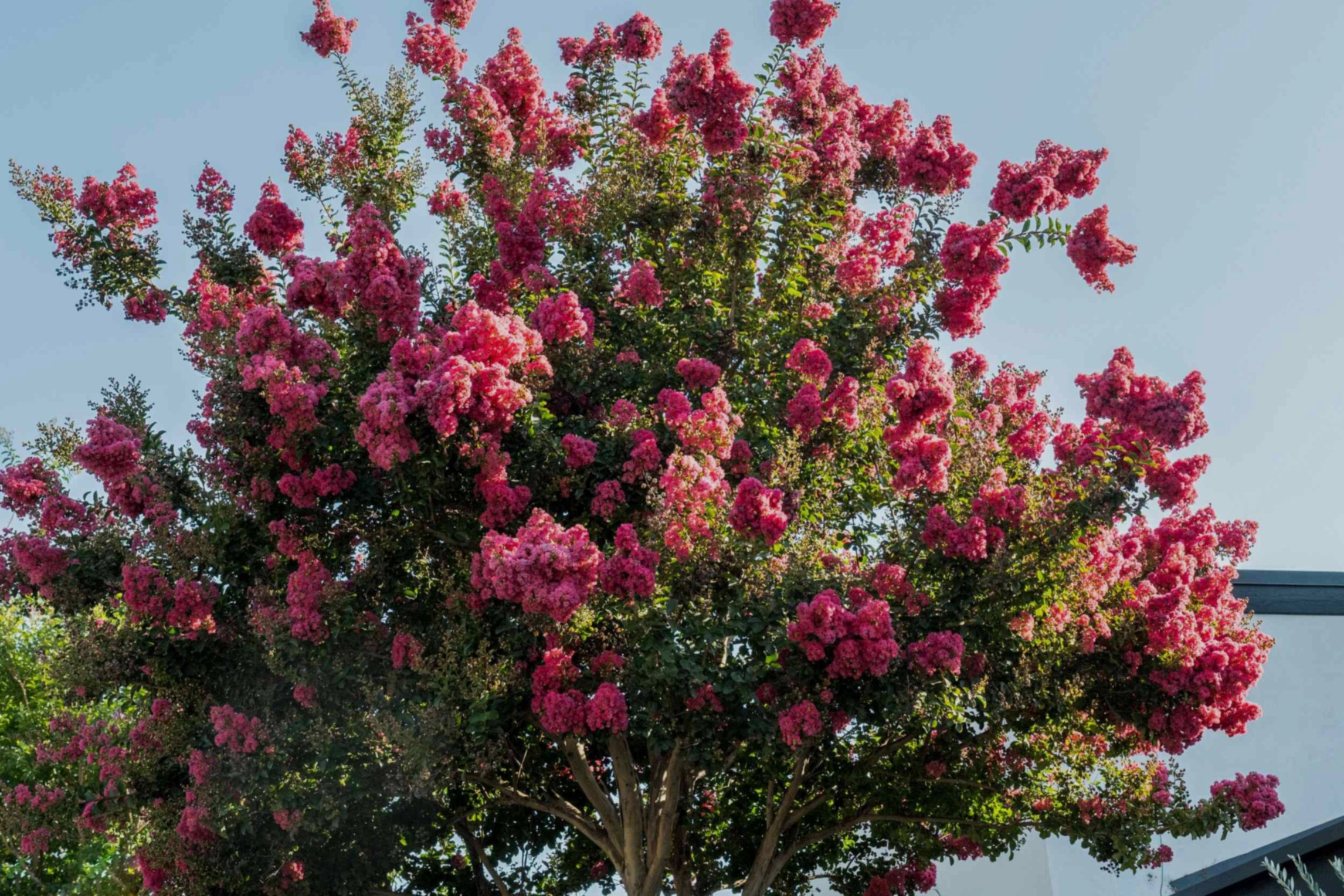
The crepe myrtle earns its nickname, the “lilac of the South,” for a reason. When it’s working, you get a showstopper display of crinkly, paper-thin flowers that last from late spring all the way into early fall. It’s hard not to feel like you’ve won at gardening when those blooms finally drop.
But then there are the years it doesn’t. The leaves come out fine. They get big. They stay green. But not a single blossom appears.
If your tree is playing hard to get, stop guessing. There is usually a logical culprit behind the lack of flowers. It’s rarely magic; it’s usually biology being ignored.
Here is exactly why your crepe myrtle is refusing to bloom and what to do to fix it.
Зміст
Pruning Timing and Technique
Crepe myrtles flower on “new wood.” That means next year’s blooms grow from branches produced this season. If you prune at the wrong time, you are literally cutting off the flowers before they have a chance to happen.
Many people treat crepe myrtles like hedges. They hack them down hard in winter. This is a mistake. You aren’t just shaping the plant; you are removing the buds for the next summer’s display.
Instead, wait until after the flowers fade in summer or late fall. Clean up dead branches then. Open up the center of the tree so air can move through and sunlight can reach the inner branches. This airflow does double duty. It keeps the tree healthy and it encourages the kind of vigorous new growth that leads to better blooms.
The Light Requirement
You cannot cheat the sun with a crepe myrtle.
These plants are full-sun obligates. They need between six to eight hours of direct, bright light every single day. If your tree is tucked under an overhang or shaded by a taller neighbor, it’s going to prioritize survival over reproduction. It will grow leaves. It won’t make flowers.
Check the light pattern in your yard. Is the tree getting that minimum window of direct sun? If not, the fix is drastic but effective. Move the tree.
Do this when the plant is dormant in winter. It’s not pretty to look at, but transplanting a shaded crepe myrtle into a sunny spot is one of the most reliable ways to force blooming.
Water Management Mistakes
Water stress kills blooms. And by water stress, I mean both too little and too much.
Underwatering sends the plant into panic mode. It drops leaves. It stops flowering. It focuses entirely on staying alive until the next rain. Overwatering is arguably worse because it leads to root rot. Once the roots are drowning, they can’t take up nutrients. The tree looks weak. No energy is left for flowers.
To fix this, look at your soil. If it drains poorly, amend it with compost before planting or around established trees. This improves drainage and reduces stress during droughts. Water consistently. Don’t let the soil bake until it’s cracked, and don’t let it sit in a puddle. Consistency is the key.
The Fertilizer Trap
There is a common misconception that fertilizing crepe myrtles heavily will guarantee blooms.
Wrong.
If you give your tree too much nitrogen, you get the opposite of what you want. You get a giant, green, leafy bush with no flowers. The plant thinks it’s in a vegetative growth phase, so it pumps out foliage and ignores the reproductive stage entirely.
Crepe myrtles do need phosphorus to flower. They also need other essential nutrients, but excess nitrogen is the enemy of blooming.
Keep it simple. Apply a well-balanced or low-nitro, slow-release fertilizer once a year. Do this in early spring. That single application usually provides enough support for a big display without tipping the biological scales toward excessive leaf production.
Pests and Disease Control
Sick plants don’t bloom. They prioritize defense.
Aphids are the usual suspects. They suck the sap. They weaken the tree. And they leave behind a sticky residue that leads to sooty mold. That black, powdery fungal growth covers the leaves, blocks sunlight, and makes the plant look terrible. Leaf spot fungi can do similar damage, creating unsightly splotches that further stress the tree.
You don’t need chemicals to fix most of this. A strong blast of water from a garden hose can knock aphids off the leaves and dislodge some fungal spores. Sometimes that’s all it takes.
For heavier infestations, an organic soap spray works. You can also plant companions that repel insects. Meanwhile, pruning dead branches helps improve airflow, which naturally suppresses fungal issues. Get the pests under control, and the blooming usually follows.
How to Ensure Your Crepe Myrtle Flowers Next Season
If you want a profusion of blooms, you have to balance the basics. Sun, water, and nutrients aren’t just checkboxes; they are a system. If one link breaks, the chain fails.
- Give it sun. Full exposure for at least six hours a day.
- Prune lightly. Wait until after flowering. Remove dead wood to open the center.
- Check the soil. Ensure drainage is good. Amend with compost if it’s clay-heavy.
- Water wisely. Consistent moisture without waterlogging.
- Fertilize sparingly. Low-nitrogen, once a year in spring.
- Watch for pests. Hose them off. Treat if necessary.
There is no magic spray that forces a crepe myrtle to bloom if its fundamental needs are being ignored. The tree knows what it needs. It’s just waiting for you to stop getting in its way.
Eventually, the buds will push through. The leaves will thin. And that paper-thin color will finally show up against the green.


