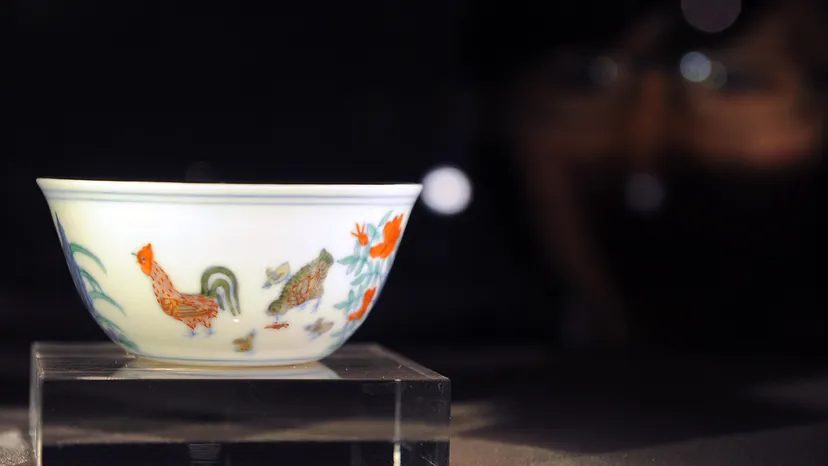
Imagine a bowl so precious that you wouldn’t dare put chicken soup in it. That’s the reality for the Meiyintang ‘Chicken Cup.’ It’s painted with roosters and chicks. It’s beautiful. But it sold for $36.05 million in 2014. That set a world auction record for Chinese porcelain. You can’t eat out of a $36 million bowl.
So why is it worth that much? To understand the price, you have to look at the material. Specifically, what is porcelain?
The cup comes from the Chenghua reign, between 1465 and 1487. That was a weird time. Porcelain quality hit its peak. Production quantities hit their lowest point. Europeans knew about this magic white stone. They just couldn’t figure out how to make it themselves.
Porcelain is delicate. It’s elegant. It’s translucent. But it’s also tough. It’s nearly impermeable. It keeps water out. So what sets it apart from other ceramics? Let’s break down the history and the science.
Зміст
What is porcelain, exactly?
Porcelain is a high-performance ceramic. It’s durable. It’s got serious specs. Giovanni Savorani runs Confindustria Ceramica, the Italian Association of Ceramics. He says the production process makes the difference.
“Porcelain is a type of ceramic material that is highly durable and has high-performance characteristics due to its production process.”
The recipe is simple in theory. Clay. Sand. Feldspar. Natural stuff. The exact mix varies. It depends on who’s making it and what they’re building.
For tableware, you want kaolin. It’s a white clay. Fine particles. You’ll see kaolin in tiles too. And in sanitary ware.
Here’s the kicker. Porcelain is a subset of ceramics. Both use clay. Both get fired in a kiln. But porcelain gets treated differently. The clay is denser. It fires longer. It fires hotter.
We’re talking up to 2,300 degrees Fahrenheit. That’s 1,260 degrees Celsius.
Those extreme temperatures change everything. They dictate the porosity of the surface. They give porcelain its water-resistant properties. They make it last.
Why choose porcelain for your home?
Some products could be made from cheaper stuff. But sanitary ceramic? That’s porcelain-glazed ceramic. It offers the best solution for modern life. Health. Well-being. Material science. It all comes together here.
There are real benefits to using porcelain in your renovation.
- Made from natural raw materials.
- Easy to clean.
- Resistant to mold.
- Stops bacterial growth.
- Durable. Water-resistant.
- Good for wet areas. High-traffic zones.
- Doesn’t emit volatile organic compounds (VOCs).
- Recyclable. Reusable.
“These are very important qualities… people are looking for peace of mind with materials that can help prevent the spread of bacteria within the home.”
Savorani makes a good point. We live in a germ-conscious world. You want materials that don’t hide bugs. Porcelain doesn’t hide bugs.
It’s not just about looks. It’s about function. It’s about not spending your weekends scrubbing grout or replacing rotting counters. You pick porcelain for the long haul.

Cutting the Hard Stuff
Slice thin porcelain? Sure. A standard blade handles it. But bump up the thickness to 0.4 inches (10 millimeters) or more? Forget it. You need a waterjet. That is the only way to get a clean line without turning the tile into dust.
A wet saw is the industry standard for a reason. Water keeps the blade from melting. You can try the score-and-snap method. It is cheap. It requires no electricity. But porcelain is dense. It fights back. Chips happen. Edges scorch. The risk is real.
How Large Tiles Are Made
Size dictates the process. If you are looking at tiles up to 4 by 4 feet (1.2 by 1.2 meters), special molds create the shape. Standard stuff.
Go bigger? The manufacturer switches to a compactor. This system presses a continuous layer of ceramic powder. It allows for massive slabs. Soft plastic forming exists too. A manual method. Good for variety. Not for mass production of giant sheets.
The Price of Durability
You will not pay $36 million for a porcelain tile. That was the Meiyintang “Chicken Cup.” But expect to pay more than ceramic. Home Advisor says porcelain tile costs up to 60 percent more.
It is a hard surface. It demands professional handling. Installation is not a weekend DIY project for beginners. Mistakes are expensive.
Yet, the value holds. Savorani points out the trade-off. Low maintenance. Eco-friendly. Long-lasting. It beats most alternatives on durability.
What Is Actually in Your Plates?
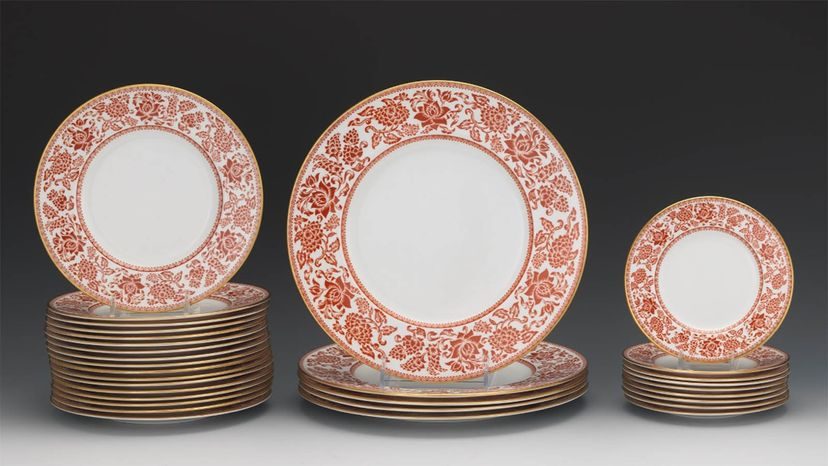
In the tableware world, “china” and “porcelain” mean the same thing. The term “china” came from the origin. China made it. We named it after the place.
Bone china is different. It originated in England. One ingredient sets it apart. Actual bone ash from farm animals. Noritake notes this addition. It strengthens the ceramic. It gives that milky white color.
The firing process differs too. Bone china fires at lower temperatures. Easier to manufacture. Weaker as a result. Regular porcelain takes the heat. It gets harder.
Which matters more? The look or the strength? Most homeowners want both. You rarely get both in the same package without paying a premium.
The Chemistry of the Kiln
You can’t just mix clay and fire it and expect a Ming vase. The difference between a sturdy tea cup and a fragile souvenir comes down to what’s inside the mix and how hot you burn it.
Hard paste porcelain is the real deal. It’s a specific blend of kaolin and petuntse (that’s feldspar, basically). You fire this stuff between 1400°C and 1450°C. That’s hot. Enough to cause thorough vitrification. The result? It’s strong. It’s white. If you tap it, it rings. It’s translucent if you hold it up to the light.
Soft paste porcelain is different. It’s a European invention. Guys in Europe wanted the Chinese look but didn’t have the right dirt. So they mixed kaolin with frit —glassy stuff. They fired it lower, around 1100°C to 1200°C. It didn’t vitrify as well. The texture is softer. It chips easier. It’s less clear. The surface feels a bit grainier.
It’s not just about aesthetics. It’s about physics. Hard paste stands up to thermal shock better. Soft paste is more forgiving during the forming process but less durable in the long run.
From Tang Dynasty to Meissen
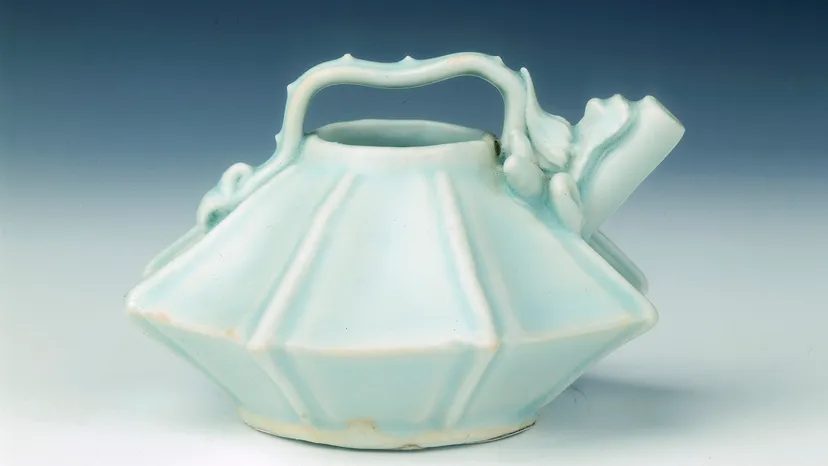
China started making primitive porcelain around 2,000 years ago. Tang dynasty era. But the stuff we recognize? That came later.
Yuan dynasty (1279 to 1368). That’s when the formula clicked. That’s what Marco Polo saw. He brought a jar back to Europe in the 14th century. Gray-green. Small. He called it porcellana. Named it after the cowry shell because of the shape. Not the material. The shape.
Trade routes opened up in the 16th century. European markets went crazy for Chinese imports. But they couldn’t make it. For centuries. They guessed wrong. Eggshells. Underground juices. Exposure to elements for 40 years.
Nope.
It took an alchemist to crack the code. Johann Friedrich Böttger. 18th century. He found the formula. Founded the Meissen factory in Germany. That started the European porcelain industry.
Then in the 1770s, they found kaolin in Cornwall, England. British manufacturing took off. Since Böttger, things have changed. Or have they?
“Constant technological innovation in the ceramic industry — that has largely been led by Italy — led to the birth of modern porcelain tile and a new family of products in the early 1990s,” Savorani says.
But look closer at the process. The materials? Mostly the same. The way it’s made? Not much has shifted since the 18th century. Modern porcelain tile is newer. But the core chemistry remains rooted in those ancient Chinese discoveries.
Modern Porcelain Applications and Sustainability
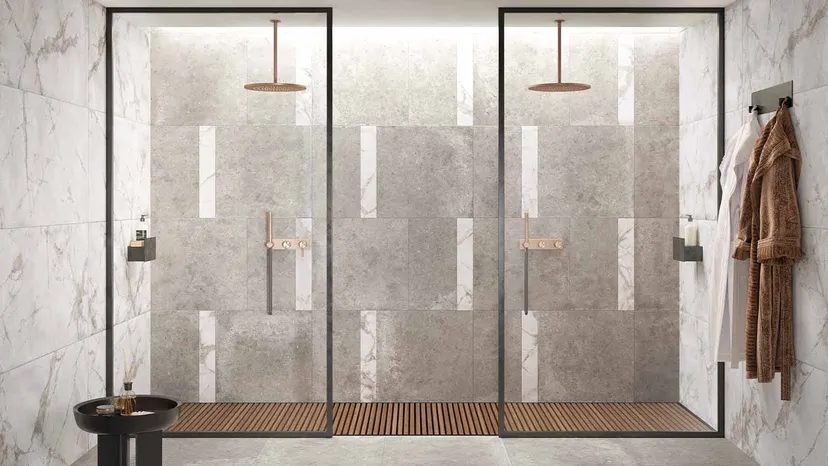
Porcelain isn’t just for Tang dynasty teacups anymore. We’ve moved past the era where it was strictly a material for statues or decorative plates. Today, you’ll find it lining floors, walls, and even the exteriors of buildings. It’s durable enough for high-traffic areas. The material has expanded into jewelry and specialized laboratory equipment. Bathroom fixtures rely on it heavily. Washbasins, tubs, and toilets all benefit from the resilience of porcelain enamel.
Timothy Schroeder, president and CEO of Duravit USA, points out that ceramics have a rich history across industries. He notes in an email that it is a natural material. Production and its lifecycle are sustainable. It is highly durable. It offers hygiene solutions that fit modern lifestyles.
The Shift Toward Large-Format Tiles
The biggest change in the industry lies in technology and sustainability. Manufacturers are pushing boundaries with new equipment. Porcelain ceramic tiles are now available in massive sizes. You can find slabs as large as 5.25 by 10.5 feet [1.6 to 3.2 meters]. Thicknesses range from 3 to 30 mm [0.11 to 1.1 inches].
These large-format options reduce grout lines. They create cleaner visual spaces. For homeowners, this means fewer seams to clean. It also means more consistent aesthetics across large surfaces.
Factory Efficiency and Waste Reduction
Companies are improving factory efficiency. They are reusing 100 percent of wastewater. A large portion of waste material is also recycled. This reduces the environmental impact of production. It lowers the cost of raw materials. It makes the final product more sustainable.
For DIYers, this shift doesn’t change how you install the tile. It does, however, mean better availability of eco-friendly options. You can support manufacturers who prioritize sustainability. It’s a small step, but it matters.
Upcycling Old Fixtures
Old porcelain isn’t wasted. A New York City Department of Environmental Protection project crushed 6,500 old bathroom fixtures. They mixed the material with oyster and clam shells. This created an artificial receiver reef for breeding oysters in Jamaica Bay.
It’s a clever way to repurpose broken or removed fixtures. It turns waste into habitat. You might not be building a reef at home. But you can consider upcycling or donating old porcelain items. It keeps them out of landfills. It gives them a second life.
This article was updated in conjunction with AI technology, then fact-checked and edited by a HowStuffWorks editor.