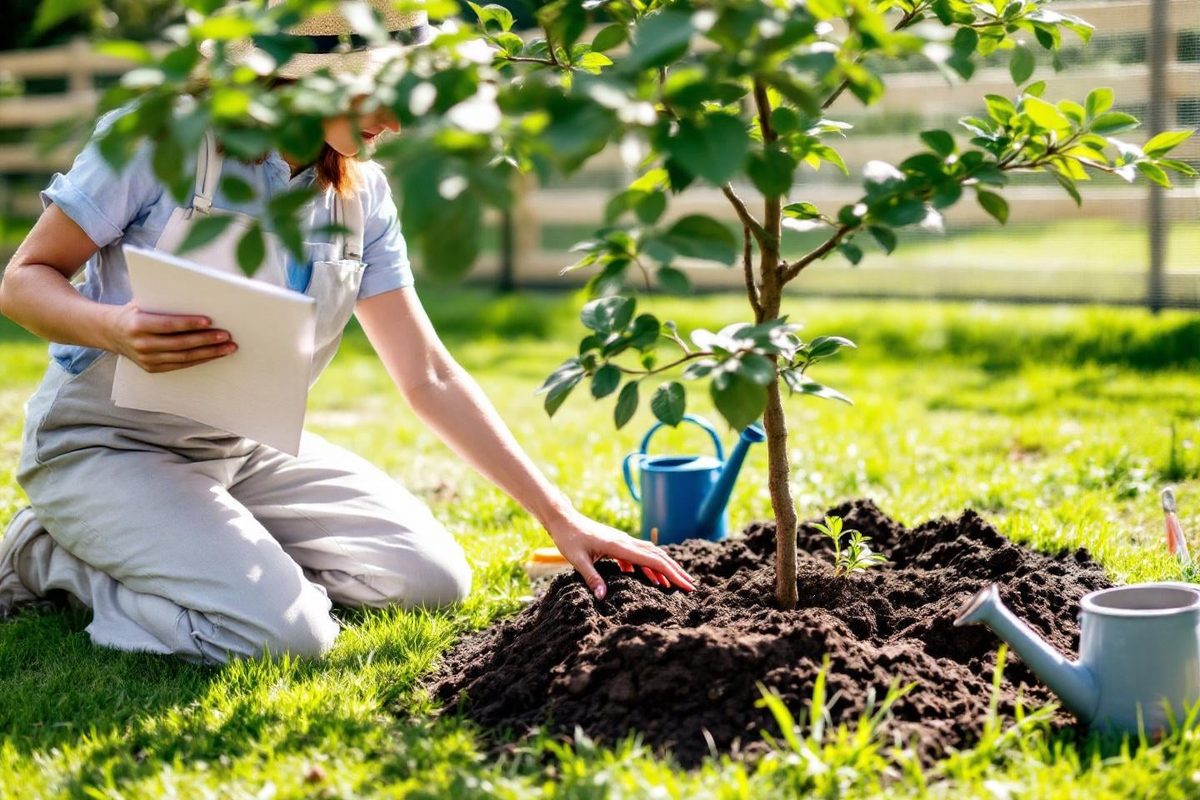
You picture it clearly. A summer of sun. Pears heavy on the branches. Cherries staining your fingers. It feels like the natural next step for any garden with enough space. But planting fruit trees in the heat of July or August is risky business. It’s not impossible, but it is unforgiving. Too many rookies plant a sapling, water it once, and hope for the best. The tree dies in three weeks. You’ve wasted money. You’ve wasted time. The difference between a thriving orchard and a graveyard of dead wood comes down to details ignored in the excitement of buying plants.
Before you break ground this season, pause. Check these three essentials. Get them right, and your investment pays dividends for decades. Get them wrong, and you’re just supporting weeds.
Зміст
Finding the Right Spot: Light, Wind, and Location
Location is not a suggestion. It is a biological requirement. Your tree’s future productivity depends entirely on where you put it today. This isn’t just about where it fits in your landscape design. It’s about survival.
Sunlight and Wind: The Non-Negotiables
Most fruit trees need a minimum of six hours of direct sunlight daily. This drives photosynthesis. It fuels the growth. It ensures robust flowering. Without it, you get weak wood and little fruit. Simple.
But sunlight isn’t the only enemy. Wind is.
Young branches are tender. Leaves have thin cuticles. A relentless summer breeze can desiccate them rapidly. If the wind dries out the leaves faster than the roots can replace the moisture, the tree shuts down. It stops growing. It suffers heat stress.
How to protect young trees from wind damage:
- Plant near a south-facing wall or hedge. This provides a windbreak. It also reflects heat.
- In coastal regions like Brittany, plant on the leeward side of a talus or small grove.
- Avoid open, exposed ridges. The wind here accelerates evaporation.
Creating a Microclimate in Tough Spots
Your garden might not be ideal. Maybe it’s sloped. Maybe it’s surrounded by pavement that radiates heat. You can still fix this.
You don’t need a vast estate to create a favorable microclimate. You just need strategy.
- Install physical barriers. Wooden palisades or trellises covered in climbing plants break the wind’s force without blocking light.
- Use companion planting. Planting elderberry or currant bushes near your fruit trees acts as a natural windbreak. It also attracts pollinators.
- Avoid wall proximity. Don’t plant too close to a north-facing wall. But be careful with south-facing walls in summer. They bake. If the sun hits the wall at high intensity, it can scorch young leaves. Leave a foot of clearance.
In urban gardens, finding a sunny corner protected from the dominant wind direction is key. Adjust your planting position. Use raised beds to improve drainage if the soil is heavy. Small changes yield big results.
The Soil: The Secret to Successful Transplanting
The soil is where the action happens. Most amateur gardeners look at the foliage. They ignore the roots. This is a mistake.
Summer planting means the tree is under stress. It doesn’t have a full root system to draw water from deep down. The soil must be ready to support it immediately.
Preparing the Soil Before Planting
You cannot just dig a hole and drop the tree in. Not in summer.
- Amend the soil. Mix in compost. Not too much nitrogen, which pushes soft, water-thirsty growth. Focus on organic matter for water retention.
- Check drainage. Waterlogged roots rot quickly in hot weather. If the water sits, the tree dies.
- Loosen the surrounding earth. Roots need to spread out. Compacted soil restricts them.
Choosing the Right Rootstock
Not all trees are created equal. The rootstock determines how well the tree adapts to your soil type.
- Clonal rootstocks offer uniformity and early fruiting.
- Seed-grown rootstocks produce vigorous, long-lived trees but take longer to fruit.
Ask your nursery about the rootstock. Match it to your soil conditions. Clay? Go for a tolerant variety. Sandy soil? You need something with good drought resistance.
Water Management: The Summer Survival Kit
Water is the most critical factor in summer planting. It’s not a
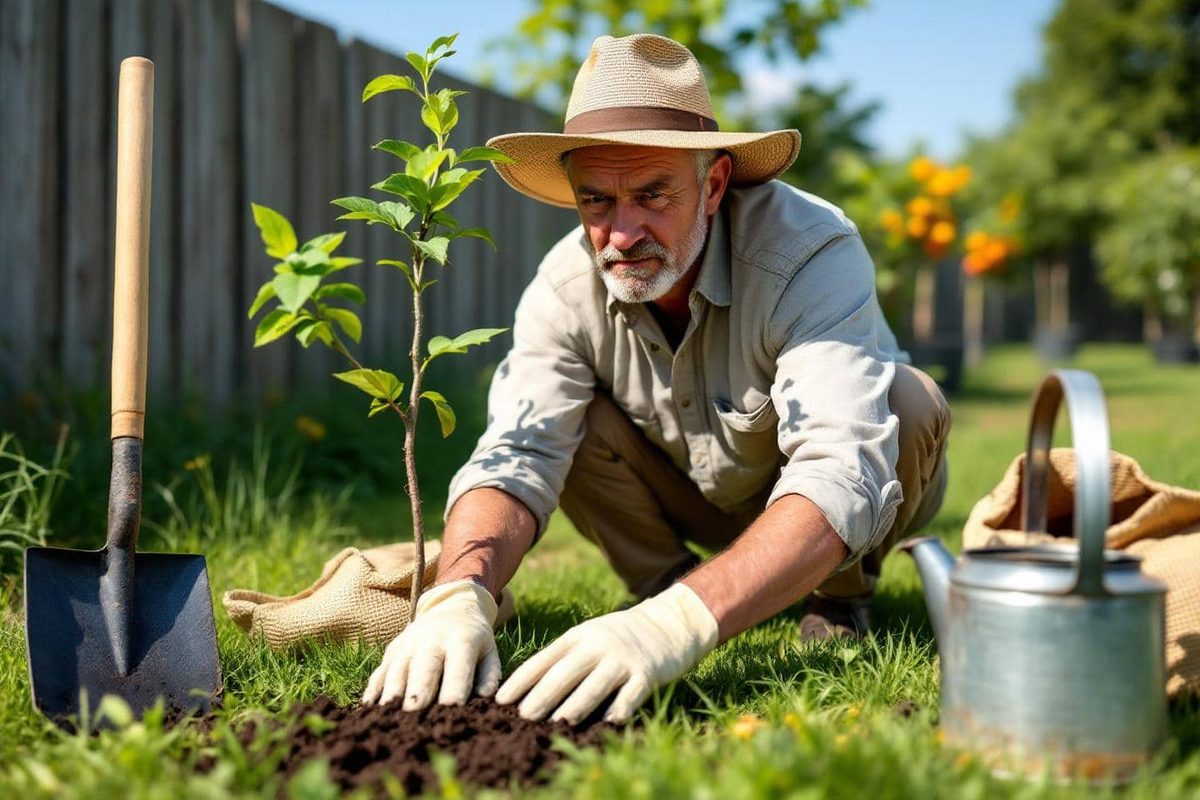
The ground you plant into dictates whether your tree survives the summer heat or becomes fertilizer for the worms. A solid root system needs three things: moisture retention without drowning, physical stability, and nutrients. If the soil is wrong, the tree fails. Period.
Check drainage and skip the gravel trap
Enthusiasm often overrides logic. We see it all the time. Homeowners dig a hole, drop in a tree, and walk away. But poor drainage is a silent killer. It causes root asphyxiation. Disease follows. Rot sets in.
Here is the test. Dig your hole. Fill it with water. Wait two hours. If the water is still sitting there, your drainage is inadequate. This isn’t just theory. In regions like the Val-de-Loire, heavy clay soils literally hold onto trees rather than letting them grow.
Many gardeners try to fix this by adding a layer of gravel or broken tiles at the bottom. Stop. This creates a perched water table. The water sits on top of the gravel layer, saturating the roots above it. It does not help.
Instead, build a mound. Plant the tree on elevated soil. This protects the root crown during heavy summer rains. The statistics are clear: less than 30% of fruit trees survive in waterlogged soil. Prevention is cheaper than replacement.
Fix your soil structure with organic matter
Bad soil is not a life sentence. You can improve it. You need organic amendments. Use mature compost. Use well-decomposed manure. Add coarse sand to clay soils to break up the density.
In the Southwest of France, there is a tradition of preparing the soil weeks in advance. Why? It allows the amendments to integrate. It aerates the ground. It ensures the nutrients are ready when the roots arrive.
Check your pH levels. A simple strip test costs pennies and saves you thousands in dead trees. Cherries prefer slightly acidic soil. Pears tolerate alkaline, calcareous ground better. Match your amendment to the tree’s needs. Patience here yields vigorous growth later.
Smart watering strategies for summer planting
Summer planting is risky. Heat is high. Evaporation is faster. If you don’t control the water, the young roots dry out before they can grab hold of the surrounding earth.
The initial soak: saturate the root ball
The first watering must be heavy. Give the tree 10 to 20 liters of water immediately after planting. You need to wet the entire root ball. This pushes out air pockets. It creates direct contact between roots and soil.
Historically, French rural communities celebrated this moment. They called it a “water festival” for the young trees. It wasn’t just superstition. It was recognition that proper hydration at this stage sets the trajectory for the next decade.
Even hardy varieties struggle if the water doesn’t penetrate deep. Surface sprinkling is useless. You need deep saturation.
Managing thirst during heatwaves
vigilance is required all summer long. Young trees have high water demands. Heatwaves are becoming more frequent and severe across France.
Mulch is your best friend. Apply a thick layer of straw, wood chips, or dried grass clippings. This blocks evaporation. It keeps the root zone cool.
Water deeply once a week. About 15 liters per session. Do not spray lightly every day. Shallow watering encourages weak, shallow roots. Deep watering forces roots downward.
Time your irrigation. Early morning or late evening is best. Avoid midday watering. You lose too much to evaporation.
Use a simple trick. Place a saucer or small basin under each tree. If water pools and stays for days, you are overwatering. If it dries out in an hour, you might need more frequency. Observation beats guesswork every time.
Three golden rules for vigorous fruit trees
- Drainage is non-negotiable. If water sits for more than two hours, fix the soil structure before planting. Mounding is better than adding gravel.
- Feed before you plant. Enrich the soil with organic matter weeks in advance. Check the pH. Match the soil to the specific tree variety.
- Water deeply, not often. Saturate the root ball initially. Maintain deep weekly watering with mulch during summer. Monitor for signs of saturation or drought using simple tools like basins.
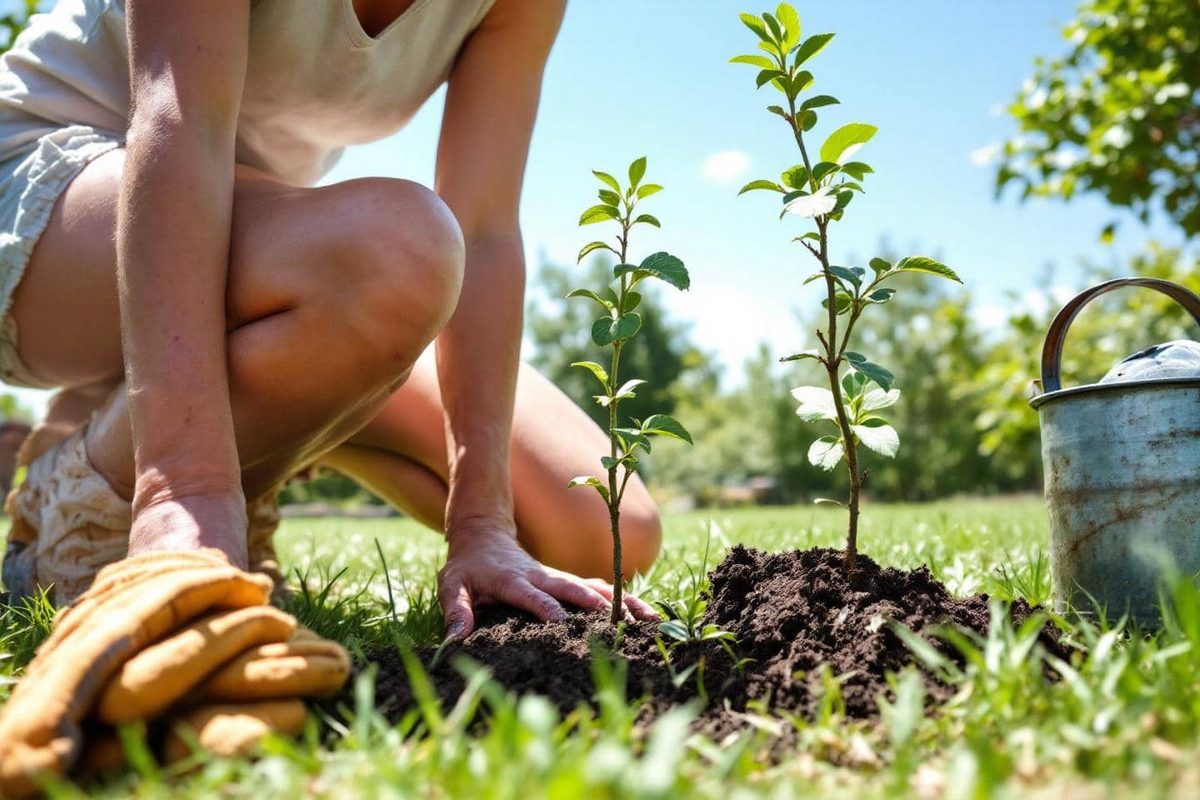
Planting fruit trees: soil, sun, and survival
You think sticking a sapling in the ground is straightforward. It’s not. It’s a slow burn of observation and technique that plays out over months, not minutes. If you skip the prep, the tree pays the price later.
The first mistake most people make? Putting it anywhere convenient. Don’t do that. You need a spot that gets full light. And shelter. Big winds snap young trunks and dry out leaves before they have a chance to strengthen. Move the garden layout if you have to. The energy you put into positioning at the start dictates how vigorous the tree will be for its entire life. It’s a long-term bet.
Next, look at the dirt. If it’s heavy clay or pure sand, fix it before the roots settle. Drainage is non-negotiable. Stagnant water rots roots faster than drought kills them. Dig it up. Amend it with organic matter. Make it loose. A healthy soil structure is the only thing standing between your tree and a slow decline.
Then there’s the water. This is where most new plantings fail. You can’t just water lightly and hope for the best. The first few weeks demand abundance. Keep the root ball soaked. Anticipate summer heat. Even if the forecast looks okay, the roots are tiny and fragile right now. They can’t reach deep yet. You have to bridge that gap with consistent moisture.
Seasonal care tricks that actually work
Once it’s in the ground, the work doesn’t stop. It just changes pace.
Winter is for pruning. Cut away anything dead or damaged. Don’t rush this. Wait until late winter when you can clearly see the structure.
Autumn is for feeding. Add compost around the base. Let nature break it down slowly over the cold months.
And keep an eye out for pests. You don’t always need sprays.
Consider planting lavender near your fruit trees. It repels aphids naturally.
It’s about working with the ecosystem, not against it. Install a titmouse box. Those birds eat caterpillars that would otherwise strip your leaves bare.
Regional tricks matter too. Sprinkle coffee grounds at the base of young trees. It keeps ants away. Ants protect aphids, so fewer ants means fewer aphids. It’s a simple chain reaction.
Why your orchard choices matter now
Choosing the right spot isn’t just about aesthetics. It’s about biology.
- Light exposure: Determines sugar content in fruit and overall tree health.
- Soil quality: Affects nutrient uptake and disease resistance.
- Water management: Prevents shock during the critical establishment phase.
We often treat gardening as a hobby. It’s more than that. It’s a commitment to the cycle. You’re planting something that will outlive you. You’re creating a habitat.
With biodiversity under pressure, why not make your yard part of the solution? A sustainable orchard isn’t just about yield. It’s about resilience. It’s about connecting with the seasons in a way that feels intentional, not accidental.
The work is hard. The waiting is longer. But the first bite from a tree you planted yourself? That’s not just fruit. That’s history.