Concrete is durable, but it is not indestructible. Cracks are inevitable, caused by temperature fluctuations, soil settling, or heavy loads. However, ignoring these fissures can lead to structural damage, water infiltration, and safety hazards. The key to effective repair lies in matching the product to the specific type of crack and the surface it inhabits.
Not all sealants are created equal. Some are designed for high-traffic driveways, while others are better suited for interior basement walls or decorative masonry. Choosing the wrong product can result in a repair that fails within months. Below, we break down the top ten concrete crack fillers, categorized by their best use cases to help you select the right tool for the job.
Зміст
🚗 Best for Driveways & High-Traffic Areas
These products are engineered to withstand vehicle weight, oil resistance, and extreme weather conditions. They are primarily designed for horizontal surfaces only.
1. Sikaflex Pro Self-Leveling Sealant
Best For: Horizontal surfaces exposed to weather extremes; freshly poured concrete.
This polyurethane sealant is our top recommendation for cracks between 0.25 and 1.5 inches wide and up to 0.5 inches deep. Its primary advantage is flexibility; once cured, it remains slightly elastic, allowing it to move with the concrete as temperatures change or the ground settles.
- Application: Requires a caulk gun. It is self-leveling, meaning it smooths itself out without scraping.
- Cure Time: Dries to the touch in 1–2 hours; full cure takes 3–5 days.
- Key Feature: Can be applied to damp concrete (if water has stopped for an hour) and freshly poured concrete (after 24 hours).
- Limitation: Strictly for horizontal surfaces. It will run on slopes or vertical walls.
2. Quikrete Commercial-Grade Self-Leveling Sealant
Best For: High-traffic horizontal surfaces; quick fixes for 1-inch cracks.
Similar to Sikaflex, this commercial-grade option is ideal for driveways, patios, and garage floors. It fills cracks up to 1 inch wide and is flexible enough to resist shrinking or cracking due to temperature shifts.
- Application: Caulk gun application. Ensure the crack is dry and debris-free.
- Cure Time: Sets in a few hours, but requires up to 7 days for a full cure.
- Key Feature: Self-leveling eliminates the need for manual smoothing.
- Limitation: Not waterproof (only weather-resistant) and cannot be used on sloped or vertical surfaces.
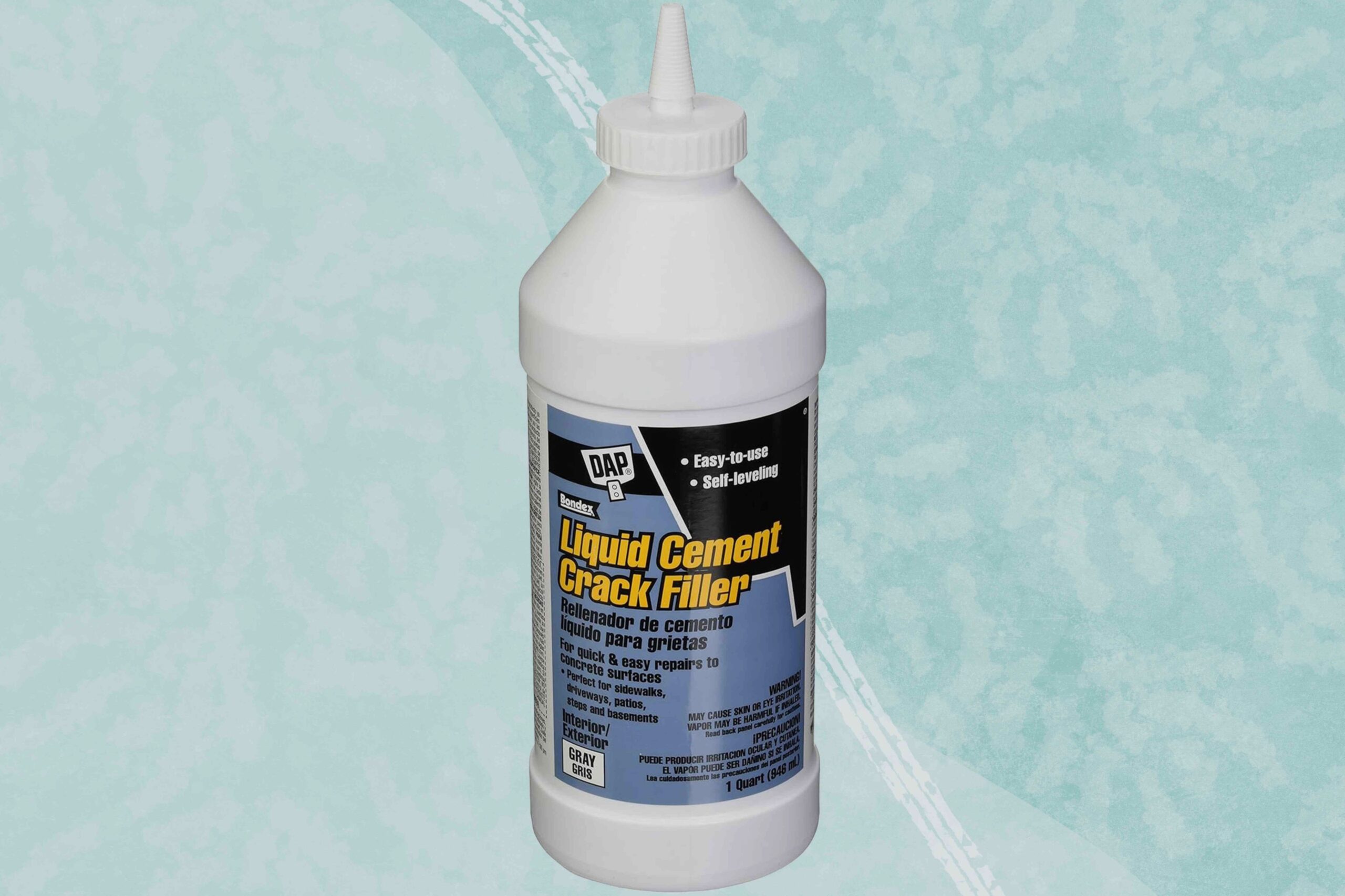
3. DAP Latex-Based Crack Filler
Best For: Homeowners seeking a fast-drying, tool-free solution for driveways.
For those who want to avoid caulk guns, this latex-based filler comes in a convenient squeeze bottle. It is designed for cracks no wider than 0.5 inches and dries remarkably fast.
- Application: Squeeze bottle. Shake well before use; warming the bottle in water for 10 minutes improves flow.
- Cure Time: Ready for foot and vehicle traffic in just 30–45 minutes.
- Key Feature: No tools required. Dries to a concrete-gray color that can be painted.
- Limitation: Thickens in cold weather. Not suitable for vertical surfaces or slopes.
4. Sika High-Performance Polyurethane Sealant
Best For: Watertight seals on high-traffic horizontal surfaces.
This is a robust option for cracks up to 1 inch wide. Like other self-leveling sealers, it requires a caulk gun but offers a slightly textured finish that blends well with surrounding concrete.
- Application: Caulk gun. Self-leveling.
- Cure Time: Dry in hours; full cure in 3–5 days.
- Key Feature: Extremely durable against temperature extremes (-40°F to 170°F). Forms a watertight seal.
- Limitation: Horizontal use only.
5. Pli-Stix Thermoplastic Rubber Rope
Best For: Asphalt and concrete driveways requiring a permanent, melted-in seal.
This contractor-grade product is unique: it is a rope of thermoplastic rubber that you pack into cracks (0.25–0.5 inches wide) and then melt with a heat gun or propane torch. It fuses with the surface, creating a flexible, watertight bond.
- Application: Pack into crack, then apply direct heat until liquefied (20–30 seconds).
- Cure Time: Drivable in 20 minutes.
- Key Feature: Permanent and flexible. Also works on asphalt.
- Limitation: Only available in black, which may show on light concrete. Requires heat equipment.
🏠 Best for Foundations, Basements & Vertical Surfaces
Water intrusion in basements and foundations can lead to mold, structural rot, and radon gas entry. These products are designed to be injected or applied to vertical surfaces and must be strictly waterproof.
6. RadonSeal Comprehensive Injection Kit
Best For: Foundation and basement wall cracks requiring a waterproof, permanent seal.
This kit is designed for DIYers tackling cracks up to 0.5 inches thick in foundations. It uses a polyurethane foam that expands forcefully to fill every void in the crack, sealing out water, dust, insects, and radon gas.
- Application: Complex injection process using ports and a caulk gun. Includes cleaning supplies and mixing components.
- Cure Time: Water-resistant in hours; fully cured in 24 hours.
- Key Feature: Comprehensive kit with everything needed except a caulk gun. Handles active leaks.
- Limitation: More complex application process than simple sealants.
7. Silicone-Based Sealant (General Purpose)
Best For: Small cracks in concrete and stucco; gaps between different materials.
Silicone sealants offer excellent adhesion and flexibility, making them ideal for sealing gaps between concrete floors and stucco walls, or for small cracks (up to 0.5 inches ) in both vertical and horizontal surfaces.
- Application: Caulk gun. Smooth with a damp putty knife.
- Cure Time: Paintable after 2 hours; full cure takes up to 2 weeks.
- Key Feature: Resists stains from gasoline, oil, and salt. Waterproof.
- Limitation: Not for continuous submerged use (e.g., pool bottoms). Long full cure time.
🧱 Best for Masonry, Stairs & Interior Patches
These products are often acrylic or epoxy-based, designed for aesthetic repairs on walls, stairs, and indoor surfaces where vehicle traffic is not a factor.
8. Acrylic-Based Patching Compound
Best For: Indoor/outdoor masonry, brick, and concrete stairs.
This ready-to-use acrylic filler is perfect for spalling, peeling, or flaking concrete. It provides a textured finish that blends seamlessly with mortar and brick.
- Application: Trowel or putty knife. Apply in layers no thicker than 0.25 inches for deep cracks.
- Cure Time: 24 hours between layers.
- Key Feature: Paintable. Cleans up with water if applied quickly.
- Limitation: Not for driveways or areas with vehicle traffic. Not waterproof.
9. 100% Epoxy Concrete Repair Patch
Best For: High-durability repairs in high-traffic or weather-exposed areas.
Once cured, this epoxy patch is stronger than concrete itself. It is ideal for tough cracks or holes up to 0.5 inches deep in garage floors, foundations, and walkways.
- Application: Two-part mix (base + activator). Apply with trowel within 30 minutes of mixing.
- Cure Time: Cures in 8 hours at 70°F/50% humidity.
- Key Feature: Impervious to vehicle traffic and weather. Will not shrink or crack.
- Limitation: Requires mixing. Higher cost. Fast working time requires efficiency.
💡 Critical Selection Guide: How to Choose?
Selecting the right filler depends on three main factors: Orientation, Traffic, and Moisture.
-
Horizontal vs. Vertical:
- Self-leveling sealants (Sikaflex, Quikrete, DAP) rely on gravity to smooth out. They must be used on flat, horizontal surfaces. Using them on walls or stairs will cause them to slump and fail.
- Non-leveling sealants (Silicone, Epoxy, Acrylic Patch) can be applied to vertical surfaces like foundation walls or stair risers.
-
Vehicle Traffic:
- If cars or heavy equipment will drive over the repair, choose Epoxy, Pli-Stix, or Polyurethane sealants.
- Avoid Acrylic patches and Latex fillers on driveways, as they will wear away quickly.
-
Waterproofing Needs:
- For basement leaks or foundation cracks, use Injection Kits (RadonSeal) or Silicone/Polyurethane sealants that remain flexible and watertight.
- For cosmetic repairs on dry interior walls, Acrylic patches are sufficient and easier to apply.
Pro Tip: Regardless of the product, preparation is 90% of the success. Cracks must be clean, dry (unless specified otherwise), and free of loose debris before application. Failure to clean the crack will result in poor adhesion and eventual failure of the repair.
Conclusion
Effective concrete repair is less about buying the most expensive product and more about choosing the right chemistry for the environment. For driveways, flexible polyurethane or thermoplastic options provide durability against traffic and weather. For foundations, waterproof injection kits or silicone sealants prevent moisture damage. By matching the product to the surface orientation and traffic load, homeowners can ensure repairs that last for years rather than months.