It is twenty degrees outside. You turn up the thermostat. The fan spins up with a healthy hum. But the air coming out of the vents? Still cold.
This is the specific anxiety of owning an electric furnace. Unlike gas units that hiss, pop, and smell like propane, electric furnaces are quiet. They are simple. And when they fail, they fail silently. You get no error codes flashing on a digital display. You just get a cold house and a confusingly silent machine.
Before you call a pro and hand over $200 for a diagnostic visit, you need to run through the checklist. Most electric furnace issues are mundane. A tripped breaker. A dirty filter. A loose wire.
Here is how to troubleshoot an electric furnace without getting shocked or making the problem worse.
Зміст
The Safety First Rule
Electric furnaces run on 240 volts. That is not a suggestion. That is a serious shock hazard.
If you are not comfortable opening the panels, stop reading. Call an HVAC technician.
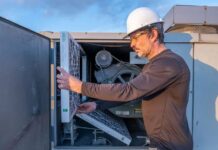
If you are handy, you must disconnect power before touching anything inside the unit. Locate the furnace disconnect switch—it looks like a heavy-duty light switch mounted on the wall next to the unit—or flip the corresponding breaker in your main electrical panel.
Verify power is off by trying to turn the furnace on. If it doesn’t respond, you are safe to proceed.
1. Check the Thermostat and Settings
It sounds obvious. But so many “broken” furnaces are just confused.
Is the thermostat set to “Heat”? Is the temperature set higher than the current room temperature? If you have a smart thermostat, check the battery. A dying battery can cause erratic behavior.
If the thermostat is fine, listen closely when you turn it up. Do you hear the contactor click? If you hear a click but no heat, the electrical signal is working. The issue is downstream. If you hear nothing, the problem might be the thermostat or the low-voltage wiring.
2. Inspect the Air Filter
A clogged air filter doesn’t just reduce efficiency. It can cause the furnace to overheat and trigger the high-limit safety switch.
When the high-limit switch trips, it cuts power to the heating elements to prevent a fire. The fan might still run to cool the unit down, but no heat will be produced.
Pull out your filter. If it is gray and fuzzy, replace it. Use a high-quality pleated filter, not the cheap fiberglass ones if you can afford better. Check it every 1-3 months. A clean filter is the cheapest maintenance you can do.
3. Test the Circuit Breaker
Electric furnaces draw a lot of power. The breaker can trip due to a surge, age, or a failing component.
Go to your main panel. Find the breaker labeled “Furnace.” It is likely a double-pole breaker, meaning it flips both sides at once.
If it is in the middle (tripped) position, flip it fully to “Off,” then back to “On.”
If it trips again immediately, do not keep resetting it. You have a short circuit or a failing component inside. Call an electrician or HVAC pro.
If the breaker stays on, proceed to