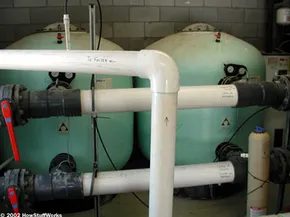
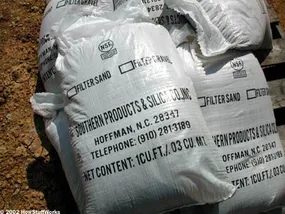
Most above-ground and in-ground pools rely on high-rate sand filters to keep the water clear. These aren’t your average playground sand setups. The tanks—usually fiberglass, concrete, or metal—are packed with special-grade sand. This isn’t beach sand. It’s angular. Squarish. That shape matters because it creates more surface area for trapping gunk.
Here is how the system actually works when the pump is running.
Dirty pool water enters through an inlet pipe. It hits a water distribution head buried deep inside the tank. From there, gravity does the heavy lifting. The water drips down through that thick bed of sand. The tiny gaps between those squarish grains catch the dirt, leaves, and debris floating in the water. Clean water sinks to the bottom, passes through a pick-up unit, and exits the filter to return to your pool.
Simple, right? Until it isn’t.
Зміст
Why Pressure Gauges Matter for Your Pool
The problem with filtering is that the filter itself gets clogged. Over time, the trapped debris slows the water flow. If the flow slows, pressure builds up.
You have two gauges on your filter system. One at the inlet. One at the outlet. Watch them.
If the inlet pressure shoots up while the outlet pressure stays low, you have a blockage. The sand is full. It can’t hold any more dirt. The water can’t get through. This is the moment you know it is time to backwash the filter.
Backwashing is not optional. If you ignore it, your pump works harder, your filter breaks, and your pool water turns green.
How to Backwash a Sand Filter Step-by-Step
You need to reverse the flow. Instead of water dripping down through the sand, you push it up. This dislodges the trapped debris.
Here is the mechanical reality of what you are doing.
- Stop the pump. Always start here. Never turn valves on a running pump.
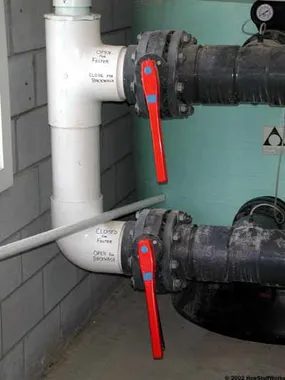
- Adjust the multiport valve. This is the heart of the operation. You will see several positions on the dial.
- Set to “Backwash.” This position closes the return pipe to the pool. It opens the waste line to the sewer or drainage area.
- Connect the plumbing. The valve internally routes the pump’s output to the bottom of the filter (inlet) and sends the dirty water out the top (outlet).
- Start the pump. Water rushes upward through the sand bed. It agitates the grains. The dirt lifts off and floats up with the water.
- Watch the sight glass. If your filter has one, look at it. You will see dirty water. Keep it running until the water runs clear.
- Rinse. Switch the valve to “Rinse.” Run the pump for 30 seconds. This settles the sand bed and prevents dirty water from rushing back into your pool during the next cycle.
- Return to “Filter.” Close the waste line. Open the return line. Restart the pump.
The pressure gauge should drop back to normal levels—usually 10-15 psi higher than your
Beyond the Sand: DE and Cartridge Alternatives
Not every system relies on sand. Some setups swap the standard bed for a diatomaceous earth filter or a cartridge filter. The mechanics differ, but the goal remains the same: trap the grime before it circulates back into the pool.
In a diatomaceous earth (DE) system, water forces its way through grids coated in a fine powder. This powder comes from diatoms—the chemically inert, fossilized remains of tiny sea organisms. The result is a microscopic sieve that catches particles sand might miss.
Cartridge filters take a different approach. Here, dirty water passes through material made of polyester cloth or corrugated paper. Maintenance is less tedious than backwashing. You simply pull the filter out. Hose it off. The debris washes away. However, these cartridges have a lifespan. After a few years—or up to eight—you discard the old unit and install a fresh one.
The Volume Reality
Laws in most regions are strict. They dictate that the entire volume of pool water must pass through the filter within a set window. That window typically ranges from 30 minutes to six hours.
Consider the complex pool mentioned earlier. It holds 167,000 gallons (630,000 liters). To stay compliant, the pump must cycle that entire volume every six hours. It’s not a passive process. It’s a massive, continuous mechanical effort.
Replenishing the Losses
The pump and filter loop doesn’t operate in a closed circle. It connects to a well or the municipal water line. This link allows fresh water to enter the system. Why? Because water disappears.
Evaporation takes its share. Backwashing consumes gallons during the cleaning cycle. Then there’s “splash-out.” This is the water that lands on the deck or clings to swimmers’ skin and suits. When the heat rises and the crowd thickens, losses accelerate. That same 167,000-gallon pool could shed 300 gallons (1,100 liters) or more in a single day.
The next hurdle is managing the chemistry.