You probably don’t think about the waste leaving your shower or toilet unless the toilet backs up or the garden starts to smell. The plumbing stays hidden under the grass. But that hidden system needs attention if you want to avoid thousands of dollars in emergency repairs.
More than 60 million Americans rely on septic systems. About one-third of all new development uses them. The design is straightforward. All drains in the home converge to a single pipe that leads to the septic tank buried outside.
When wastewater from your toilet, shower, sinks, and washing machine leaves your house, it is combined. It hits the septic tank and begins to separate. The heaviest particulate matter sinks to the bottom. This layer is called sludge. At the top, fats, oils, and proteins form a floating scum layer. In the middle, a comparatively clear liquid layer sits. This is the effluent, or gray water. Together, these components are called septage.
Only the effluent leaves the tank. It flows into the drain field, also called the leach field. This is a set of pipes with holes drilled into them. They release the effluent below ground, but above the water table. Good soil filters the liquid effectively. Plenty of organic material remains in the effluent. It acts as fertilizer. This is why the drain field often has the healthiest grass in your yard.
Simple design. But it requires monitoring. Once a problem becomes obvious, simple solutions are gone. Fixing big septic issues often requires thousands of dollars in parts and labor. A little maintenance goes a long way.
Зміст
Why regular pumping saves you money
Sludge and scum build up over time. If you ignore it, the liquid layer gets squeezed out or the solids clog the drain field. The system fails. Pumping removes the accumulated solids before they cause damage.
How often? It depends on tank size, household size, and usage. A general rule is every three to five years. Heavy water use or a small tank means more frequent pumping. Monitor the tank level if you can. Look at the sludge and scum layers. If sludge exceeds one-third of the tank depth, pump it. If scum is too thick, pump it.
What happens during a pump-out
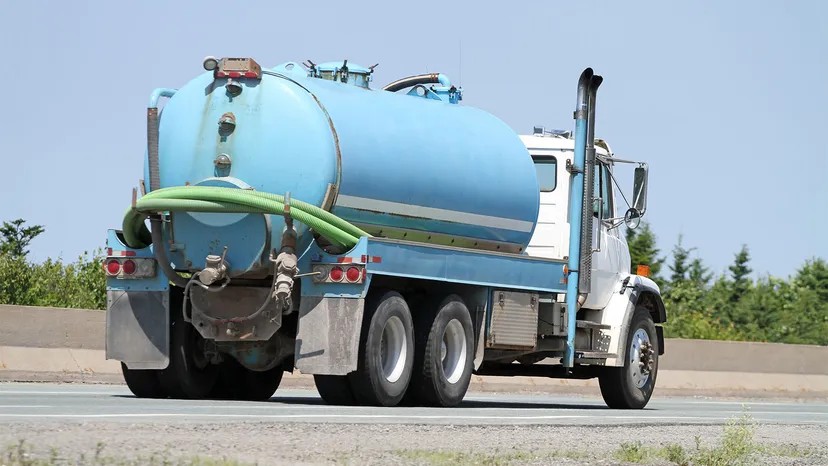
A vacuum truck pulls up to your property. It connects a hose to the tank’s access port. The truck sucks out the liquid and solids. The waste goes to a treatment facility or landfill. You are not supposed to flush toilets, run showers, or use washing machines during the pump-out. Keep water usage to a minimum.
After pumping, the tank is empty. Fresh wastewater flows in and begins separating again. The process repeats.
Tools and safety for checking your tank
You can peek into the tank before calling a pro. Wear rubber gloves and eye protection. Use a flashlight. Check the sludge level. Use a ruler or a stick with tape markings. Measure from the top of the liquid to the sludge surface. Measure the scum layer thickness.
Do not look too long. Sewer gas is a hazard. Keep your face away from the opening.
Signs you need to pump sooner
- Sludge is above the inlet pipe
- Scum is too thick
- Grass in the drain field is unusually lush or brown
- Slow drains in the house
- Sewer odors near the tank or drain field
- Water backup in toilets or showers
If you see these, schedule a pump
How to Tell When It Is Time to Pump Your Septic Tank
You can’t look through the concrete and see the gunk. No amount of sniffing or guessing will tell you where the sludge line sits. The EPA has specific thresholds for when a tank needs attention: pump when the scum layer drops within 6 inches (15.2 cm) of the bottom of the outlet tee, or when the sludge layer rises within 12 inches (30.4 cm) of that same point. Remember, the outlet tee is the pipe carrying water out of the tank, not the inlet bringing it in.
Since you have no way to measure this without opening the tank, the EPA suggests professional inspections every one to three years. Most systems need a full pump every three to five years. The inspection isn’t just about checking the tank. A technician will verify that pipes are clear, mechanisms work, and the drain field is percolating effluent correctly.
Why You Should Skip the “Magic” Septic Additives
There is a whole industry selling chemicals to extend the time between pumps. The pitch is simple: these additives act like tiny Pac-Men, chomping up the solid waste in your tank.
It is mostly a waste of money. Your tank already has a robust microbial ecosystem breaking down waste. Adding more bacteria or enzymes is often redundant. Worse, these chemicals can disrupt the natural balance. They may kill the specific enzymes needed to process waste effectively, throwing the entire system out of whack. The EPA advises against using these products as a substitute for regular inspections and pumping. Play it safe. Stick to the schedule.
What Happens If You Ignore the Pumping Schedule
Overflow is not a distant risk. It is a mechanical failure waiting to happen. When the tank overflows, waste has two places to go: back into your house or out into the drain field.
- Back into the house: Toilets and floor drains will back up. The waste that belongs underground ends up in your bathroom.
- Into the drain field: Unprocessed waste floods the soil.
When the drain field floods, the damage spreads. Surface water seeps up, creating a flooded yard and runoff into nearby creeks or rivers. Underground, the saturated soil can contaminate groundwater. This is not just a mess. It is a public health hazard. Contaminated water carries bacteria and diseases, including hepatitis.
Where Does the Pumped Waste Go?
Once the sludge and scum are sucked out of your tank, the job is not done. The material is still a hazard. It requires specific disposal methods.
“From Yuck to Eureka” is not just a catchy phrase. It describes the regulated process of transporting septage to approved facilities where it is treated and disposed of safely.
You cannot dump it in a ditch. You cannot pipe it into a storm drain. Licensed operators transport the waste to treatment plants or designated landfills. The process ensures the pathogens are neutralized before the material is finally disposed of.
What happens to the waste after the truck pulls away
Once the pump truck hits the release valve, the tank is empty. That simple step triggers a chain reaction regulated by federal and state environmental laws. In the past, waste companies could just bury the sludge in unlined dump sites. Those sites are now banned because they pose health hazards, though many still require active remediation.
Today, the destination of your septage is strictly controlled. It usually ends up in one of three places:
1. Municipal wastewater treatment plants: The sludge is mixed with city sewage and processed.
2. Independent for-profit treatment facilities: Specialized companies handle the digestion and treatment of septage.
3. Approved landfills: Guidelines here are strict, and these sites are often few and far between.
The most controversial use? Agriculture. If you don’t see a “USDA Organic” label on your produce, there is a chance it was grown using treated septage as fertilizer. Commercial farmers often support this practice. It solves the municipality’s disposal problem and provides cheap nitrogen-rich nutrients for crops. When applied to cropland with good soil structure and a low water table, the earth filters the waste similarly to how a home drain field works. However, health professionals and environmental scientists argue that using biosolids threatens farmland and poses significant health risks. The debate is far from settled.
Turning sewage sludge into electricity
There is a newer, less controversial path for septage. Methane, a byproduct of sewage breakdown, is a fuel source. Treatment plants now use on-site fuel cells to convert this methane into electricity. Unlike combustion, this process generates little to no pollution. It turns a disposal headache into a power source for homes.
Practical septic tank maintenance and cost breakdown
You don’t need to worry about the end-of-life destination of your sludge, but you do need to manage the tank itself. Here is the practical reality of keeping your system running.
How often should you pump?
Every three to five years. Have a professional inspect the tank once every three years to catch issues before they become backups.
Can you DIY this?
No. Attempting to pump your own tank can result in hefty fines. Licensed companies handle this work because it involves hazardous waste regulations.
Do additives help?
No. Studies show that chemical and biological additives are actually detrimental to septic systems. Skip the products.
Signs you need cleaning:
– Blocked drains.
– Unpleasant odors lingering around the tank or drain field.
– It has been three to five years since the last pump.
What does it cost?
Expect to pay around $375 on average. Specifics depend on tank size:
– 3,000-liter tank: ~$250.
– 5,000-liter tank: ~$1,000.
The price gap is significant. If you have a larger system, budget accordingly. Ignoring the schedule saves money in the short term but risks expensive overflow repairs.