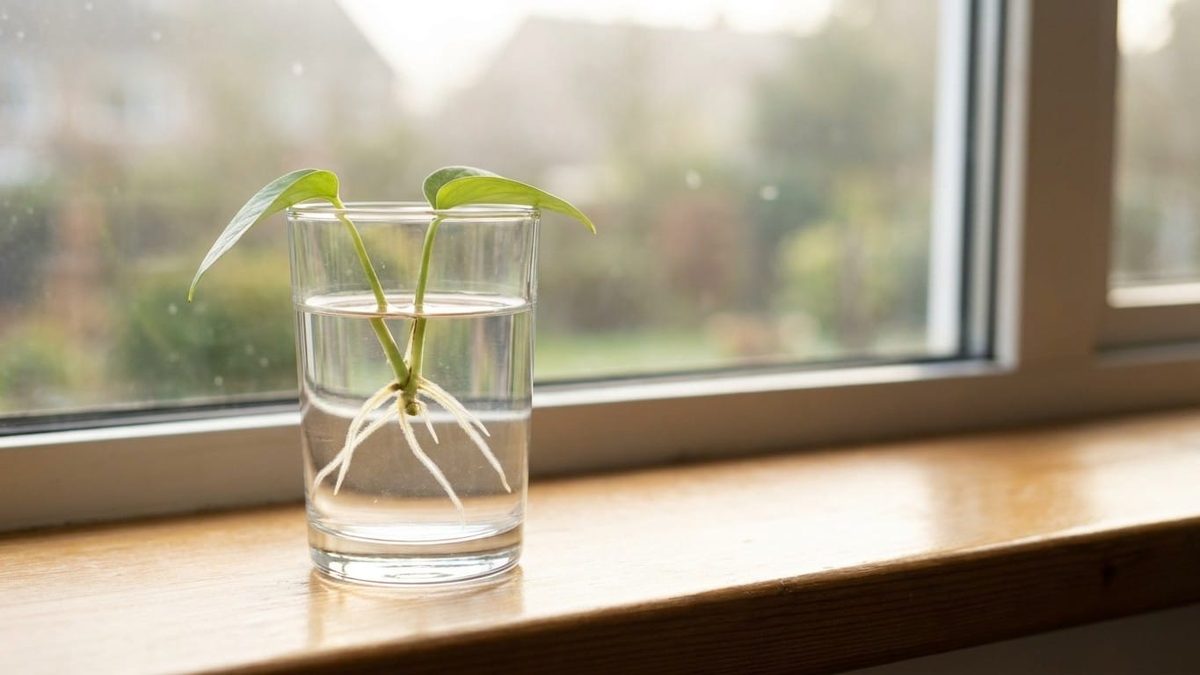
No soil. No money. Just a glass of water and a pair of scissors.
My neighbor showed me this trick last May. Since then, I haven’t spent a cent on houseplants. Cutting pothos in water is one of the oldest, most underappreciated gardening hacks. It works. It’s cheap. And if you time it right, it’s nearly foolproof.
But there is a catch. Getting roots to grow is easy. Keeping them alive after you move them to dirt is where most people fail.
Зміст
Why May Changes Everything
Spring is the sweet spot for herbaceous cuttings. Sap is rising. Days are getting longer. Temperatures are mild.
Timing is the difference between a thriving plant and a brown stick. Each species has a specific window. Miss it, and your success rate drops by half.
May is that peak window. It is the ideal month for taking cuttings from lavender, rosemary, sage, and thyme. For tropical houseplants, May offers enough natural light to trigger rooting without hormones. Zero cost. Zero chemicals.
3 Plants That Root in Days
Pothos is the easiest plant to propagate in water. Cut a 10 to 15 cm stem below a node. Drop it in a glass of water. Roots appear in 7 to 14 days. It tolerates low light. It forgives forgetfulness. Success rate: 98%.
Tradescantia (spiderwort) is even faster. It is the champion of speed. Roots appear in 5 to 10 days. Cut segments of 8 to 12 cm. Group 3 to 4 stems in one glass for a dense look. Success rate: 98%. Buy one plant, get ten in two weeks.
Rosemary is slightly pickier. It takes 3 to 4 weeks to root in water. But in May, with well-draining soil (at least 50% sand), it can root without hormone powder. Start in water to jumpstart the process, then move to soil.
The Exact Step-by-Step Method
You need almost no equipment. A glass, jar, or cut plastic bottle works. No soil. No perlite. No mini-greenhouse.
- Cut below the node. Nodes are small brown bumps on the stem. Roots come from here.
- Remove lower leaves. Any leaf touching the water will rot. Rot kills the stem. Keep 2 or 3 leaves at the top.
- Change the water. Do this every 3 to 4 days. Stagnant water breeds algae and bacteria.
- Add charcoal. Drop a small piece of charcoal into the glass. It absorbs impurities. It keeps the water clean.
Light plays a role. Place the glass in indirect light. No direct sun. An east or northeast-facing window in May provides morning light without cooking the stems.
The Real Trap: The Transition to Soil
Here is the problem. Most people think the hard part is getting roots. It isn’t. The hard part is moving the plant from water to soil.
Water roots and soil roots are different. Water roots are delicate. They drown in heavy soil. They suffocate. They rot.
You cannot just dig a hole and drop the rooted cutting in. You must acclimate it.
Wait until the roots are at least 2 inches long. Mix your potting soil with extra perlite or sand. Make it light. Very light. Water the soil beforehand so it is damp, not soggy.
Make a small hole with a pencil. Gently place the cutting in. Do not pack the soil down hard. Water roots need air. Cover the roots loosely. Keep the soil moist but not wet.
Some plants shock. They drop a leaf. That is normal. Others thrive. The pothos usually handles the transition well. The tradescantia often bounces back immediately.
It is not magic. It is just patience. And a little bit of sand.
Safety and Maintenance
Clean your scissors before you cut. A dull blade crushes the stem cells. A clean blade heals faster. Use rubbing alcohol on the blades between plants. Prevents disease.
Watch for algae. If the water turns green, change it. Algae competes for oxygen. Your cutting needs oxygen.
If the stems turn slimy or black, you have bacterial rot. Cut the healthy part above the rot. Use fresh water. Add more charcoal. Start over.
This method works because it mimics nature. Plants want to live. Give them the right conditions in May. They will do the rest.
Will you try it? Or are you waiting for the next sale at the garden center?
The critical window for transplanting pothos from water to soil
Most people quit here. The roots have been growing in that glass jar for weeks. You watch them. You wait. And then nothing happens.
This is where the transfer fails. Aquatic roots are fragile. Once they hit 3 to 5 centimeters in length, you have to move them. If you wait longer, the roots adapt to the water. They stop wanting to grow in dirt. Transitioning from liquid to substrate is the hardest part of propagation.
The plant needs two to four weeks to switch gears. Its roots must transform from aquatic to terrestrial. During that window, it is extremely vulnerable.
Use a very light potting mix. Keep it humid, but do not drown it. Keep it out of direct sun for the first fourteen days. Do not add fertilizer. The plant needs stability, not a chemical kick in the rear.
There is a hidden advantage to water propagation that most guides ignore. It is transparent. You see everything. Cloudy water? Bad sign. A blackening stem? Red flag. No roots after three weeks? It is gone. In soil, you only find out it is rotting when it is already dead. Water lets you catch the failure early.
If you want to beat the odds, try multiple stems at once. You do not need fancy tools. Use any recycled glass container. An empty yogurt cup. A mustard jar. A jam pot. Fill them with water. Add the cuttings. It costs almost nothing.
Consider the math. A pothos bought for four to eight euros can take over an entire apartment in less than a year. Regular pruning is the secret. Cutting a stem forces the plant to branch out. One cut becomes several new shoots. The mother plant gets bushier and denser.
Pruning and propagation feed each other. You cut. You get more plants. The original plant thickens. It is a virtuous cycle. Garden centers probably hope you never figure that out.
Source : jardinerfacile.fr