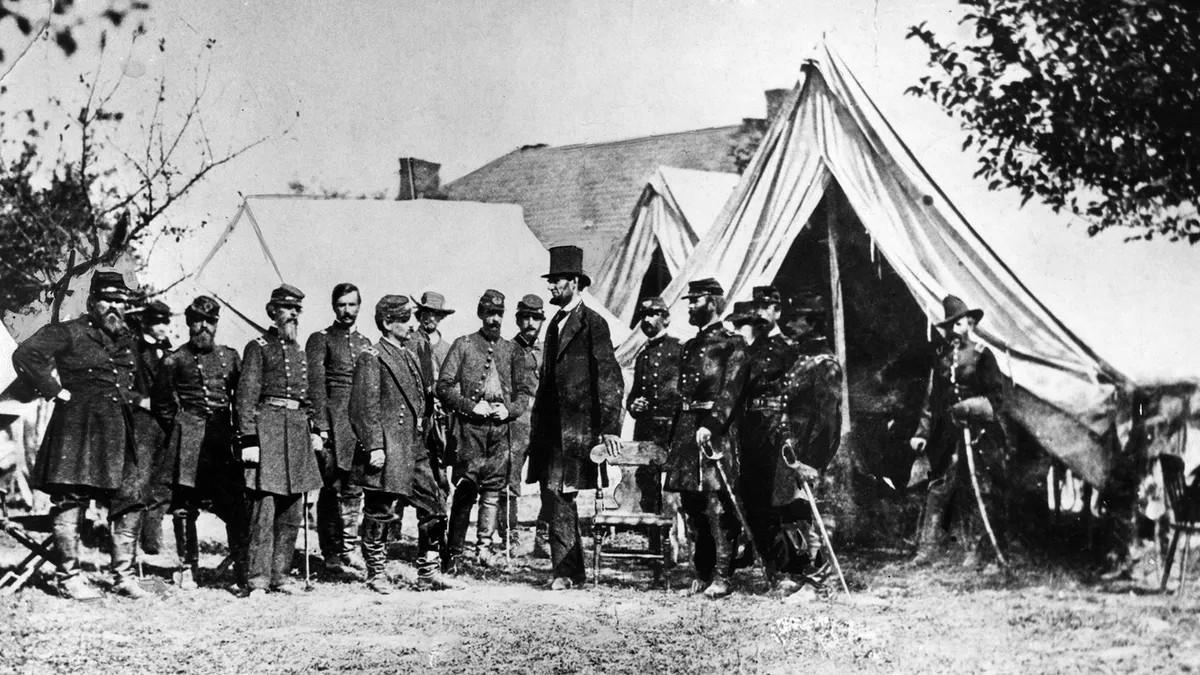
The American Civil War was not merely a series of skirmishes; it was a massive, industrial-scale conflict that fundamentally reshaped a nation. In these battles, the scale of loss went beyond simple troop counts—it represented the breaking points of armies, the shifting of political tides, and the brutal reality of a war of attrition.
While many battles were fought, a select few stand out due to their staggering casualty rates and their ability to alter the strategic trajectory of the entire conflict.
The High-Water Marks of Conflict
The Battle of Gettysburg (July 1–3, 1863)
Widely regarded as the war’s most significant turning point, Gettysburg saw roughly 51,000 casualties. By halting General Robert E. Lee’s second invasion of the North, the Union victory at Gettysburg—combined with the fall of Vicksburg—effectively broke the Confederacy’s momentum. It transformed the war from a struggle for territory into a fight for the national purpose later articulated in Lincoln’s Gettysburg Address.
The Battle of Chickamauga (September 19–20, 1863)
Fought in Georgia, this battle resulted in approximately 34,624 casualties, making it the second-bloodiest engagement of the war. While it was a major Confederate victory in the Western Theater, it failed to provide long-term strategic gains. Instead, it paved the way for Union successes at Chattanooga, which eventually opened the door to the Deep South.
The Battle of Chancellorsville (April 30–May 6, 1863)
This battle is often cited as Lee’s greatest tactical masterpiece, as he successfully outmaneuvered a much larger Union force. However, the victory came at a devastating cost: the accidental shooting and subsequent death of Stonewall Jackson. This loss deprived the South of one of its most vital commanders, proving that even a “brilliant” victory can be a strategic setback.
The Battle of Spotsylvania Court House (May 8–21, 1864)
With roughly 30,000 casualties, this battle epitomized the shift toward a war of endurance. Part of Ulysses S. Grant’s Overland Campaign, the fighting at the “Mule Shoe” salient was characterized by horrific close-quarters combat. It demonstrated Grant’s new strategy: rather than retreating after a heavy loss, he would press forward to wear down Lee’s army through sheer attrition.
The Cost of Momentum and Strategy
The Battle of the Wilderness (May 5–7, 1864)
This engagement saw 28,000 casualties amidst dense, tangled woods that turned command and control into chaos. While tactically a stalemate, it was politically significant: unlike previous Union generals who retreated after heavy losses, Grant kept moving south, signaling that the North would not stop until the Confederate capital was threatened.
The Battle of Shiloh (April 6–7, 1862)
The 23,746 casualties at Shiloh shocked a nation that had expected a short conflict. This battle served as a grim awakening, proving that the war would be a long, industrial struggle. It also strengthened Union control in the West, setting the stage for future campaigns in Tennessee.
The Battle of Stones River (December 31, 1862 – January 2, 1863)
Resulting in 23,515 casualties, this Union victory provided much-needed morale after several setbacks. By securing middle Tennessee, the Union gained control over vital supply lines and railroads, proving that territory and logistics were just as decisive as battlefield charges.
The Battle of Antietam (September 16–18, 1862)
Antietam holds the somber distinction of having the bloodiest single day in American history, with roughly 23,100 casualties occurring on September 17 alone. While the battle was tactically inconclusive, it was a strategic triumph for the Union. It halted Lee’s first Northern invasion and provided President Lincoln the political capital to issue the Emancipation Proclamation, fundamentally changing the war’s objective to include the abolition of slavery.
The Second Battle of Bull Run (August 28–30, 1862)
With 22,180 casualties, this Confederate victory sent Union forces reeling and briefly revitalized Southern hopes. It served as a stark lesson in the difficulties of coordinating massive federal armies during the early stages of the war.
The Battle of Fort Donelson (February 13–16, 1862)
Though its 17,398 casualties are lower than others on this list, its strategic impact was immense. The Union capture of this fort opened the Cumberland and Tennessee rivers, allowing the North to penetrate deep into the Confederate heartland and eventually reach the Mississippi River.
Summary of Strategic Impact
The scale of these battles reveals a clear trend: the war evolved from a series of localized battles into a massive, grinding machine of attrition.
The significance of these battles lies not just in the loss of life, but in how they forced the transition from a war of maneuver to a war of exhaustion, ultimately leading to the surrender at Appomattox Court House.