Emerging from a long winter, many homeowners are ready to reclaim their outdoor spaces. However, before investing in new furnishings, it is often more effective to start by clearing out items that detract from the aesthetic and functionality of the area.
Professional designers suggest that certain decor trends have aged poorly or simply do not serve the unique demands of exterior living. By removing these “eyesores,” you can create a more cohesive, comfortable, and visually appealing environment. Here are six common outdoor decor mistakes to avoid.
Зміст
1. Oversized Egg Chairs
While egg chairs were once a symbol of mid-century modern chic, their popularity has waned significantly. Designer Sophia deDomenico argues that these pieces are no longer worth the space they occupy.
“It’s visually obstructive, occupies a ton of floor space, and is uncomfortable to sit in for longer than five minutes,” deDomenico explains.
The primary issue is that the design has lost its originality through mass-market saturation. Instead of a trendy statement piece, consider investing in a vintage solid wood club chair. These offer better back support, a timeless silhouette, and a versatility that blends seamlessly with various design styles.
2. Artificial Plants
The temptation to use fake greenery is understandable, especially for those worried about maintenance. However, designer Ashley Hauza advises against it, noting that artificial plants rarely fool the eye and tend to degrade quickly.
“The color tends to be ‘off’ so they don’t necessarily look real to begin with, but then they start to collect dust and fade in color,” Hauza says.
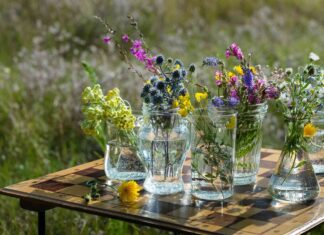
Since you are already outdoors, the best approach is to use real, low-maintenance plants. Select potted flowers or shrubs that are native to your climate zone. By checking sunlight requirements and choosing hardy varieties, you can achieve a lush look with minimal effort.
3. Outdoor Rugs
Adding texture to an outdoor seating area is a great idea, but outdoor rugs often present more problems than they solve. According to deDomenico, they are difficult to clean and maintain, often becoming dirty or damaged by weather conditions.
“While I like the visual layer they add, they are a beast to take care of,” she notes.
A more practical alternative is to use outdoor throw pillows and blankets. These items provide color and texture, can be easily stored during inclement weather, and are far simpler to launder or replace.
4. Cliché Word Art
Inspirational signage, such as “Live, Love, Laugh” or “Grill Master,” has become a dated hallmark of mass-market decor. Hauza warns that these pieces can instantly make a space feel outdated and impersonal.
“Large, brightly colored styled word art and overly literal signage… can seriously date a space since they reflect that era of mass-market decor,” she says.
This does not mean all signage should be avoided. Functional and elegant metal signs, such as those directing deliveries or reminding guests to close gates, can add character without feeling kitschy. The key is simplicity and utility over forced sentimentality.
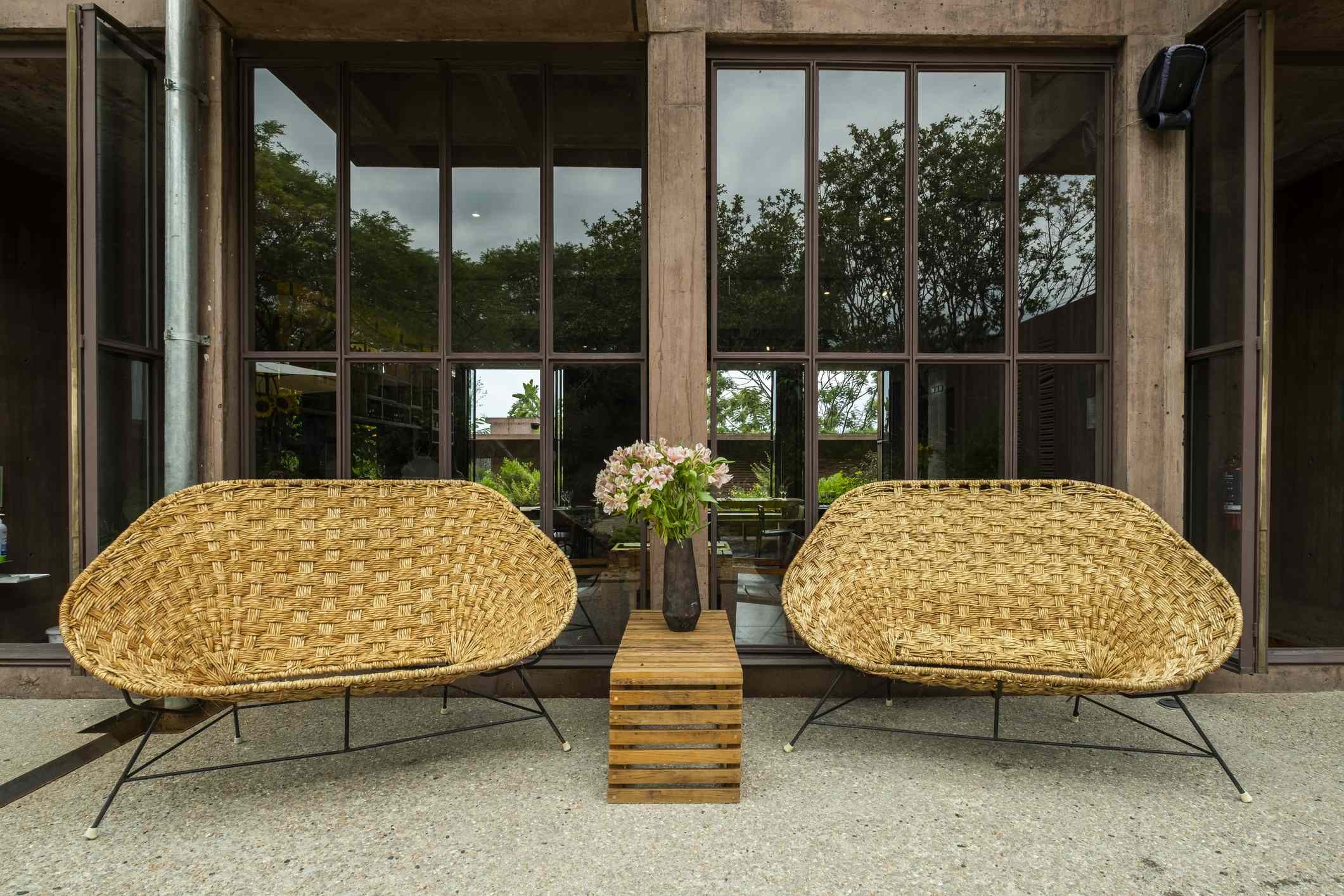
5. Matching Woven Furniture Sets
There is a common misconception that outdoor furniture must match perfectly to look put-together. In reality, uniform sets often look sterile and resemble impulse purchases from big-box stores.
“They are bulky, and anything too matchy matchy makes the space feel like more of an afterthought,” deDomenico observes.
For a more curated and inviting look, aim for a mixed-and-matched aesthetic. Combining different textures, materials, and styles—much like you would in an interior room—creates depth and interest, making the space feel collected over time rather than bought in one go.
6. Broken or Faded Items
Finally, do not hold onto furniture or decor simply because it is still structurally sound. Outdoor items are exposed to harsh elements, leading to fading, cracking, and wear that indoor pieces rarely experience.
If a piece is visibly worn, it undermines the entire design scheme. Regularly assess your outdoor inventory and replace items that have lost their luster. Keeping your outdoor space fresh and well-maintained signals care and intentionality, transforming it into a true extension of your home.
Conclusion:
Transforming your outdoor space begins with subtraction. By removing dated trends, impractical items, and worn decor, you create a clean canvas for a more inviting, functional, and stylish exterior environment.