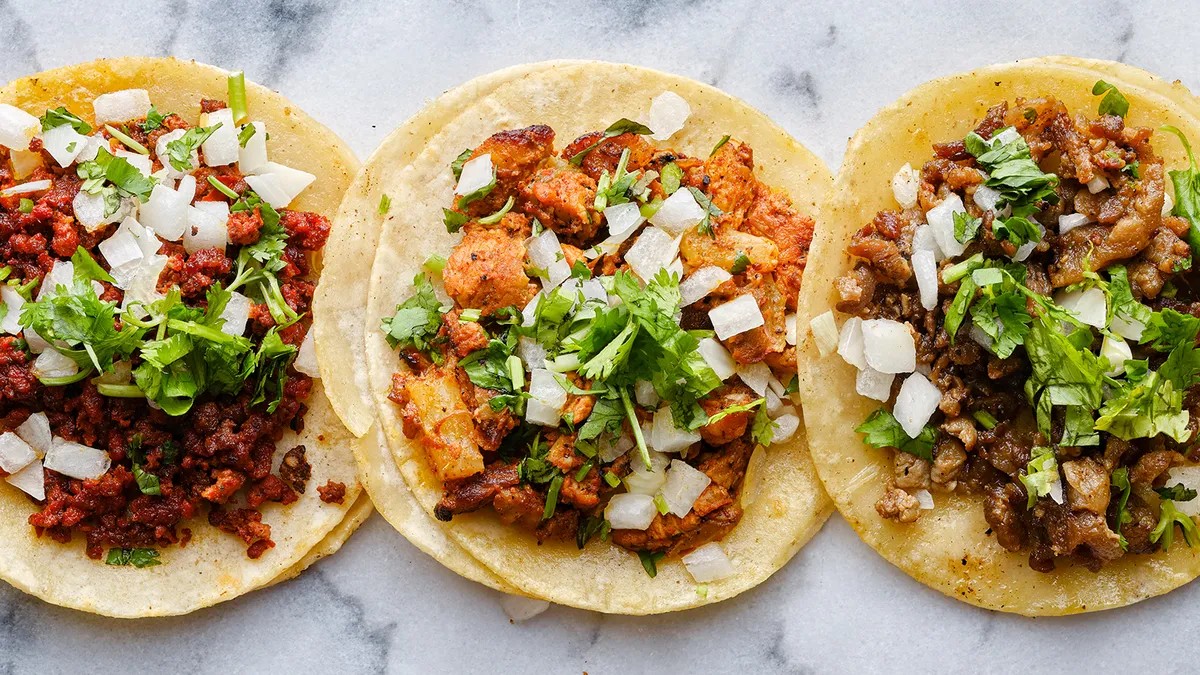
The question of where the taco originated is deceptively simple. While the answer is undoubtedly Mexico, the history of the dish is not a single moment of invention. Instead, the taco is a culinary evolution—a fusion of ancient Indigenous traditions, colonial influences, and the migratory patterns of working-class people.
Зміст
The Foundation: Corn and the Indigenous Legacy
To understand the taco, one must first look at the tortilla. Long before Spanish arrival, Indigenous populations across Mexico and Central America had perfected the art of nixtamalization —a process of soaking corn in an alkaline solution to create a versatile dough.
These soft corn tortillas served as much more than bread; they were functional tools, acting as edible plates and spoons. In its most primal form, a taco is simply any filling wrapped in a tortilla to be eaten by hand. This practical, portable format allowed the dish to flourish as a staple of both domestic life and street vending.
The Mystery of the Name: Miners and Explosives
While the food existed for centuries, the linguistic origin of the word “taco” remains a subject of historical debate. Interestingly, the term may not have started in a kitchen.
- The Mining Theory: One of the most compelling theories suggests a connection to 18th-century Mexican silver mines. In mining terminology, a “taco” referred to a plug or wad used to hold explosives in place to break ore.
- The Connection: Some historians believe the name migrated from the mines to the food, as miners likely carried simple, wrapped tortillas as portable meals. This theory is supported by early dictionary entries for “tacos de minero” (miner’s tacos).
This distinction is important: the concept of eating wrapped food is ancient, but the identity of the “taco” as we name it today is likely tied to the industrial and working-class history of Mexico.
Urbanization and the Melting Pot of Flavors
If the taco’s roots are in the fields and mines, its modern identity was forged in the streets of major cities, particularly Mexico City. As people migrated from various regions to urban centers, they brought their local recipes with them, turning the city into a massive culinary laboratory.
This migration led to a rapid diversification of styles:
– Regional Specialties: Coastal areas developed fish and shrimp tacos, while central regions focused on carnitas or tacos de guisado (stewed fillings).
– The Wheat Influence: In northern Mexico, the arrival of the Spanish introduced wheat, leading to the widespread use of flour tortillas, which remain a staple of northern Mexican cuisine.
– Global Fusion (Al Pastor): One of the most famous taco varieties, tacos al pastor, is a direct result of cultural blending. Lebanese immigrants brought Middle Eastern spit-roasting techniques (shawarma) to Mexico. Over time, the meat was swapped from lamb to pork, the marinades were localized, and the dish became a uniquely Mexican icon.
From Street Food to Fine Dining
The taco has successfully navigated the journey from a cheap, portable meal for laborers to a globally recognized culinary art form. The versatility of the format—tortilla + filling + salsa —allows it to adapt to any culture or ingredient.
This evolution reached a historic milestone in 2024, when Taquería El Califa de León in Mexico City became the first taco stand to earn a Michelin star. This recognition highlights a significant trend: the elevation of “humble” street food to the highest levels of gastronomic prestige.
The taco is not a static recipe, but a living history of Mexico—shaped by Indigenous ingenuity, shaped by colonial shifts, and refined by the diverse hands of those who migrated to its cities.
Conclusion
The taco is a product of continuous adaptation rather than a single invention. It represents a centuries-long dialogue between Indigenous traditions and global influences, proving that even the simplest foods can carry the weight of an entire nation’s history.