Forget the harsh chemicals cluttering your shed. You already have a solution in your pantry. White vinegar and apple cider vinegar are powerhouse ingredients for yard maintenance, pest deterrence, and camping cleanup. They work hard, cost pennies, and leave zero toxic residue.
Here is how to deploy them effectively outdoors.
Зміст
Gardening Hacks with Vinegar
Your garden doesn’t need to be a chemical battlefield. A little acidity goes a long way.
Clean stained terracotta pots
Clay pots look dingy fast. Fill them two-thirds with cold water and one-third with vinegar. Let them soak until the stains vanish. Then scrub with soap and rinse. The pots will look brand new.
Strengthen plant immunity
Diluted vinegar can help plants fight off disease. Mix one ounce of vinegar into one gallon of compost tea. Spray this regularly on garden plants. It invigorates them and builds resistance to pests.
Treat fungal infections on roses
Black spot and other fungi thrive in damp gardens. Create a spray by mixing three tablespoons of natural apple cider vinegar into one gallon of water. Use a garden sprayer to hit your roses daily. It curbs the spread of disease effectively.
Save moldy seedlings
If your seeds are molding in a damp starting medium, act fast. Create a solution of one part vinegar to nine parts water. Clean the seedlings with this mix. Move them to fresh containers. Keep spritzing them with the diluted vinegar while waiting for germination.
Kill weeds naturally
You don’t need a commercial herbicide for cracks in the sidewalk. Boil one quart of water. Add two tablespoons of salt and five tablespoons of vinegar. Pour the boiling mixture directly onto weeds. Do this carefully. The heat and acid cook the plant from the roots up.
Stop Pests Without Poison
Ants, cats, slugs, and roaches hate vinegar. It disrupts their sense of smell and deters them instantly.
Block ant trails
Identify where ants are entering your home. Wipe those areas with undiluted vinegar. Spray thresholds, near sinks, and around appliances. The scent confuses their pheromone trails and stops the troop.
Keep cats out of your flowerbeds
Cats treat gardens like litter boxes. They leave droppings and dig up bulbs. Soak wads of newspaper in vinegar. Scatter them in the trouble spots. The sharp smell discourages repeat visits.
Neutralize cockroaches
A squirt of pure vinegar can stun a cockroach. It gives you enough time to capture and dispose of it properly. Keep a spray bottle full for quick interventions.
Eliminate slugs at night
Slugs feed under cover of darkness or cloudy days. Fill a spray bottle with half vinegar and half water. Hunt them down at night. Squirt them directly. The solution kills them on contact.
Camping Essentials That Do Double Duty
When you’re off-grid, every item needs to earn its weight. Vinegar cleans, deodorizes, and prepares.
Clean canvas tents
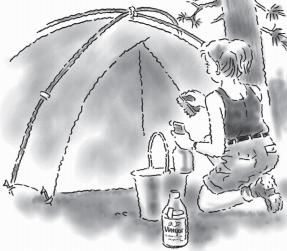
Mildew is the enemy of canvas. Dip a bristle brush in warm water. Spray your cleaner (or vinegar) and scrub. For mildew spots, wipe with vinegar. Let the tent dry in the sun. It kills spores and restores the fabric.
Remove odors from coolers and jugs
Picnic gear often smells musty. Rinse smelly items with undiluted vinegar. Wash with soap and water. Rinse thoroughly. The vinegar neutralizes the odor instead of masking it.
Reduce fishy smells when cleaning fish
Rubbing a freshly caught fish with vinegar helps before you scale it. The process becomes easier. It also controls the fishy odor on your hands. A simple, effective hack for campers.
Make plastic tarps antistatic
Plastic covers attract dust. Clean them with a solution of one tablespoon of vinegar to one gallon of water. This reduces static electricity. Your tarps will stay cleaner longer and attract less debris.
Boost Seed Germination and Flower Life
Some seeds are stubborn. Roses wilt too fast. Vinegar solves both problems.
Soak tough vegetable seeds
Okra and asparagus have woody seeds. Rub them with coarse sandpaper to break the shell. Soak them overnight in warm water with half a cup of vinegar and a squirt of liquid dish soap. Plant as usual. This softens the shell and speeds up germination.
Prep softer seeds
For nasturtium, parsley, beets, and parsnips, skip the sandpaper. Just soak them in the vinegar-soapy water. They still benefit from the treatment.
Extend the life of cut roses
Commercial flower food works, but you can make your own. Mix one gallon of water with one tablespoon of vinegar and one tablespoon of granulated sugar. Display roses in this solution. They last twice as long as they would in plain water. Change the water every two to three days to keep it fresh.
These methods rely on simple chemistry. No specialized equipment. No expensive purchases. Just vinegar and water. Start small. See what works for your space. The yard will thank you.