


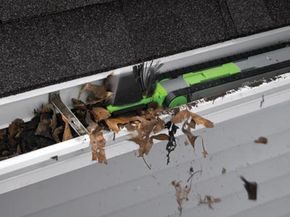
Cleaning gutters is miserable. Nobody likes it. But the real issue isn’t just the chore. It’s the risk. You are standing on a ladder. You are reaching into dark, wet spaces. The U.S. Consumer Product Safety Commission reports that emergency rooms handle over 164,000 ladder injuries every single year. In 2007 alone, that figure included 17,124 head injuries. It is statistically unlikely you will avoid getting hurt if you keep climbing up there every fall.
Inventors have known this for a long time. They are always looking for a way to keep your feet on the ground.
In September 2006, iRobot ran an internal design contest. They wanted new product ideas. Jim Lynch, an electrical engineer at the company, saw an opportunity. He looked at gutter cleaning and saw a job that was dumb, dirty, and dangerous. He started playing with an electric screwdriver. He added a toy truck chassis. The result won the competition.
One year later, iRobot released the Looj. It is a remote-controlled robot. It motors through gutters. It pitches debris out. It keeps you safe.
Зміст
The Design and Mechanics of the Looj
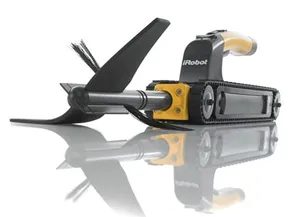
The Looj is small. It is only 2 1/4 inches high and 3 1/4 inches wide. That is 5.72 by 8.26 centimeters. This slim profile allows it to fit into standard residential gutters. Two treads run the entire length of the device. Treads provide higher friction than wheels. They help the machine handle uneven ground. They prevent the robot from getting stuck.
The front of the Looj features a replaceable three-stage auger. This is the working part. An auger is essentially a long screw. It agitates debris to break it apart. The Looj’s auger has flexible flaps. These flaps scoop up leaves and debris. They propel the material away from the gutter.
The machine is not afraid of water. It can operate in up to one foot of standing water. This is important because gutters are often wet. Mud and slush are common. The treads grip even in these conditions.
Power and Control Systems
The auger is driven by an internal motor. That motor is powered by a rechargeable battery. The Looj uses a 7.2-volt nickel-cadmium battery. This is the same type used in exit signs and power drills. Both the auger motor and the drive motor receive commands from an electronic controller. This controller has a memory store. It holds the necessary instructions for movement.
The controller is housed in the removable handle. The handle doubles as the remote control. It is powered by two AAA batteries.
You remove the handle from the main body to operate the robot. The remote works at a distance of up to 75 feet. That is about 23 meters. It transmits directions via radio frequency. An antenna inside the main housing receives the signal. Early models had external antennas. These often got caught on gutter straps. The current design avoids that problem.
With the remote, you stay in one place. You can drive the Looj up and down the gutter. You can change the direction of the auger. This prevents leaves from falling back onto your roof. You can also reverse the unit. If you hit an impassable clog, you can back up. You can bring the robot back to you easily.
Why the Name?
Jim Lynch chose the name “Looj” for a reason. It alludes to the Olympic sport of luge. Both activities involve propelling an object through a narrow track. The double-O spelling fits iRobot’s naming convention. It matches products like the Roomba and the Scooba.
The robot is built for a heavy-duty job. It borrows design elements from military machines iRobot produces. The treads are not an accident. They are a deliberate choice for reliability.
Is It Actually Effective?
The Looj promises to pitch dead leaves out of your gutters. The mechanics support that promise. The auger breaks up clumps. The treads provide traction. The remote allows for precise control.
But does it work as advertised? And what other gadgets exist for this task?
The design solves the immediate problem of ladder safety. It removes the need to climb. It keeps you on solid ground. The engineering is straightforward. It uses proven components. The battery life is manageable. The remote range is sufficient for a one-story or two-story home.
Homeowners often ask about maintenance. The auger is replaceable. This extends the life of the device. The battery is rechargeable. You do not need to throw it away when it dies.
The Looj represents a shift in how we handle home maintenance. It prioritizes safety over traditional methods. It acknowledges that ladder injuries are a significant public health issue. By removing the ladder from the equation, you reduce the risk of head trauma. You also reduce the physical strain on your body.
Cleaning gutters remains a necessary task. But the method is changing. Tools like the Looj offer a practical alternative. They are not perfect. They are not magic. They are machines. But they work within the constraints of a standard gutter system. They offer a way to complete the job without the danger.
What happens when you need to clean a gutter that is too narrow or too wide for this specific unit? The market continues to evolve. New tools are emerging. The principle remains the same. Keep your feet on the ground. Let the machine do the climbing.
How to Actually Use the Looj Robot
Start with a charged unit. Slide the included belt clip onto the robot’s side. Clip it to your tool belt. This leaves both hands free for the ladder. Climb up. Reach the gutter line.
Grab the detachable handle. Insert the Looj into the channel. Align the auger head with the debris pile. Let go of the handle. The robot is now autonomous.
Use the remote. Steer the auger along the track. Drive it forward. If it hits a snag, hit reverse. Pull it back. Finish a section? Snap the handle back into the slot. Lift the unit off the gutter. Clip it to your belt. Climb down.
Once on the ground, rinse the accumulated gunk off the treads with a garden hose. Keep it clean. It runs smoother.
The belt clip is not a gimmick. It is the main safety feature. You keep your three points of contact. You do not fumble with a heavy robot in your hand while balancing on rung two. Safety is the entire point here.
The remote adds another layer. You stay planted on the ladder. No overreaching. No twisting your spine to aim the tool. You just press buttons.
When the Looj Fails
It does not work everywhere. The robot tracks on the inner lip of the gutter. Standard profiles work. Non-standard profiles are a nightmare.
Older homes often have smaller gutters. Or straps that sit too low. The Looj can get wedged. If the gutter surface is warped or inconsistent, the treads slip. It stops moving.
Uneven rooflines are a dealbreaker. The Looj cannot turn corners. It moves in a straight line. If your house has angles, you have to climb down. Reposition the robot. Climb up. Repeat. For a complex roof, this is not a time-saver. It is a frustration.
If you have a simple, rectangular house with modern gutters, it is a win. If you have an architectural puzzle, skip it.
Looj 125 vs 135 vs 155: What’s the Difference?
iRobot sells three models. 125. 135. 155.
The hardware is identical. The battery is the same. The charger is the same. The belt clip is the same.
The box contents differ.
- Looj 125 : The base kit. Robot, battery, charger, clip.
- Looj 135 : Adds a hard storage case. Protects the unit when not in use.
- Looj 155 : Includes the case and a second rechargeable battery.
You can buy extra parts separately. Replacement augers wear out. Replacement treads wear out. Buy them if you plan to use this for years.
Are There Better Alternatives?
If the Looj sounds too limiting for your roof, look at other options. Traditional gutter scoops are cheap. They work on every shape. They require elbow grease.
Leaf blower attachments are faster for straight runs. They clear dry debris instantly. They struggle with wet mats.
Manual cleaning with a hose and a curved scoop is the low-tech fallback. It is messy. It is wet. But it works on every gutter, standard or not.
The Looj is a niche tool. It fits a specific house type. Check your gutters before you buy.

Ladders aren’t the only way to avoid falling when cleaning gutters. If you already have certain tools in your garage, you might not need to buy a specialized robot like the iRobot Looj. You can often adapt what you own into a safe, ground-level cleaning system.
Wet-Dry Vacuum Extensions
A wet-dry shop vac is a versatile tool. With the right accessory kit, it transforms into a gutter cleaner. You can switch between blowing debris out or vacuuming it up. This gives you flexibility for different jobs. Light leaf piles respond well to vacuuming. Hard-packed clogs might need the force of the blower function.
Attach an extender that hooks over the gutter edge. This keeps your hands and body on the ground. You guide the wand from below. It reduces the risk of slipping or losing balance.
Blowers and Hose Attachments
The same logic applies to other equipment.
– Gas-powered leaf blowers often have nozzle attachments designed for gutters.
– Pressure washers can use specific gutter cleaning wands.
– Standard garden hoses may have connector kits that turn water pressure into a cleaning tool.
These options let you clear debris without climbing. They work best for routine maintenance.
The Blind Spot Problem
There is a catch. These tools require you to work almost entirely blind. You cannot see inside the gutter channel. If you hit a stubborn, wet clog, the air or water might not dislodge it. You might leave debris behind. In those cases, a ladder is still necessary. You need to get close to verify the gutter is clear.
“All of these tools reduce the number of trips you make up and down the rungs.”
Autumn Preparation
Fall is approaching. Leaves will start dropping. Check your gutter type before buying attachments. Not all adapters fit all profiles. Finding a product that matches your existing setup saves money and effort.
If you do end up on a ladder, be careful. Fall prevention is critical. Consult safety guidelines from the Consumer Product Safety Commission or local health departments. Clear gutters prevent water damage. Just don’t pay for it with a broken bone.


