You want that heavy oak shelf, the framed mirror, or the cast-iron tool rack to stay put. You do not want it to become a floor decoration. The difference between a hanging failure and a secure installation comes down to two things: the right fastener and the correct hole size.
Drywall is thin, usually 1/2 or 5/8 inch. It looks solid until you put real weight on it, then it crumbles. For light items, a nail works fine. For heavy objects, you need hardware that bites into the drywall or anchors itself to the structural studs behind it.
Зміст
Finding Studs Without a Detector
Most interior walls are built with wooden studs spaced 16 inches apart. This is the standard in residential construction. If you have an electronic stud finder, use it. It detects the nails holding the drywall to the wood.
No stud finder? Fine. Measure 16 inches from a corner. Tap the wall with your knuckles. Does it sound solid? There is likely a stud there. If it sounds hollow, go to the opposite end of the wall and measure 16 inches in. Tap again. Carpentry rules dictate that studs are always measured from one end, so you will almost certainly find one.
Studs are spaced in increments of 16 inches. If you miss the first spot, the next one is exactly 16 inches away.
Choosing the Right Anchor for Heavy Loads
Standard nails fail under weight because they only hold by friction and the drywall’s limited tensile strength. When you move to heavier items, you need expansion anchors or toggle bolts.
- Expansion Anchors : These are plastic or metal sleeves that expand when you tighten the screw. They grip the drywall from the inside. Good for medium-heavy items.
- Toggle Bolts : These are the strongest option for drywall alone. They feature a wire hanger that opens up behind the drywall, spreading the load across a large surface area. Use these for very heavy items like large cabinets or heavy mirrors.
Installation Steps for Toggle Bolts
- Choose the bolt. Make sure the toggle hanger is wide enough to support the weight.
- Drill the hole. This is the critical step. The hole must be large enough for the folded toggle to pass through, but not so large that the drywall splits. Check the manufacturer’s specs for the exact drill bit size.
- Fold the toggle. Wrap the bolt and hanger so the hanger is compact.
- Slide it through the hole. Push it through the drywall until the hanger snaps open on the back side.
- Secure the object. Hang your item on the bolt and tighten it. The hanger stays open, clamping the drywall securely from behind.
Do not skip the hole size check. If the hole is too small, you will rip the drywall. If it is too big, the toggle will not stay in place.
Safety and Material Notes
- Tools needed : Drill, appropriate drill bit, screwdriver, tape measure, knuckles.
- Safety : Wear safety glasses when drilling drywall. Dust is not fun to inhale.
- **Drywall thickness
How to Stop Drywall From Cracking on Light Hangs
Small stuff trips people up. Not because it is hard, but because the wall gives way. Drywall is fragile. Plaster is worse. One slip, one bad angle, and you have a chunk of your wall on the floor.
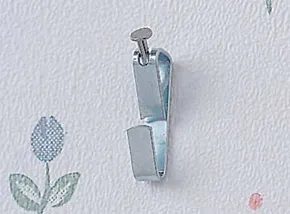
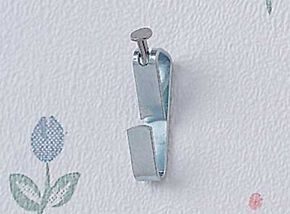
Stop. Before you touch that nail, grab a strip of cellophane tape.
- Stick it right over the spot.
- Hold the picture hanger flat against the surface.
- Drive the nail through the hanger and into the tape.
The tape acts as a buffer. It catches the first impact so the material does not shear. You remove the tape, and the nail sits flush. Simple. Effective.
Which Tools Do You Need for Medium-Weight Items?
Large frames are a different beast. A nail will not hold. You need mechanical grip. That means plastic or nylon wall anchors.
Do not guess the hole size. Check the package. It tells you exactly which drill bit to use. If you use a bit that is too big, the anchor slips. Too small, you cannot get it in.
Step 1: Drill the Pilot Hole
Use the specified drill bit. Keep the drill level. Go slow. You want a clean hole, not a ragged tear in the paper face of the drywall.
Step 2: Insert the Anchor
Take the plastic anchor. Tap it all the way in with a hammer. It should sit flush with the wall. If it sits proud, the screw will not bite properly.
Step 3: Secure the Screw
Pass the screw through your item. Turn it into the anchor. As you turn, the anchor expands. It pushes against the sides of the hole. That is the grip. That is why it holds.
The screw does not hold the weight. The expanded anchor does.
Why Standard Anchors Fail for Heavy Loads
You have hung a small frame with a nail. You have hung a large mirror with a plastic anchor. Now you have something else. A heavy shelf. A large television. A cast iron radiator cover.
Plastic anchors have limits. They work for medium weight. They fail for heavy weight.
When you turn a screw into a plastic anchor, it expands. It grips the hole. But if the weight is too much, the drywall around the hole crushes. The anchor pulls out. The object falls.
This is where you stop using plastic. You stop using nails. You need something stronger. You need something that bypasses the drywall entirely or engages the structural element behind it.
The next step is not just about a stronger anchor. It is about finding the stud.
Where Is the Stud?
Drywall is just skin. Behind it is framing. Wood. Metal. That is the structure. If you can hit that, you can hang almost anything.
Finding the stud is the critical step for heavy objects. You can use a stud finder. It uses sensors to detect the density change behind the wall. Or you can use an old-school method. Tap the wall. Listen. A hollow sound is air space. A solid sound is wood.
Once you find the stud, you do not need an anchor. You drive a screw directly into the wood. The screw bites into the fiber. It
Installing Expansion Anchors for Mid-Range Weight
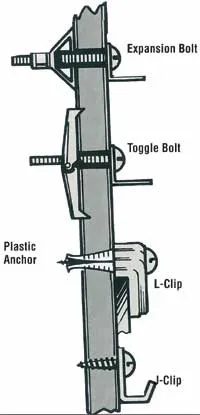
When you need to mount something heavier than a picture frame but lighter than a full bookcase, the expansion anchor (or expansion bolt) is usually the go-to choice. These come in various diameters and lengths to handle different wall thicknesses and load capacities. Pick the size that matches your specific object.
The installation process is straightforward, but skipping steps leads to failure.
- Check the packaging for the required drill bit size. Drill the hole. Do not guess the diameter.
- Tap the anchor into the hole with a hammer until it sits flush.
- Turn the slotted bolt clockwise until it stops turning. Then, back it out slightly. This action expands the anchor against the interior of the wall cavity, locking it in place.
- Thread the bolt through your shelf, mirror, or hanger.
- Reinsert the bolt into the expansion anchor. Tighten until secure.
Using Toggle Bolts for Heavy Loads
For cabinets, heavy media centers, or large bookshelves, expansion anchors often fail. You need toggle bolts. They distribute weight over a wider area and are better suited for thick loads. Like expansion anchors, they come in specific sizes. The critical difference is the installation sequence. Once the toggle is inside the wall, you cannot remove the bolt without the wing falling down behind the drywall.
Follow this order strictly:
- Drill the hole specified by the toggle bolt manufacturer.
- Remove the bolt from the toggle mechanism.
- Thread the bolt through your object or hanger before touching the wall.
- Reinsert the bolt into the toggle wings.
- Squeeze the wings together with your thumb and forefinger. Push the assembly through the drilled hole.
- Hold the object against the wall while pushing the toggle through.
- Pull the bolt toward you. You will feel the wings snap open and hit the back of the wall.
- Tighten the bolt clockwise until the object sits flat against the surface.
Choosing the Right Fastener for Your Wall
How do you determine the right size of fastener for your wall? Look at two factors: the weight of the object and the wall material. The fastener must support the load without crushing the drywall or wood. If the object is heavy and you are working with drywall, finding a stud is often the safest route. If a stud is not possible, toggle bolts designed specifically for drywall are essential to prevent the object from falling.
FAQ: Hanging Heavy Objects on Drywall
Can I hang heavy objects on drywall without finding a stud?
It is risky. For truly heavy items, a stud provides structural integrity. If you cannot locate a stud, use toggle bolts rated for drywall. Standard screws or even some anchors may pull out under sustained heavy weight, leading to damage and potential injury. Always match the hardware rating to the object’s weight.