


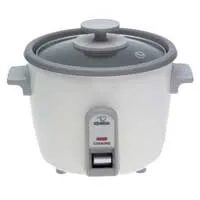
How #FuzzyLogic rice cookers are changing cereal soup
You might think that cooking rice is easy. Heat the water to boiling. Add grains. Wait. done.
But basic rice cookers don’t actually “know” how to cook rice. Heat the element until the water boils, then turn it off. It is a mechanical binary. On or off. Be it hot or cold. There are no nuances.
The Fuzzy Logic Rice Cooker is different. With the help of a microcomputer circuit, the temperature and time are monitored in real time. They regulate the heat curve. They decide when to stop. They mimic human intuition.
Зміст
The math behind meals
This is not new magic. It is applied mathematics.
This concept originates from fuzzy set theory, which was proposed by Lotfi Zadeh, a professor at the University of California, Berkeley, in 1965. He proposed fuzzy logic in 1973.
Standard math includes absolute values. An element is either in the set or not. A sparrow is a type of bird. This is not the case with bats. Clear cut.
Fuzzy logic counteracts this rigidity. This provides some nuance. Bats have wings. Therefore, they have common characteristics with birds. Only partially belongs to the “Birds” set. It’s a spectrum.
Machines programmed with this logic see the world in the same way. It does not depend on cold, hard parameters. They incorporate vague words like “slightly” and “almost” into their decision-making algorithm.
Why does rice taste better
This is important in the kitchen because cooking is rarely binary.
Different grains absorb water in different ways. Changes in ambient humidity. Changes in height. Standard cookware ignore these variables until the water runs out. Fuzzy logic models constantly take these into account.
The chip makes the decision. Add heat for 1 minute to rest down the starch. Bring to a boil. Stop for a rest. It mimics the way an experienced cook handles a pan.
However, they are often better than you.
“Fuzzy logic assumes a more pragmatic approach… allowing home appliances to make human-like decisions.”
Results
A stable structure can be obtained. Not sticky. Not crispy. Fresh cooked grains.
The technique itself is not complicated. It’s a matter of precision. This allows the device to adapt to the specific batch of rice you add.
This is the basis of modern smart cooking. The chips learn. They will adjust it for you. It ensures that the results are as expected.
This is a small change in logic. There are different types of rice models.

Beyond fuzzy logic: Why induction heating is a real upgrade
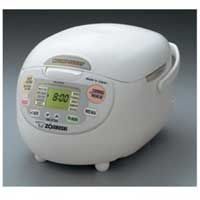
The Zojirushi NHS-06 on the left is the flagship machine with standard technology. On the right is the NS-ZCC18 Neuro Fuzzy One person was playing chess and the other was playing checkers.
Fuzzy logic is not magic. This is reactive logic only. Imagine a hot day in July. The surrounding heat helps the heating element work, so the rice cooks faster than usual. The basic rice cooker only heats up until the timer goes off. A fuzzy logic model reads the temperature. Executes if/then statements in the background. “If the temperature rises rapidly, turn the power back on.”
This reaction allows custom cooking profiles. It’s not just “takikomi gohan”. You get sushi rice with the right texture, porridge with the right viscosity, and soft brown rice that doesn’t become coarse. Texture settings can be changed in some models. difficult? soft? Tacky? Wet? The algorithm adjusts the boiling and resting stages to achieve these precise metrics.
But here’s the problem. Fuzzy logic is smart, but it’s limited by how heat transfers.
The title “advanced technology” applies to induction heating.
Fuzzy logic optimizes algorithms, while induction changes physics. Basic and Fuzzy Logic cookers have a standard heating plate at the bottom. The heat must be transferred from the plate through the pot to the rice. This is indirect. Hotspots occur. Cold pockets remain.
IH cookers do not require an intermediary. The entire inner boiler becomes a heating element. Just like an induction cooktop, the electromagnetic current heats the pot directly. result?
Heat is evenly distributed in the pot.
This means that there is no need to stir to distribute the heat. The lower layer no longer burns when the upper layer is uncooked. The heat is direct, even and intense.
You may notice that other devices also use this logic. washing machines. refrigerators. computers. Also subway cars. This is a widely used method for processing variable inputs. But in the kitchen, the jump from fuzzy logic to induction heating is where you stop guessing and start planning meals.
If you’re still unsure, ask yourself whether you want a computer with an adjustable fan or a liquid-cooled processor. One is efficiency. The other is superior performance. When it comes to getting the perfect rice, the latter always wins.


