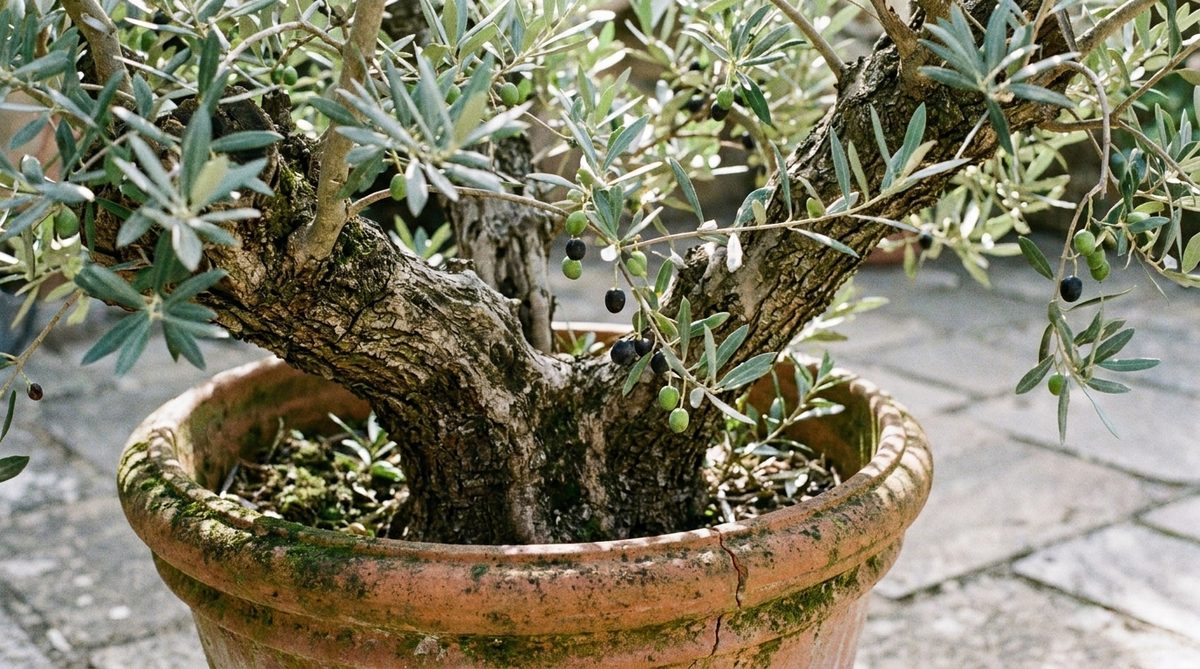
Spring is here. Balconies wake up. You step outside with your coffee, stare in the sun and look at this beautiful Mediterranean specimen in its pot. It looks perfect. It looks majestic. It looks the same as it did three months ago.
Does it bother you?
They watch the seasons change. You see how the sun shines on the branches. However, the silhouette remains frozen in time. It feels like a lie. As if the plant had stopped. Behind this aesthetic mystery lies a botanical reality that is rarely explained in the nursery industry. Your tree is not dead. It’s not broken. It’s just a long, slow game of survival.
Зміст
The nursery illusion
When you bought it, you bought a lie. Well, no lie. Marketing strategy.
Professional growers do not sell plants. They sell sculptures. They take young specimens and cut them heavily. They carve the crown. They structure the trunk. Calibrate the shape so it catches your eye at the garden center. You walk away thinking you bought a finished product. Decorative piece.
But it’s alive. It has mutated. And it’s frustrating.
You expect it to explode with new branches overnight. You think, “I paid for this form. Let it grow.” But that perfect shape? It was built. The tree has used its energy to recover from the trauma of being turned into a living statue.
The speed of invisible growth
Your brain is a terrible judge of slow time.
Think of a clock. Do you see the other hand moving? No. It’s there. It moves. But your eye cannot capture it.
Your tree will do the same. Here it grows by millimeters. There it thickens its bark there. But because you look at it every day, your brain filters out the micro-changes. A familiar look masks the progress. The tree grows fat. It gains height. But it feels static. This is the trap of daily observation. You can’t see the growth because you’re too close.
Root trauma
Here’s the secret. The dirty secret of potted plants.
This tree did not grow in your pot. It started in the field. Completely on earth. It expanded. It went deep. It found water and nutrients in a vast network.
Then the daycare dug it up.
They had to cut out the roots. Lots of them. In order to place a massive root system in a thirty liter pot, they cut off the connection to the deep soil. It’s a physiological shock. Trauma.
The plant immediately goes into survival mode. All its energy goes underground. It tries to grow roots again. It tries to stabilize. Above ground? Nothing. Or very little. The branches stop growing because the roots are fighting for their lives. It’s not laziness. It’s triage.
The container determines the size
Once you’re in the pot, the rules change.
The volume of the roots determines the volume of the leaves. This is a tough law. In nature, deep roots support a wide canopy. The space in the pot is limited. Thirty liters. Fifty liters. That’s it.
The tree knows this. That’s smart. It will not grow leaves it cannot support. If the roots don’t get more water, the leaves die. So the tree shrinks back. It adapts. It keeps the leaves small corresponding to the capacity of the roots. It hasn’t stopped. It’s just limited.
Is it dead or just sleeping?
Don’t panic. Growth doesn’t stop. It’s just slowed down.
Think of it as a natural handbrake. The lack of space engages the brake. It is not a disease. It’s resilience.
How do you know it’s still alive? Take a closer look.
In spring, the signs are subtle. Check the tips of the branches. Are there small, soft, pale green leaves? This is new growth. It’s faint. The color is almost silver. This is the plant that says, “I’m still here.”
Look at the trunk. Will it be a bit thicker? Is the bark cracking a bit? That’s strength. This is a tree that adds more wood to support its current load.
Look for flowers. Small clusters. Small flowers. They confirm that the cycle is turning. The plant is still implementing its biological program. It just works in slow motion.
What you can do now
You can’t force it. Not really.
Pulling it out to check the roots will kill it. The damage is done. The best thing you can do is give it time. And space, if you want it to grow bigger. But that means moving it.
For now, appreciate the stillness. It’s not a failure. It’s a pause. It’s gathering energy. It heals wounds. It’s waiting for the right conditions.
Is your tree really static? Or are you just moving too fast to see it breathing?
The pot is small. The patience required is great. Wait. Watch. The green will come.
Why Your Mediterranean Plant Moves at a Snail’s Pace
Stop blaming your gardening skills. The reason your prized olive, fig, or rosemary plant isn’t shooting up like bamboo is written in its DNA. These aren’t tropical speedsters. They evolved in the harsh, sun-baked, rocky soils of the Mediterranean basin. Genetic programming there favors longevity over speed. It selects for patience.
Putting this species in a pot doesn’t make it faster. It slows it down further. The roots hit walls. They can’t spread. This restriction isn’t a flaw. It’s a feature. It forces the plant to focus on survival, not expansion. That’s where the majesty comes from. Expecting rapid growth is botanically nonsensical. You’re fighting evolution.
How to Support Steady Growth in Containers
You can’t force the plant to rush. But you can create the ideal environment for that slow, deliberate rise. Follow these steps to keep your potted Mediterranean specimen healthy and thriving.
- Top-dress annually. Every year, replace the top two inches of soil. This adds fresh nutrients without disturbing the root ball. It’s like giving the plant a fresh breakfast without making a mess.
- Repot every three to four years. Choose a pot just slightly larger than the current one. Don’t go huge. A little extra room for the roots is enough. Too much soil retains too much water. That’s a recipe for rot.
- Feed gently in spring. When the plant wakes up from winter dormancy, use an organic fertilizer. Keep the dose measured. Light feeding supports steady growth. Heavy feeding causes weak, leggy stems that can’t support the plant’s structure.
- Water with restraint. Give it a good soak, then wait. Let the surface soil dry out completely before watering again. Mediterranean plants hate wet feet. They thrive on drought stress. This cycle triggers deep root growth.
These constraints underground are why the top growth is slow. It’s not stagnant. It’s working. The roots are building a foundation. The branches are thickening. The leaves are hardening. You just can’t see it happening above the soil.
Accept the pace. A fast-growing plant often lives fast and dies young. Your plant is playing the long game. It’s building longevity. So, sit next to it. Watch the light move across its leaves. Notice the subtle changes in texture, in color, in resilience. It’s not doing nothing. It’s doing exactly what it was designed to do.
The soil is drying. The sun is high. The roots are deep. And the plant? It’s just getting started.