The image is one of the most iconic symbols in the world: a powerful eagle perched atop a prickly pear cactus, locked in a struggle with a serpent. While this emblem serves as the centerpiece of the Mexican flag, the identity of the bird itself—and the history behind its depiction—is a subject of both profound cultural significance and scientific debate.
Зміст
A Legend Carved in History
The eagle and snake imagery is not merely a decorative motif; it is the foundational myth of the Aztec civilization. According to ancient codices, the god Huitzilopochtli commanded the Mexica people to establish their capital in a location marked by a specific divine sign: an eagle devouring a snake while perched on a cactus.
The Aztecs eventually discovered this sight on an island in Lake Texcoco, leading them to build their great city, Tenochtitlan. This moment transformed the eagle into a symbol of:
– Divine Power: Associated with the sun and celestial forces.
– Victory: Representing the triumph of light (the sun) over darkness (its enemies).
– National Identity: Evolving from an Aztec religious sign into the official coat of arms of modern Mexico.
The Golden Eagle: The Official Icon
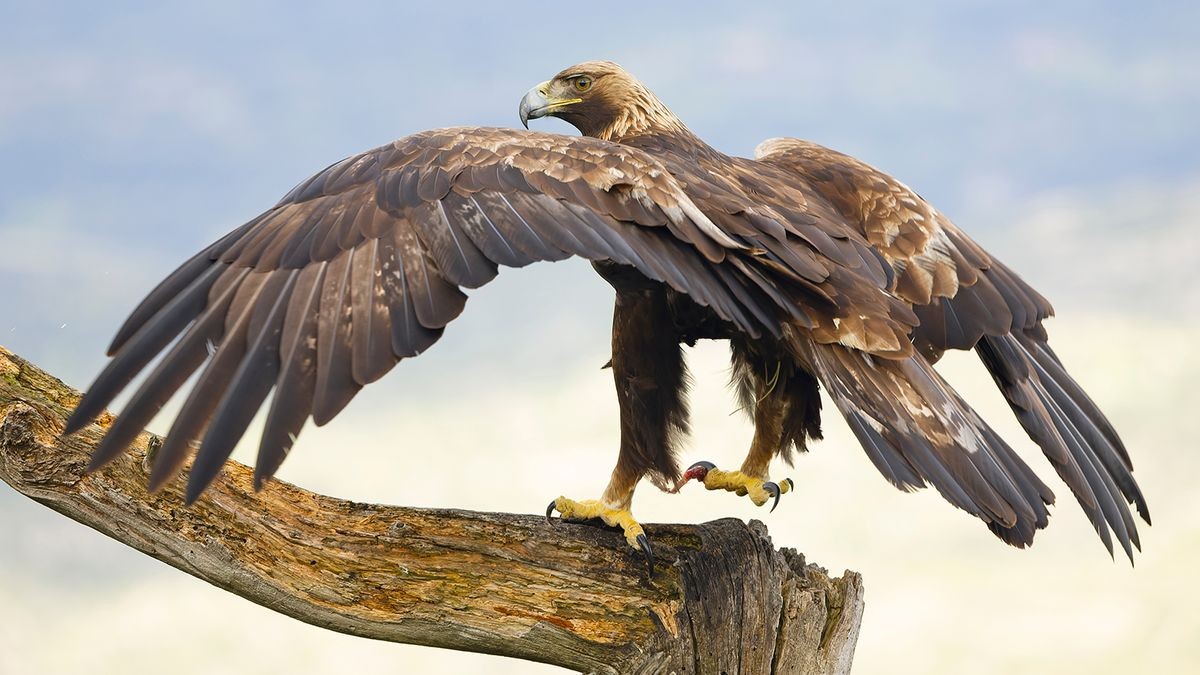
Today, the Golden Eagle (Aquila chrysaetos ) is officially recognized as Mexico’s national bird. Formally regulated by the government in 1984, the Golden Eagle is a formidable predator known for its impressive physical traits:
– Wingspan: Typically ranging from 6 to 7.4 feet (1.9 to 2.3 meters).
– Appearance: Dark brown plumage accented by golden feathers around the head and neck.
– Behavior: They are apex hunters, primarily targeting small mammals like rabbits and squirrels, though they are opportunistic enough to hunt fish, frogs, or even carrion.
Beyond Mexico, the Golden Eagle is a global traveler, found across vast stretches of North America, Europe, and Asia, making it one of the most widespread eagle species on Earth.
The Great Debate: Eagle or Caracara?
Despite the official designation, a fascinating historical mystery persists among historians and ornithologists. Some researchers argue that the bird depicted in original Aztec records may not have been a Golden Eagle at all.
The primary candidate for this alternative theory is the Crested Caracara. Unlike the Golden Eagle, the Caracara is a member of the falcon family and possesses distinct characteristics:
– Long, slender legs.
– A unique crest of feathers on the head.
– A habitat preference for open country ranging from the American Southwest through Central and South America.
Naturalist Rafael Martín del Campo suggested that as Aztec drawings were interpreted by later generations, the Caracara—sometimes referred to as the “Mexican eagle”—may have been visually conflated with the Golden Eagle. This raises an intriguing question for historians: Did the symbol change to match a more “regal” species, or has the identity of the original bird simply been lost to time?
Summary
Whether the national symbol depicts a Golden Eagle or a Crested Caracara, the imagery remains a powerful testament to Mexico’s ancient roots. It serves as a bridge between the mythological origins of the Aztec Empire and the sovereign identity of the modern Mexican state.