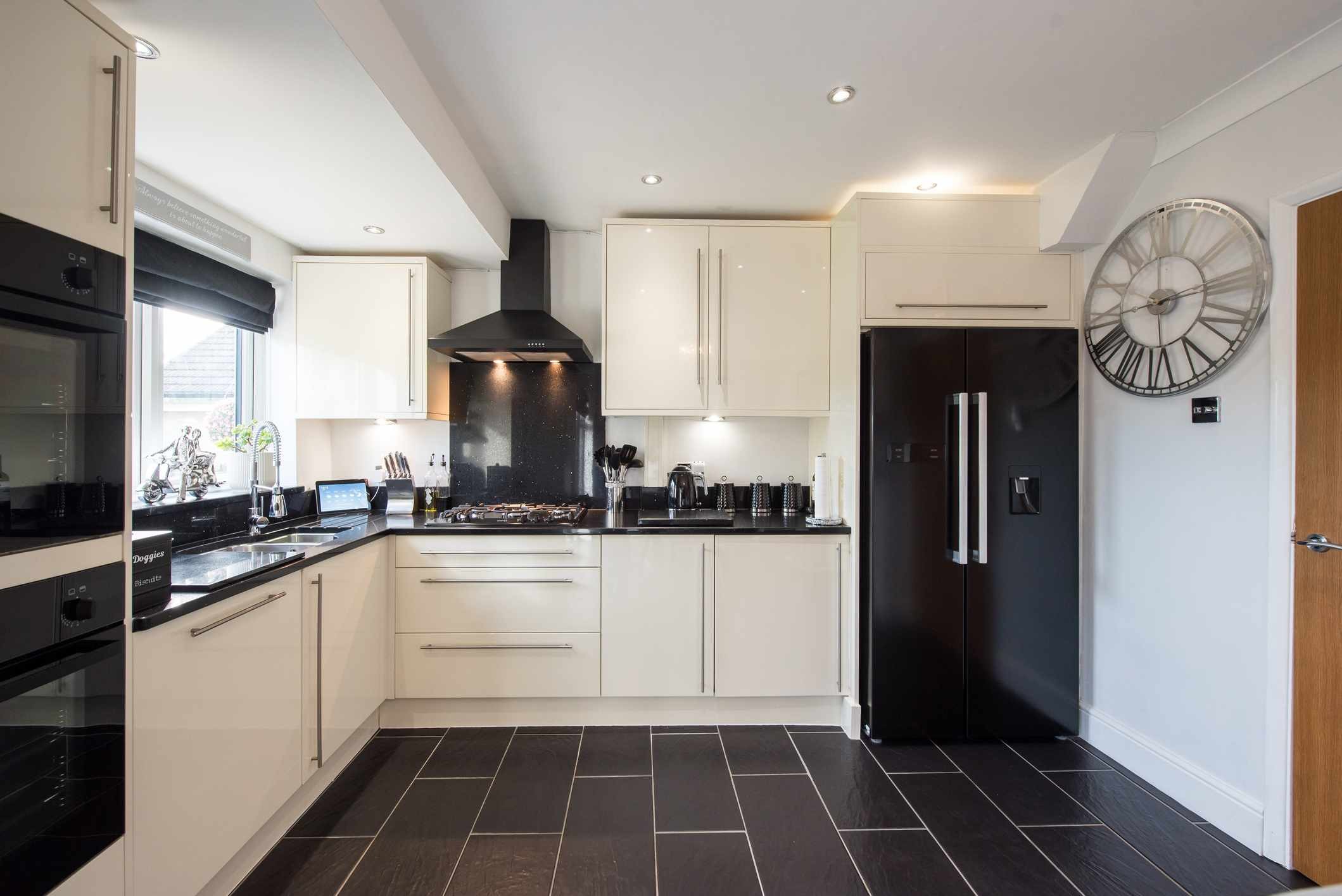
Choosing tile colors is a long-term commitment. Unlike paint, which can be changed with relative ease, tile sets the tone for years. Designers agree: certain colors have simply had their moment… and that moment is over. Here are six outdated tile shades to avoid if you want a modern, stylish space.
Зміст
The Gray Era Is Over
Gray, particularly the “Millennial Gray” that dominated the 2010s, is now seen as tired and sterile. Interior designer Courtney Batten explains that the overuse of gray makes it feel artificial rather than sophisticated.
Instead of gray, opt for warmer neutrals like taupe or light beige. These shades offer a similar grounding effect without the coldness. The shift reflects a broader trend toward warmer, more inviting color palettes in interiors.
Navy Blue Is Losing Its Appeal
While classic in many applications, navy blue tile is falling out of favor. It has been overused to the point of predictability. Batten suggests deep teals as a more current alternative. Teal offers a similar pop of color with a fresher, more modern edge.
This illustrates how even timeless shades can become dated through saturation. The key is to find alternatives that feel unique, not ubiquitous.
Brown-Beige: A Relic of the Past
Dark brown-beige tile is a dead giveaway for homes built in the late 1990s and early 2000s. Designer Alice Moszczynski calls it “energy-lacking,” a sentiment shared across the industry.
Switch to light taupes or greiges for a more modern neutral. These tones provide the same earthy feel without the dated heaviness. The change reflects a wider move toward lighter, brighter interiors.
White Marble: From Sleek to Standard
Classic white marble is now considered overdone. It lacks originality. Batten recommends travertine or limestone instead. These natural materials offer the same luxurious stone look without the predictability of white marble.
The decline of white marble shows how quickly trends can shift. What was once seen as high-end now feels commonplace.
Black: High-Contrast Fatigue
Black tile, especially in popular metro shapes, has lost its edge. Designer Daniela Gottschalk notes that black, white, and gray are fading from favor. Black can also be impractical in wet areas, where watermarks and fingerprints are easily visible.
However, black-and-white checkered tiles remain popular in kitchens and hallways. The key is to use black strategically, not as an all-over solution.
Avocado Green: A Nostalgic Mistake
Avocado green, once a staple in 1970s kitchens, is now seen as heavy and outdated. Moszczynski suggests muted sage greens or olive tones instead. These nature-inspired hues are on trend, offering a fresh take on green without the dated look.
The shift away from avocado green reflects a broader desire for more natural, less jarring color schemes. Today’s interiors prioritize tranquility over retro aesthetics.
Choosing tile colors requires foresight. What looks modern today may feel dated tomorrow. Designers advise leaning toward warmer neutrals, unique alternatives, and timeless natural materials to create spaces that stand the test of time.