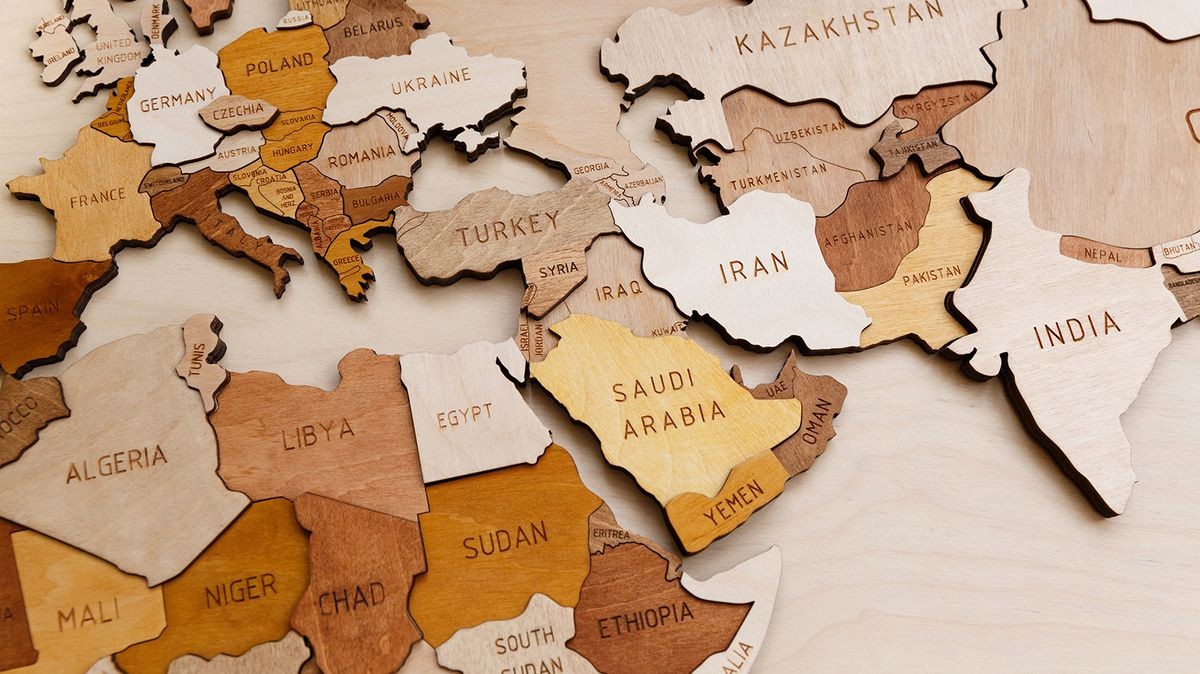
The term “Middle East” can be a source of confusion because it does not refer to a specific landmass or a single continent. Instead, it is a geopolitical designation used to describe a collection of countries located primarily in Western Asia, with significant links to North Africa and parts of South Asia.
Because the boundaries are defined by politics and culture rather than strict physical geography, the exact list of countries included can vary depending on the context.
A Crossroads of Civilizations
The Middle East occupies a unique position at the intersection of Europe, Asia, and Africa. This strategic location has made the region a central hub for global trade, migration, and conflict throughout human history.
Often referred to as the “Cradle of Civilization,” the region provided the foundation for much of modern human society. It was within these territories—most notably in Mesopotamia and Egypt—that humanity first developed:
– Systematic agriculture
– Complex writing systems
– The world’s major religious traditions
Regional Powerhouses: Saudi Arabia and Iran
While the region comprises many nations, Saudi Arabia and Iran stand out as influential actors that shape both the economic and political landscape of the Middle East.
Saudi Arabia: The Energy Hub
Located on the Arabian Peninsula between the Persian Gulf and the Red Sea, Saudi Arabia is the largest nation in the region. Its global influence is driven by two primary factors:
- Energy Markets: The country holds vast reserves of oil and natural gas, making it a cornerstone of the global energy economy.
- Religious Significance: As the birthplace of Islam, Saudi Arabia is home to the holy cities of Mecca and Medina, placing it at the spiritual heart of the Islamic world.
The landscape is characterized by vast, arid deserts, which heavily influence the country’s climate and lifestyle.
Iran: A Historical and Strategic Giant
To the east, situated between the Persian Gulf and the Caspian Sea, lies Iran. Formerly known as Persia, Iran represents one of the world’s oldest continuous civilizations.
Like Saudi Arabia, Iran possesses significant oil reserves, which grant it substantial leverage in international politics. Its identity is a complex blend of deep-rooted Persian history and Islamic tradition, maintaining a distinct cultural footprint that influences the broader region.
Why These Definitions Matter
Understanding the Middle East requires looking beyond simple maps. The region’s importance is not just about its location, but about its control over vital resources (like oil) and its status as a religious epicenter. The shifting definitions of the region reflect how global powers view these strategic connections between energy, history, and politics.
The Middle East is defined less by rigid borders and more by its role as a strategic, cultural, and economic bridge between three continents.