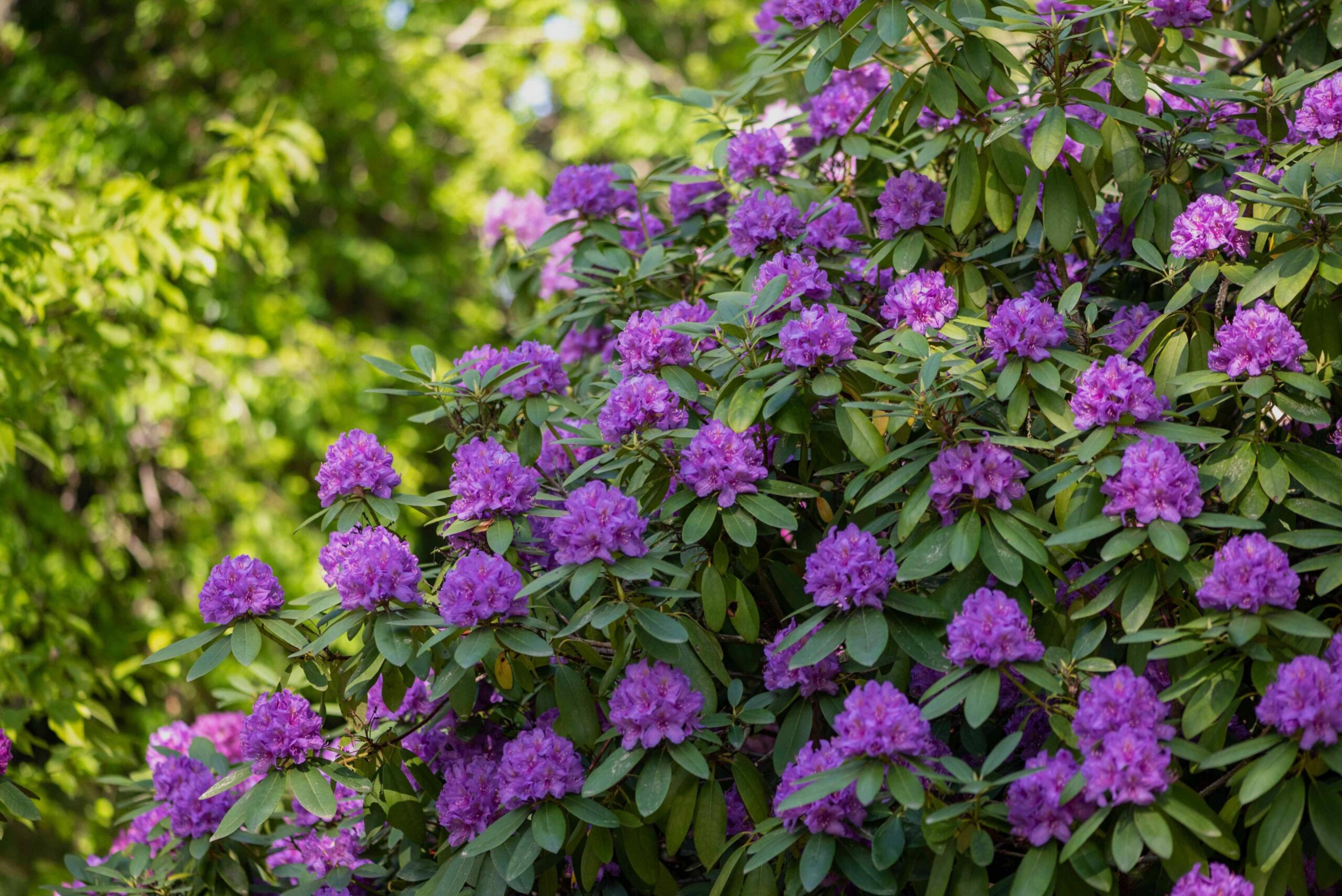
Rhododendrons are versatile shrubs that add vibrant color and lasting structure to gardens. These evergreen plants thrive in many climates and can be used in a variety of landscaping applications, from formal hedges to natural woodland settings. Understanding the different cultivars and their growth habits is key to maximizing their impact.
Selecting the Right Rhododendron
When choosing rhododendrons, consider their mature size, bloom time, flower color, and foliage. These plants fall into a broad range of shapes and sizes; some grow into tall hedges while others stay compact enough for containers.
Azaleas belong to the same genus, but this guide focuses on evergreen rhododendrons, identifiable by their bell-shaped flowers in clusters with five lobes and ten stamens. The leaves are typically glossy, thick, and leathery.
Landscaping Applications
Rhododendrons can be integrated into almost any garden style, from manicured designs to wilder, naturalistic arrangements.
Foundation Plantings
Rhododendrons add year-round interest when planted near buildings. Ensure the chosen variety complements the home’s exterior finish and won’t outgrow the space.
Recommended cultivars:
- Carolina Rhododendron (R. carolinianum ) : 3–6 feet tall, with pale lilac, white, or pink blooms.
- Chapman’s Rhododendron (R. chapmanii ) : 3–5 feet tall, rounded shape, heat-tolerant.
- ‘Northern Starburst’ : 4 feet tall, burgundy foliage, large pink flowers.
- ‘PJM Hybrid Group’ : 4 feet tall, mahogany foliage, pink to white flowers.
Privacy Hedges
The dense evergreen foliage makes rhododendrons ideal for hedges. Choose taller cultivars for maximum privacy.
Recommended cultivars:
- ‘Roseum Elegans’ (R. catawbiense ) : 6–8 feet tall, lavender blooms.
- White Laurel (R. maximum ) : Up to 15 feet tall, white or pale pink flowers.
- ‘English Roseum’ : 6–8 feet tall, deep pink flowers.
Mixed Borders and Beds
Rhododendrons bloom in late spring, making them striking additions to mixed beds. Their foliage provides year-round structure, and they pair well with spring bulbs (daffodils, tulips) and summer perennials (hostas, chrysanthemums).
Woodland Gardens
Rhododendrons thrive in dappled shade, making them perfect for woodland settings. The evergreen foliage provides winter interest, and the blooms add splashes of color against trees and bark.
Container Gardening
Dwarf rhododendrons can be grown in containers. Choose pots with good drainage and use potting soil formulated for acid-loving plants.
Recommended cultivars:
- ‘Peter J. Mezzit’ : Dwarf evergreen, violet-purple flowers.
- ‘Yaku Sunrise’ : Dark green foliage, magenta flowers with white throats.
- ‘Ginny Gee’ : Pink to white flowers, grows only to 2 feet.
Essential Care
Successful rhododendron growth depends on proper soil, water, light, and occasional fertilization.
Soil
Rhododendrons prefer loamy, well-draining, acidic soil (pH <6.0). Amend heavy clay soils to prevent root rot.
Water
Water regularly to keep the soil moist, especially during droughts. Mulch to retain moisture.
Light
Rhododendrons thrive in dappled sunlight, partial shade, or deep shade with less than two hours of direct sun.
Fertilizing
Minimal fertilization is needed if soil conditions are ideal. Use a complete fertilizer (12-4-8 NPK) in late spring after flowering.
Common Issues
Lace bugs, mites, and scale can occasionally infest rhododendrons but are easily controlled with water sprays, insecticidal soap, or pesticides.
By selecting the right variety and providing proper care, you can enjoy the stunning blooms and lush foliage of rhododendrons for years to come.