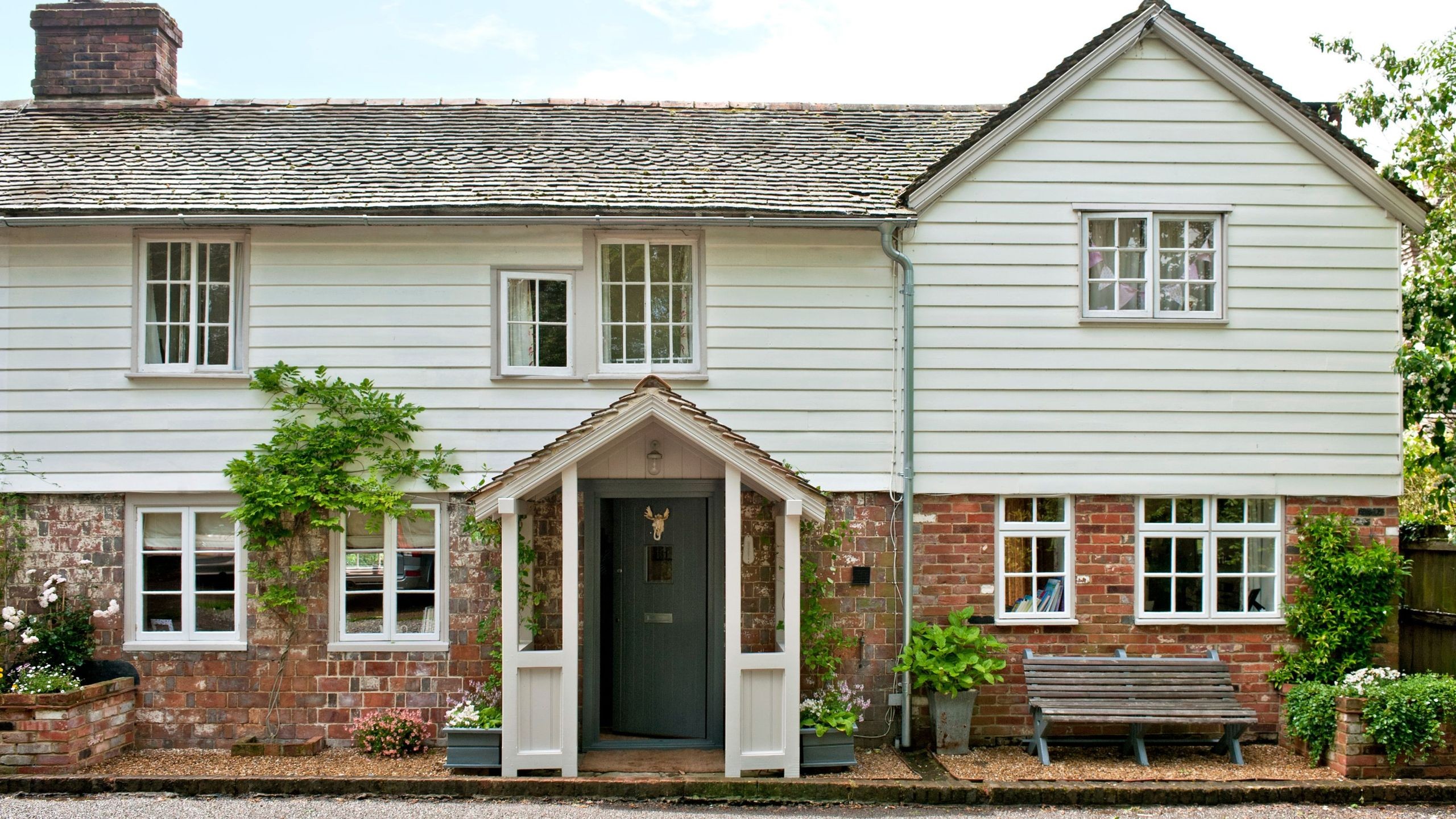
Adding a porch is one of the most effective ways to boost a home’s kerb appeal. Beyond the aesthetic charm, a well-designed porch offers practical benefits: it provides shelter from the elements while you find your keys and offers a dedicated space for outdoor footwear.
However, getting the dimensions wrong can be a costly mistake. A porch that is too large can overwhelm a small house, while one that is too small can look insignificant and unbalanced. To ensure your addition enhances rather than detracts from your home, consider the following expert guidance on scale, style, and legality.
Зміст
Determining Functional Size
There is no universal “ideal” size for a porch, as the dimensions should be dictated by your specific needs. Design experts suggest focusing on what you actually intend to protect.
- For basic weather protection: If your goal is simply to shield the doorway, a structure extending 1m to 1.5m forward and at least 500mm on each side of the door is recommended.
- Considering the elements: Remember that rain rarely falls perfectly straight. When designing, account for horizontal rain ; a canopy that is too shallow may fail to protect the person standing at the door.
- Custom vs. Off-the-shelf: Most high-quality porches are custom-built to suit the specific architecture of a home. However, “off-the-shelf” options are available—these are typically lightweight, do not require foundations, and are often suitable for DIY installation. These standard models usually range from 1.5m to 3m in width.
The Importance of Architectural Proportion
A porch does not exist in a vacuum; it must exist in harmony with the “host” house. To achieve a balanced look, pay attention to these two design principles:
1. Relationship to the Main House
The proportions of your home’s elevation—such as the width of the facade and the height of the eaves—should guide your decision.
– A wide porch on a narrow home can feel dominant and intrusive.
– A narrow porch on a long facade can appear minimal and unbalanced.
2. Internal Proportions
Even if your house has unusual dimensions, the porch itself should follow traditional architectural logic. For example, a porch with a flattened ridge or an unnaturally low roof pitch may look “off.” Utilizing vernacular proportions (traditional, locally appropriate styles) ensures the porch looks aesthetically “right” regardless of the main building’s style.
Navigating Planning and Building Regulations
Before committing to a design, you must understand the legal constraints. In the UK, certain “permitted development” rules can allow you to build without formal planning permission, provided you meet strict criteria.
Planning Permission Limits
You can generally avoid the planning permission process if your porch meets these requirements:
– External ground area: No more than 3m².
– Height: No higher than 3m.
– Placement: Set back at least 2m from any highway or home boundary.
Note: If your home is listed or located within a conservation area , you will almost certainly need permission regardless of size.
Building Regulations
Even if you don’t need planning permission, you may still need to comply with building regulations. Generally, you do not need approval if the porch:
– Is less than 30m².
– Is built at ground floor level.
– Features compliant glazing and electrical installations.
– Is separated from habitable rooms by a door.
Quick Reference: Porch vs. Canopy
If you are undecided on the level of enclosure, it is helpful to distinguish between these two features:
| Feature | Description | Primary Function |
|---|---|---|
| Door Canopy | An overhang projecting from the building, similar to an umbrella. | Provides shelter from rain, sun, and wind directly above the door. |
| Porch | An enclosed or semi-enclosed space, often featuring sides, pillars, or windows. | Creates a transitional room/space before entering the main house. |
Summary: To achieve maximum kerb appeal, select a porch size that respects the proportions of your home’s facade while prioritizing the functional need for weather protection and adhering to local planning limits.