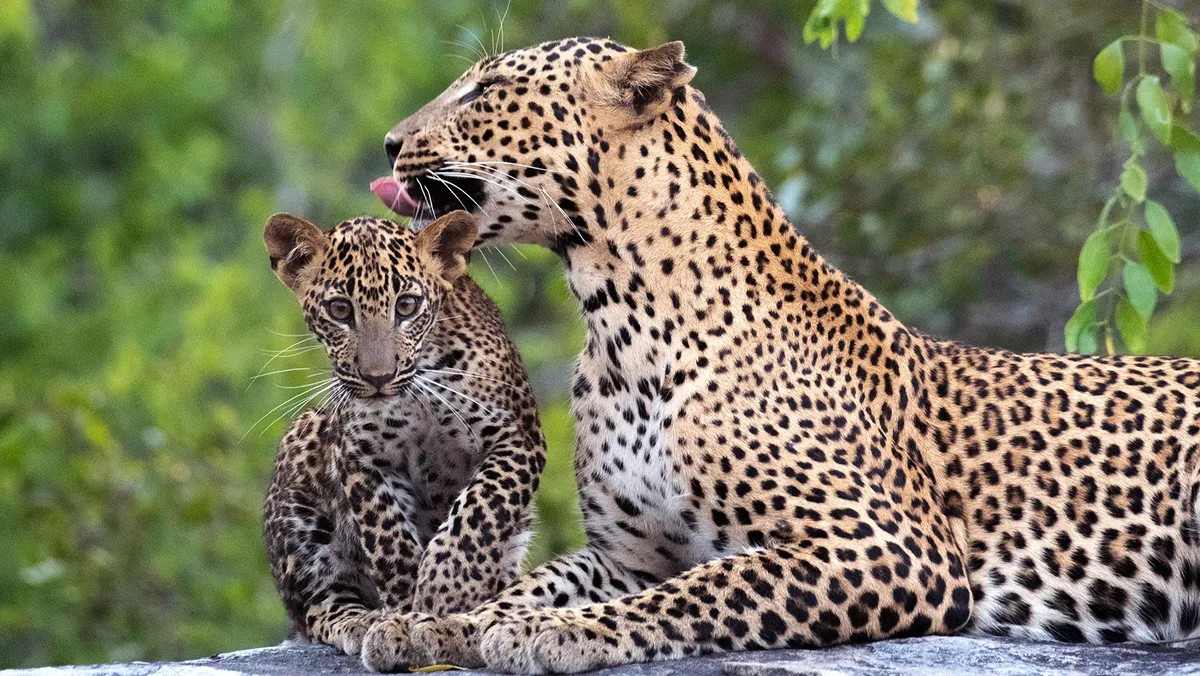
Leopards are famed for their solitary nature, agility, and powerful hunting skills. Yet, like all animal groups, they have a collective noun – and it’s unexpectedly fitting. A group of leopards is called a “leap,” a name that directly reflects their signature movements: springing from trees, ambushing prey, and moving with sudden bursts of speed.
Зміст
Why “Leap”? The Connection to Leopard Behavior
The term “leap” isn’t arbitrary. Leopards are ambush predators, relying on explosive power and precision. They don’t typically hunt in packs like lions; instead, they stalk and strike alone. This makes the term “leap” ironic, as it describes an action most leopards perform individually. It’s a vivid reminder that language often evolves from observing animal behavior rather than strict scientific classification.
Solitary by Nature, But Not Always
While leopards are largely solitary, exceptions exist. Mothers will remain with their cubs for over a year, and siblings may stick together temporarily after leaving their mother. These instances are rare, but they demonstrate that leopards aren’t entirely averse to interaction. Unlike lions with their prides, leopards primarily avoid one another, marking their own territories and hunting independently.
Collective Nouns: Tradition and Language
The use of collective nouns like “leap” for leopards isn’t scientific – it’s cultural. Many of these terms originated in medieval bestiaries and folklore, such as “The Book of Saint Albans” from the 15th century. They add color to language and spark curiosity about animal behavior. Other examples include:
- A pride of lions
- A streak of tigers
- A clowder of cats
- A coalition of cheetahs
The Human Perception of Wildlife
Collective nouns often reflect human perceptions of animals, not just their behavior. A “murder” of crows suggests darkness, while a “parliament” of owls implies wisdom. These poetic names aren’t about scientific accuracy but about how we interpret the natural world.
Ultimately, while you’re unlikely to encounter a “leap” of leopards roaming freely, the term serves as a memorable reminder of their incredible agility and solitary prowess. These unique names enrich our language and keep animal behavior alive in folklore.