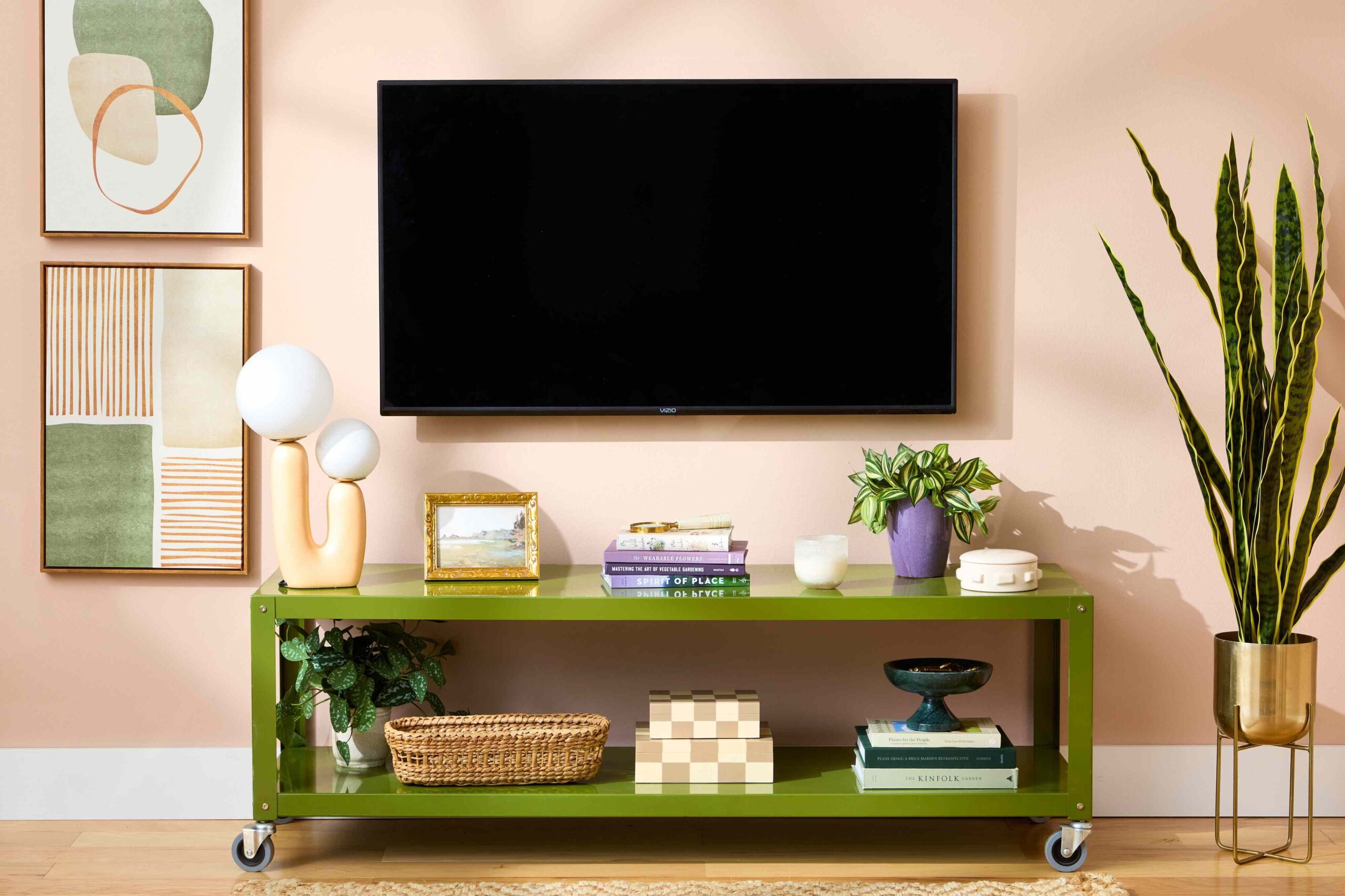
A clean, modern living space demands minimal visual clutter. For many, that means tackling the tangled mess of wires behind and around your television. While setting up a new TV often feels like an organizational headache, hiding those cords doesn’t have to be an afterthought. Thoughtful cable management elevates any room, preventing it from looking like a tech relic from the early 2000s.
Here are 13 practical solutions to conceal TV wires without unnecessary frustration.
Зміст
1. Flexible Zippered Cable Sleeves: A Simple Wrap-Up
The easiest way to manage multiple cords is to group them together. Flexible, braided cable sleeves accommodate up to seven wires, keeping them compact and organized. Available in colors that blend with walls or disappear into dark corners, these sleeves typically measure around two feet long but can be linked for longer runs.
2. Cable Management Boxes: Hide the Power Strip
Power strips on the floor are a magnet for dust and visual chaos. A cable management box provides a clean container to hide the power strip and excess wiring, creating a polished look. Available in colors like off-white, black, or wood-tone, some boxes even allow for painting to match your decor. Side ports offer access while maintaining a tidy appearance, and ventilation slots prevent overheating.
3. DIY Cable Ties: Budget-Friendly Bundling
For a quick fix, use hook-and-loop cable ties spaced every foot or so to compress a thick bundle of wires into a slimmer form. A 10-foot roll of 3/4-inch tape costs less than $15 and can handle any TV wire mess.
4. Shorter Cables: Cut the Excess
Overly long wires contribute to clutter. Replace them with shorter versions. Power, HDMI, coaxial, and data cables come in lengths as short as one foot. Speaker wires can be trimmed and stripped to the exact length needed.
5. Relocate the Outlet: Bring Power Closer
The ideal solution? Place the TV directly in front of an outlet. If that’s impossible, extend the outlet laterally. This requires creating openings between wall studs, which then need patching with drywall, tape, and paint. Electrical codes dictate that no wall space should be more than six feet from an outlet, making this extension feasible.
6. Wall Raceways: Conceal Wires on the Surface
For wall-mounted TVs, wires have a considerable distance to travel. Wall raceways provide a flat or D-shaped tube that runs along the wall surface to hide them. A back strip screws into the drywall, and a decorative plate clicks into place, blending with the wall color. Many raceways can also be painted.
7. Vertical Outlet Relocation: Simple Stud Bay Fishing
If your TV is directly above an outlet, moving the outlet higher is straightforward. Use an old-work electrical box to install the new outlet in the drywall without nailing to studs. Vertical wire runs are easy within open stud bays. The lower outlet can remain for other devices.
8. Baseboard Quarter-Round Channels: A Discreet Horizontal Run
Baseboard quarter-round trim hides gaps between the wall and floor. Hollow plastic replacements let you run two or three wires horizontally. Snap-on top pieces provide easy access for changes.
9. Crown Molding Concealment: Leverage Existing Space
Crown molding, where walls meet ceilings, provides a large space for running wires. Thin speaker wires can also be tucked into shallow channels behind door trim.
10. In-Wall Concealment: Code-Compliant Wiring
For a truly hidden solution, run wires within the wall. Avoid violating fire codes by using an in-wall power kit. This keeps wires safe and prevents damage from exposure.
11. False Wall Construction: A Dedicated Hiding Space
A non-load-bearing false wall can be built to conceal wires completely. Attach it to an existing wall or create a freestanding structure. Trim eliminates the need for drywall compound and sanding.
12. Integrate Wires Into Design: Turn Chaos Into Aesthetic
Get creative by incorporating wires into your decor. Run horizontal wires along the floor as part of baseboard molding or hide them within furniture with built-in outlets.
13. Mount the Power Strip: Get It Off the Floor
Moving the power strip off the floor and attaching it to the wall declutters wires instantly. Use painter’s tape to mark keyhole locations, then drive screws through the tape before removing it.
Important Note: Surface-mount channels are unsuitable for exposed electrical wiring. NM or BX wiring must be installed within walls for safety. Only low-voltage cables like Ethernet, HDMI, and speaker wires can be used in exposed channels.
Ultimately, a clean, well-organized entertainment setup enhances your living space. These methods offer practical solutions for concealing TV wires, creating a more polished and functional environment.