


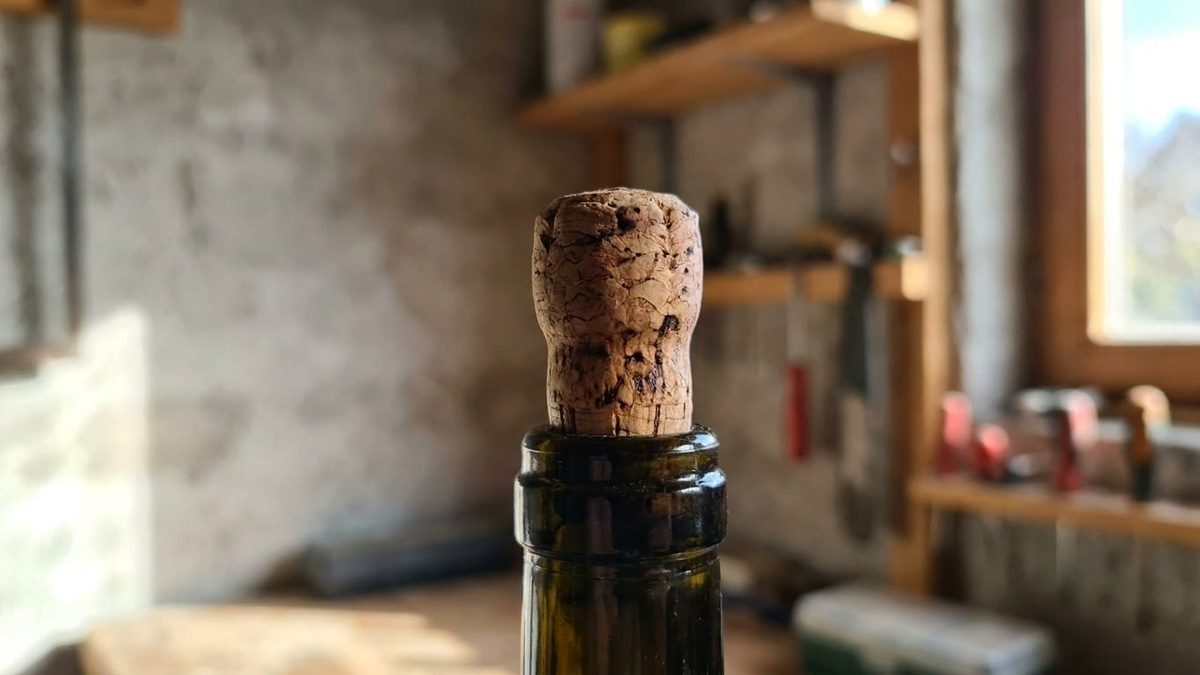
It took him less than a second to realize that the wine had gone bad.
The sommelier didn’t bother to open it. He pressed his thumb against the cap, felt the slight protrusion of the cork, and looked up with an expression you’d never want to see from a pro. “It’s too hot.”
A few words. Years of bottles that could have been wasted.
This scene is repeated in thousands of French garages every summer. We store wine there because it’s convenient. Because there is room. Because we don’t have a traditional basement. Two mistakes are intertwined: standing them upright and letting temperatures skyrocket. Understanding why these two factors are destructive is the first step to stop wasting money and happiness.
Зміст
Why heat destroys the structure of wine
Too high a temperature (over 25°C for a long time) can change the molecular structure of the wine. Aromatic compounds are particularly fragile and give wine its rich, complex aroma. Heat denatures them. It evaporates them. It turns them into less pleasant compounds.
This is not a visible deterioration. It’s quiet. progressive. irreversible.
A wine that has been too warm have more alcoholic and a weaker structure. When you put it in your mouth, you feel the taste of aged wine. Aromatically, it means aromas of cooked fruit and burnt sugar. The wine you want to drink for a memorable dinner has been aged for 10 years. It’s just the wrong direction.
“Too much heat can accelerate aging and change the taste permanently.”
Another lesser known effect has to do with the brutal physics of the bottle. Wine expands when heated. This expansion push the cork and causes slight oxidation. When wine comes into contact with oxygen, it accelerates oxidation, causing the wine to fade and lose its flavor. The sommelier detected the slightly raised cork. A physical signal that betrays everything.
Large fluctuations in temperature often cause the cork to bulge, indicating that the wine is too hot. The temperature in the garage varies between 10°C in January and 35°C in August, but it’s not just a “change”, it feels brutal. Temperatures in many garages can rise to 30°C in summer and below 5°C in winter. In this case it is not possible. These thermal shocks cause the liquid to expand and contract, causing the cap to move slightly and allow air to enter. Result: oxidation, acidity imbalance, loss of aroma.
The Vertical Storage Mistake
Storing bottles in an upright position is intuitive. It takes up less space on the shelf. It is stable. Doesn’t roll. But here is another common mistake. If the cork is not in contact with the wine, it dries out, allowing air to enter and the contents to oxidize.
The mechanism is precise. Cork functions as a compressible organic seal. To ensure optimal airtightness inside the neck, its structure must maintain moisture and flexibility. Constant contact with the wine allows the cork to maintain its volume and apply constant pressure to the glass. Deprive it of this contact, the process is reversed.
If you store a cork-closed bottle in an upright position robs it of vital moisture. Drying happens quickly. The cork hardens and contracts to allow uncontrolled airflow.
Leaving it upright for days or weeks does not irreversibly change the quality of the cork. the cork risks drying out over time. Months in a garage in the garage at 35 degrees Celsius for months? The combination of these two factors can multiplies damage exponentially. Changes in temperature can cause the cap to dry out and expand, which compromises its tightness and increases the risk of oxidation and contamination.
Exceptions and practical advice
There are nuances here that need to be explained. Bottles closed with screw caps or synthetic corks are very flexible and can be stored in an upright position without technical risk. All types of wine, especially wines intended to be consumed within two weeks, can be stored upright for short periods of time.
No one will notice if the Sunday Muscadet sits in the kitchen three days before being drunk, The rules are stricter when it comes to the bottles you hold and bet on,
So where do you store it if you don’t have a classic wine cellar? This requires a different approach. But first, don’t treat your garage like a wine fridge or store wine bottles upright. Your taste buds will surely thank you.
Storing wine without a cellar: a practical guide
you live in an apartment building. In July, the temperature in the kitchen is 27 degrees Celsius. There is no basement. This is the reality that most French families face. You want to drink your wine, not cook it.
The ideal temperature for a wine cellar is 10-14°C. This range ensures slow, harmonious aging. It lets aromas develop. It prevents alteration. You likely don’t have this setup.
So you have to find the next best thing.
Seek stability. Find the coolest, darkest spot in the house. Avoid the kitchen. Avoid garages where temperatures can vary greatly depending on the season. A north-facing hallway entrance with few windows often works surprisingly well. A interior closet or the bottom of a buffet cabinet These areas provide more stable conditions than other parts of the home.
Humidity is also important. If you use cork stoppers, make sure it doesn’t dry out. A dried cork deforms. Air comes in. Air can cause oxidation. The relative humidity should be 65-75%. Buy an affordable moisture meter. It costs a few euros. Check the levels. You can protect the bottles with a small investment.
Temperature changes are your enemy. Although average temperatures are favorable, fluctuations can have a negative effect on the wine. This is counter-intuitive. Absolute heat is not always a killer. Instability is. A spot that stays at a constant at 18°C is better than one that varies between 12°C and 22°C. Wine requires peace, not drama.
If you’re serious, consider a standard electric wine fridge. For serious collectors, entry-level models are no longer luxury items. Technology is democratizing this. You get stable temperatures without renovation work.
Is the price worth paying? Calculate what you have already wasted. How many bottles have you destroyed in a hot garage in the last few years? The fridge pays for itself in saved wine.
However, exercise self-control when you are not using your device. Choose the corridor facing north. Keep the bottles dark. Check the humidity. Watch the fluctuations. The wine will thank you.


