Hold a wet finger up to the breeze. That chill you feel? That’s evaporative cooling in action. It’s the same physics that dries you off after a swim. It’s also the engine behind one of the oldest forms of climate control on Earth. In the United States, we call these units swamp coolers. They are efficient, cheap, and gentle on the planet. But they aren’t a magic fix for every hot day. Don’t toss out your compressor-based air conditioner just yet.
The idea didn’t start with electric fans. Ancient Egyptians needed relief from the heat. They hung wet blankets across doorways. If they were royalty, servants waved those wet blankets over jugs of water. Hot, dry air moving through that moisture cooled down. Today we swap servants for motors. The science remains identical.
There is a catch. These units fail in humid places. A swamp cooler in a swamp is a bad joke. The name likely comes from the moisture they pump into the air or the mildewy smell that builds up if you never clean the pads.
Зміст
Where Swamp Coolers Actually Work
You won’t find these units working hard in Florida. They thrive where the air is dry and hot. In the U.S., that means the arid West and Southwest. Globally, the market is exploding. It was valued at $7.6 billion in 2019. Experts project it will hit $19.8 billion by 2026. Why the growth? Because the technology is simple. It worked for pharaohs. It works for homeowners today.
The Science Behind the Chill
Benjamin Franklin knew about this. In July 1758, Philadelphia baked. Temperatures hit 100 degrees Fahrenheit. Franklin sat in his room with the windows open. He wore only a shirt and long linen drawers. A brisk wind blew through the house.
He changed shirts. The wet one felt cool. The dry one felt warm against his skin. He realized the air wasn’t cooling him. His sweat was. He tested this with a thermometer. Wet the bulb. Watch the temperature drop. Evaporation steals heat.
Here is how it works. Liquid turns into gas. Molecules escape into the air. They pull heat from the surrounding air to make that transition. The remaining liquid gets colder. Hotter, faster molecules leave first. The air and water find a new, cooler equilibrium.
Swamp Cooler Anatomy
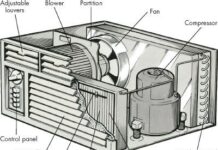
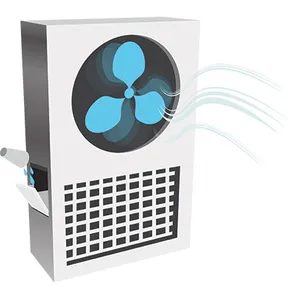
Imagine a standard air conditioner. A metal box on a window sill. Inside, complex refrigerants cycle and compress. A swamp cooler is simpler. It’s mostly just a box and a fan.
The blower pulls outside air in. It pushes that air into your home. But not before it hits a barrier. Wet pads. The air passes through them. Evaporation happens there. The air that enters your house is cooler. It is also more humid. The warm indoor air gets pushed out to make room.
A small pump keeps those pads wet. If the water dries up, the cooling stops. It’s the same principle as Franklin’s shirt or the Egyptian blankets. You just need circulation.
Why Choose Evaporative Cooling?
It’s not just about cooling a bedroom. The technology has practical applications beyond HVAC. Inventors are using it to keep food fresh. In India, makers use earthenware bowls. One bowl sits inside another filled with water. A cloth covers the top. Water wicks up and evaporates, cooling the inner bowl.
Sudan tested a similar design. Tomatoes stayed fresh for 20 days. Without the cooler, they rotted in two weeks. That’s 18 extra days of edible produce. Other regions use bamboo, wood, or bricks. The materials are local. The energy draw is minimal.
Is it worth replacing your central A/C? Maybe not. But for the right climate, or for preserving food in a hot kitchen, the ancient trick holds its own. The question isn’t if it works. It’s where you can use it without creating a mold problem.
Swamp Cooler Benefits
The math is hard to ignore. A standard window unit pulls 500 to 700 watts. A typical evaporative cooler? About 75. That is a massive gap in your electric bill. You are moving air, not compressing refrigerant. The mechanism is simpler. Water. A fan. A pad. Fewer moving parts means fewer things to break. You can likely fix it yourself with basic tools if the belt slips or the pump fails. No specialized HVAC license needed to swap out a water pad or clean a motor.
But the real draw isn’t just the low operating cost. It is the air quality. Standard ACs recirculate the same air. Dust bunnies. Pet dander. All of it gets trapped in the filter and stirred back up. Evaporative coolers pull in fresh outdoor air. They vent stale indoor air out through cracks or open windows. It is an open loop. You get a constant supply of oxygen-rich air. For people with asthma or allergies, this ventilation can feel like a breath of fresh air—literally. The air feels lighter. Crisper.
There is also the environmental angle. No Freon. No refrigerants that leak into the atmosphere or require toxic chemical handling during disposal. Just water and electricity. If you live in an area with high energy prices, the savings add up fast. You might spend pennies a day to cool a room that would cost you dollars with a compressor unit.
However, this efficiency comes with a strict geographical limit. You cannot just buy any cooler and expect it to work. The air needs to be dry. If you live in a coastal town or a humid jungle, the ambient moisture is already high. The water won’t evaporate efficiently. You will just feel like you are standing in a damp, lukewarm fog. The cooling effect relies on the phase change of water. Dry air absorbs moisture and loses heat in the process. Humid air is already saturated. It can’t take much more.
So, where does this leave you? If you are in the Southwest—Arizona, Nevada, Utah, parts of Colorado—the logic is simple. The air is arid. The sun is hot. A swamp cooler will drop the temperature significantly and keep your utility bills in check. You get fresh air. Low maintenance. Low cost. It is the obvious choice for dry climates.
But what if you are on the border? The humid subtropics? Or the Pacific Northwest where it rains half the year? The equation changes. You need to look at the specific humidity levels of your location. You need to understand how your body cools itself. If the air is thick with moisture, your sweat doesn’t evaporate. You feel sticky. Uncomfortable. A swamp cooler adds more moisture. It makes you sweat more. It makes it harder for your body to release heat. In those cases, the “cooler” air might actually feel warmer because of the humidity load.
Which brings us to the next critical question: how do you decide which system fits your home’s specific architecture and local climate? The answer lies in the details of your existing infrastructure and the typical weather patterns you face for the majority of the summer months.
The Economics of DIY Cooling
The math on evaporative cooling is hard to ignore. You can build a unit from scratch for pennies, or buy a portable model for around $40. Even high-end roof-mounted systems cap out near $3,500. Compare that to central air, which NerdWallet estimates runs $3,000 to $7,000 for installation alone. The monthly bills tell the same story. Running a swamp cooler costs less than half of what a standard AC unit does, primarily because it shaves 60–80 percent off your electricity usage.
The materials list is brutally simple: a blower fan, a water pump, a box (usually sheet metal), and a filter pad 8 to 12 inches thick. Those pads can be treated cellulose, fiberglass, plastic foam, or shredded aspen. Anything you can’t buy off the shelf, you can cut at a local metal shop. Just make sure your setup has at least two fan speeds and a vent-only mode.
There’s a secondary benefit that rarely makes the sales pitch: refrigerants. Standard ACs rely on chemicals that wreck the ozone layer. Chlorofluorocarbons (CFCs) are banned in developed nations since 1996. They were replaced by HCFCs like R22 (freon), which also got the axe in 2010. Newer units use R410A or Puron, currently phasing out for R-32, which has one-third the global warming potential. It’s still a chemical dependency. Swamp coolers use water. No refrigerants. No phase-outs. Just physics.
The Climate Trap
There is a catch, and it’s a big one. These units are climate-specific. If you live in Philadelphia, forget it.
Evaporative cooling needs dry air. It relies on the gap between the dry bulb temperature (the actual air temp) and the wet bulb temperature (how cold the air gets when water evaporates into it). When humidity rises, that gap shrinks. If the wet bulb temperature hits 70°F (21°C), the cooling effect essentially dies. You might get a breeze, but the air won’t cool down enough to keep you comfortable.
When the air is saturated with water, condensation takes over. You won’t get rain indoors, but you will get that heavy, sticky heat associated with swamps. Your sweat stops evaporating. Your body can’t cool itself.
The Environmental Protection Agency recommends keeping indoor relative humidity between 30 and 60 percent. Lower than 30, and your wood furniture cracks. Higher than 60, and mold and mildew thrive. Excess humidity also rusts metal components inside the cooler itself. Some systems try to fix this with a heat exchanger, venting humid air out while heating the dry air back in. But that process drains efficiency. You’re fighting the physics of your location.
The Maintenance Grind
Swamp coolers demand more hands-on care than most homeowners expect. You aren’t just changing a filter every three months.
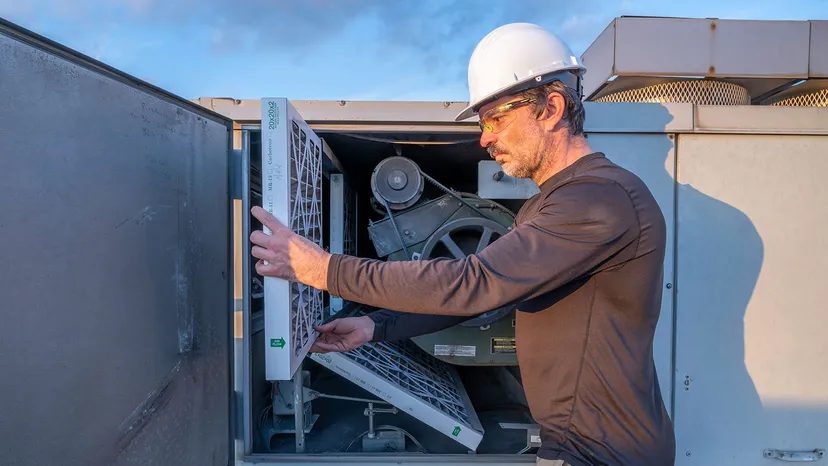
The pads need regular cleaning or replacement to prevent that distinct, musty swamp smell. As water evaporates, minerals stay behind. You have to bleed off mineral-rich wastewater to stop buildup. Check the pads, filters, reservoir, and pump at least once a month. Replace the pads twice during the cooling season, or every month if you run it continuously.
Water consumption is no joke. Depending on the size of the unit, you’re looking at 4.4 to 10.4 gallons (17 to 40 liters) per hour. In the hot, dry climates where these units work best, water can be scarce or expensive. That’s a real constraint.
Central AC units have their own maintenance rituals, sure. But if your evaporative cooler is tied into a larger HVAC system, you need a professional to shut it down in winter. You have to drain and flush the entire water system to prevent freezing damage. Then, you pay someone to reconnect it in the summer. It’s a cycle of neglect that leads to damage.
Predicting the Drop
How do you know if your unit will actually work before you buy it? You need the wet and dry bulb temperatures.
The dry bulb is just the thermometer reading outside. The wet bulb temperature indicates adiabatic saturation. It’s the theoretical minimum temperature air can reach through evaporation. You measure it with a thermometer wrapped in a wet cloth sock, exposed to airflow.
The wet bulb is always lower than the dry bulb. The difference is the wet bulb depression. A high-efficiency cooler can drop the temperature by up to 95 percent of that depression.
Look at Las Vegas. It’s 108°F (42°C) outside. The wet bulb is 66°F (18°C). The depression is 42 degrees. A swamp cooler operating at 85 percent efficiency brings that 108°F down to 72.3°F (22.3°C). That’s comfortable.
Now look at Miami. Hot and humid. The wet bulb might be 75°F. The dry bulb is 90°F. The depression is only 15 degrees. Even a perfect cooler drops the temp by a few degrees. You’re left breathing warm, moist air.
It works in the desert. It fails in the humidity. The decision isn’t just about cost. It’s about where you live.